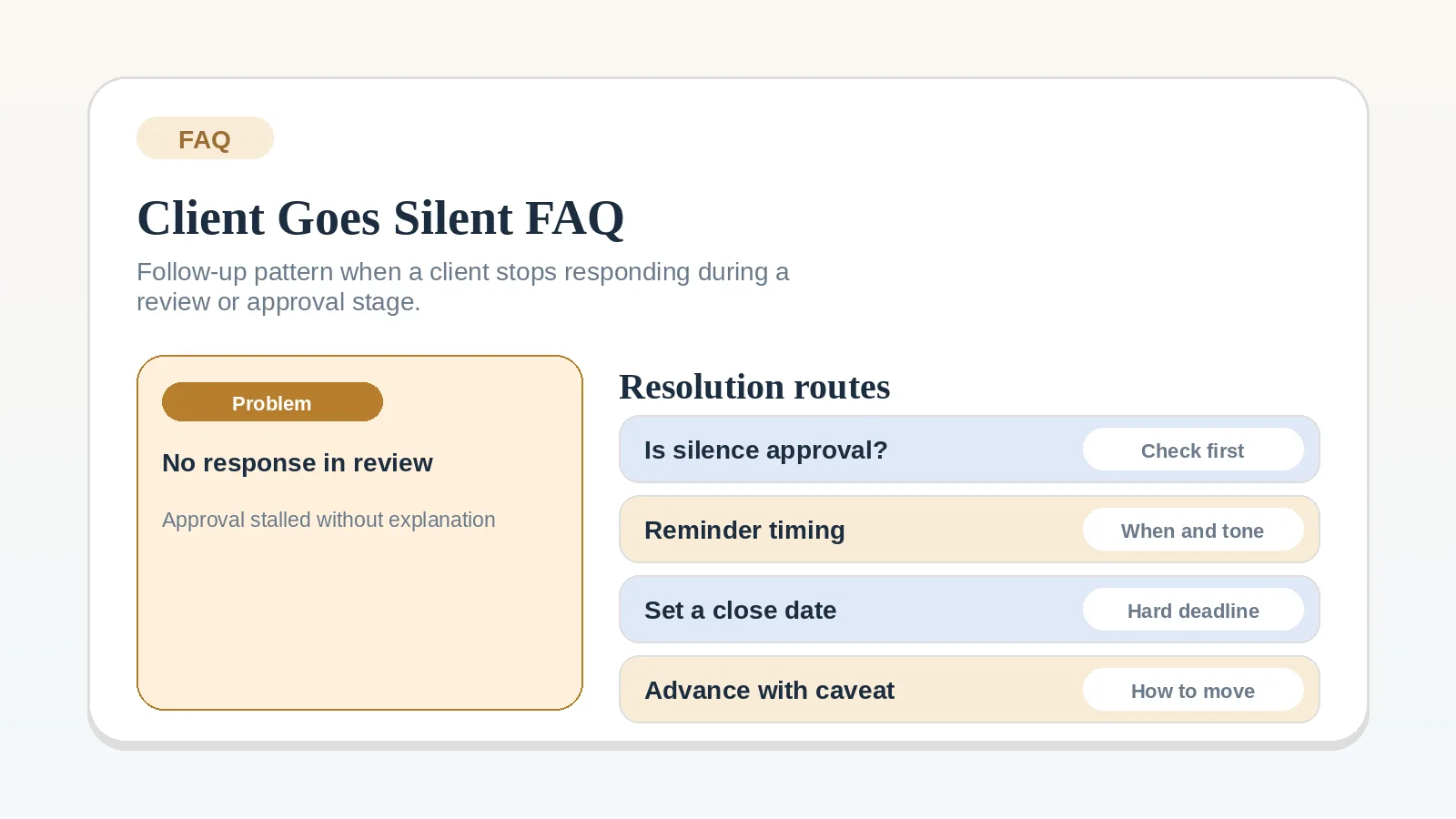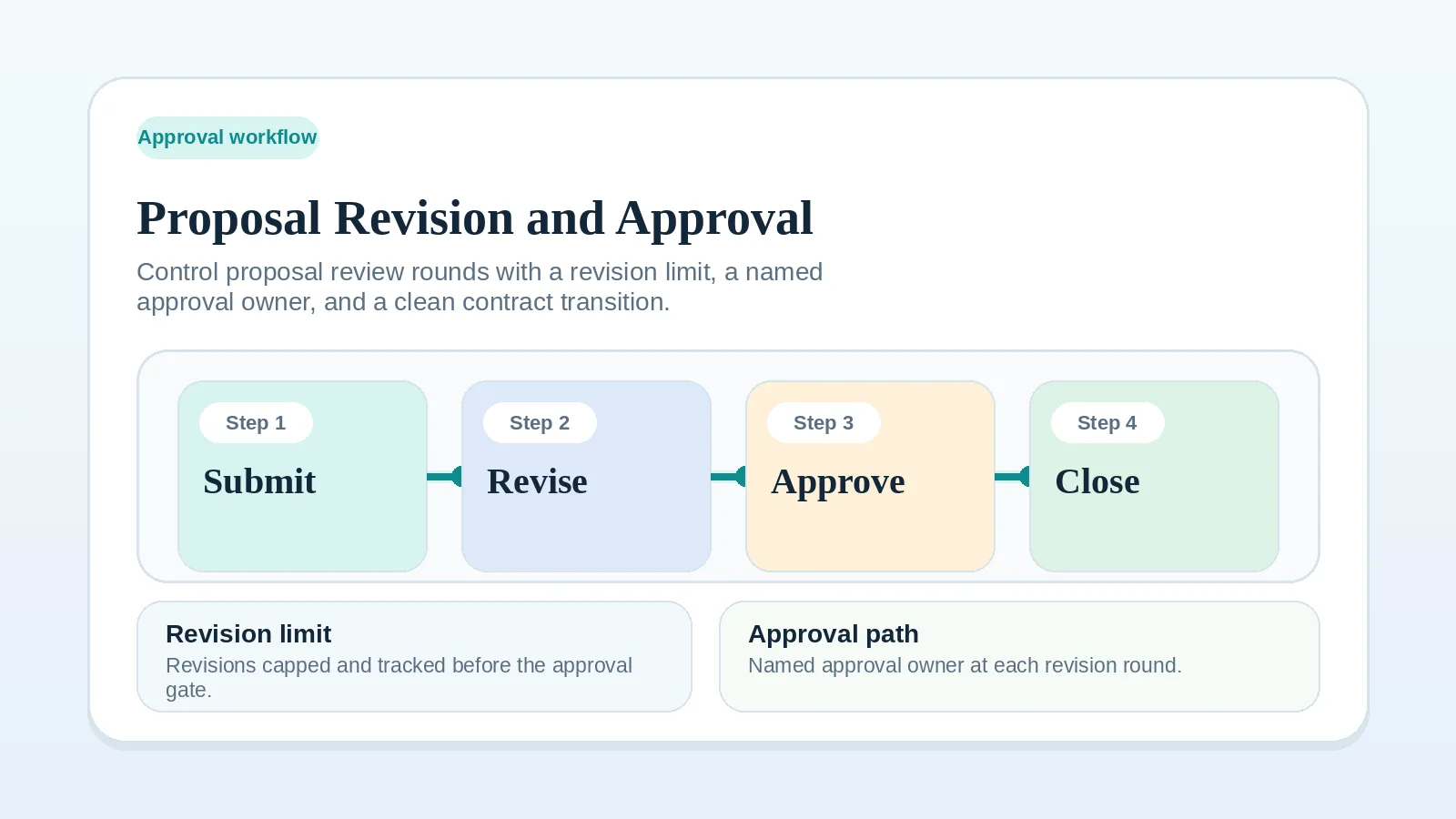
Proposal review needs one visible version, a defined route for comments, and a named person who can approve the result. Without those controls, revisions can change the proposed scope before anyone records the new agreement.
The stage runs from a review-ready proposal package to approved terms that can move into contract and onboarding. Once the agreement is signed, route proposed changes to that baseline through change-request control, including changes requested before kickoff. Use qualified advice for legal or contractual questions.
Revisit this stage when revisions bounce between versions, approval ownership is vague, comments arrive from several people, or signed projects start with hidden ambiguity.
Who needs a controlled review
- freelancers and consultants selling custom project work,
- solo operators who revise proposals manually,
- businesses where proposal review produces delays or unclear promises.
If the proposal itself is still structurally weak, fix Proposal-to-contract handoff workflow setup first.
Review decisions to make explicit
The review process needs a clear answer for:
- when proposal review officially starts,
- who owns the next action during review,
- how revision requests are captured,
- what revision work is included before the offer must be reconsidered,
- what counts as final approval,
- what moves forward into contract and onboarding after approval.
If any of those remain vague, the package may move forward without a stable agreement record.
Where review sits in the sequence
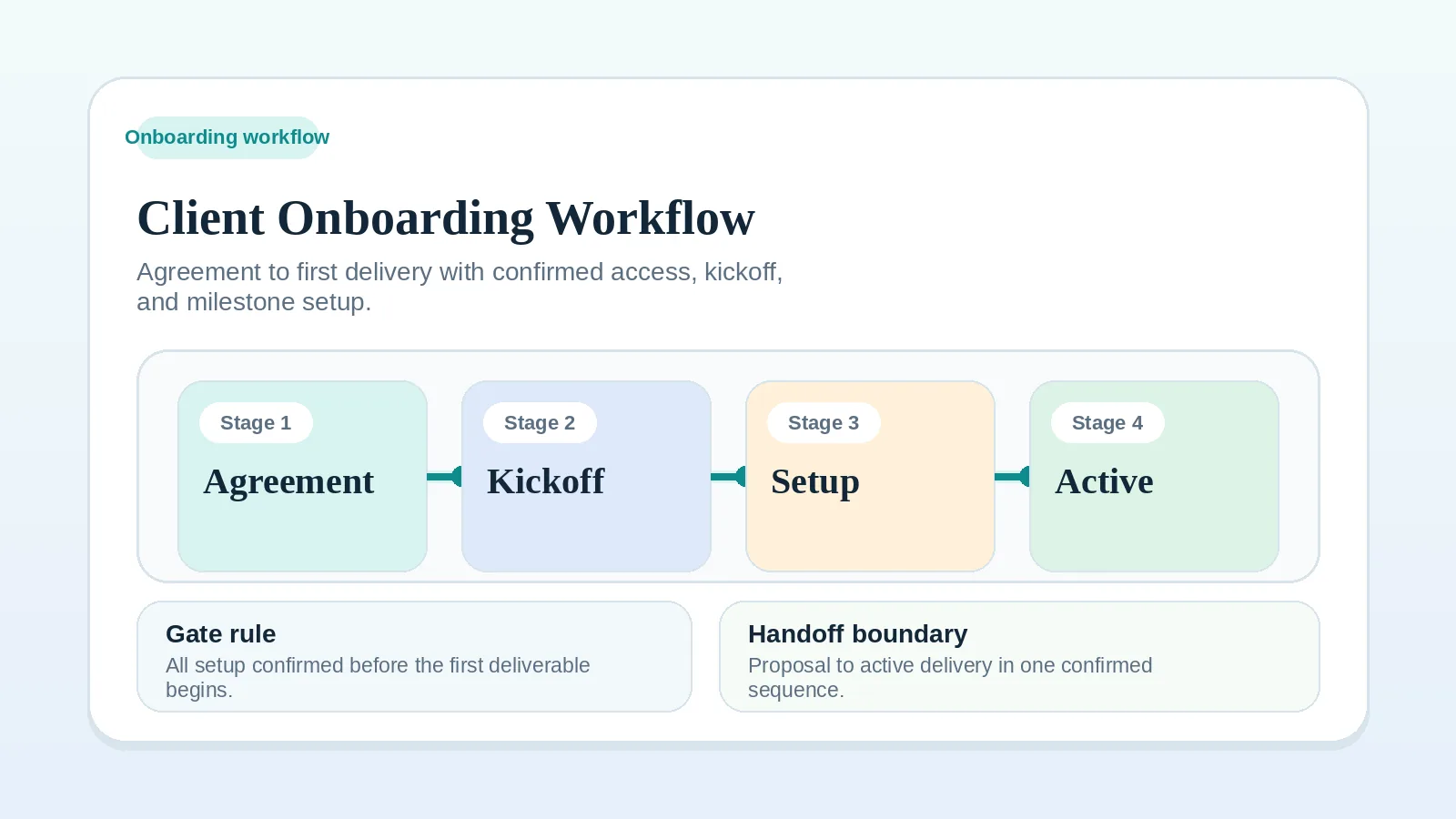
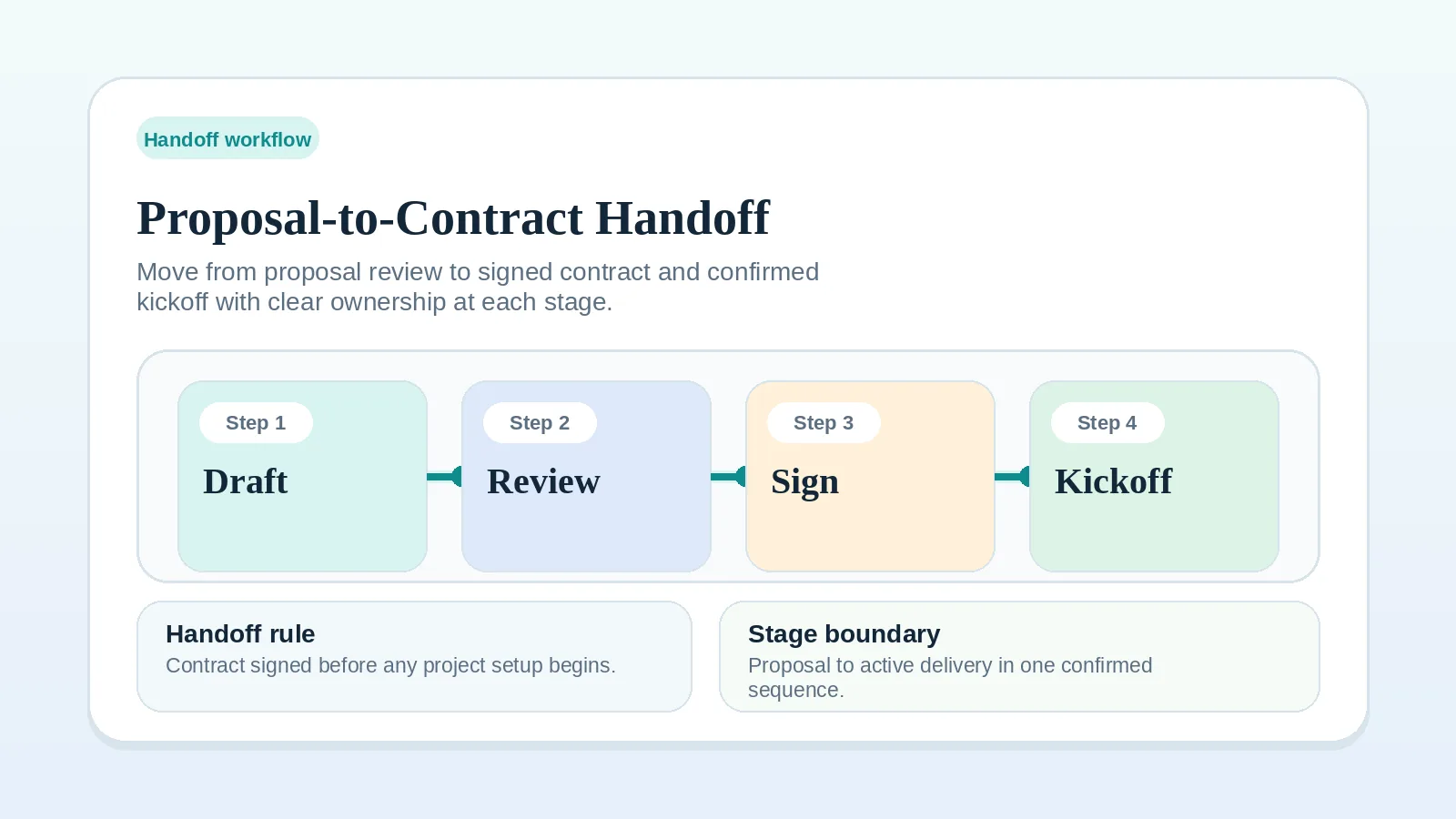
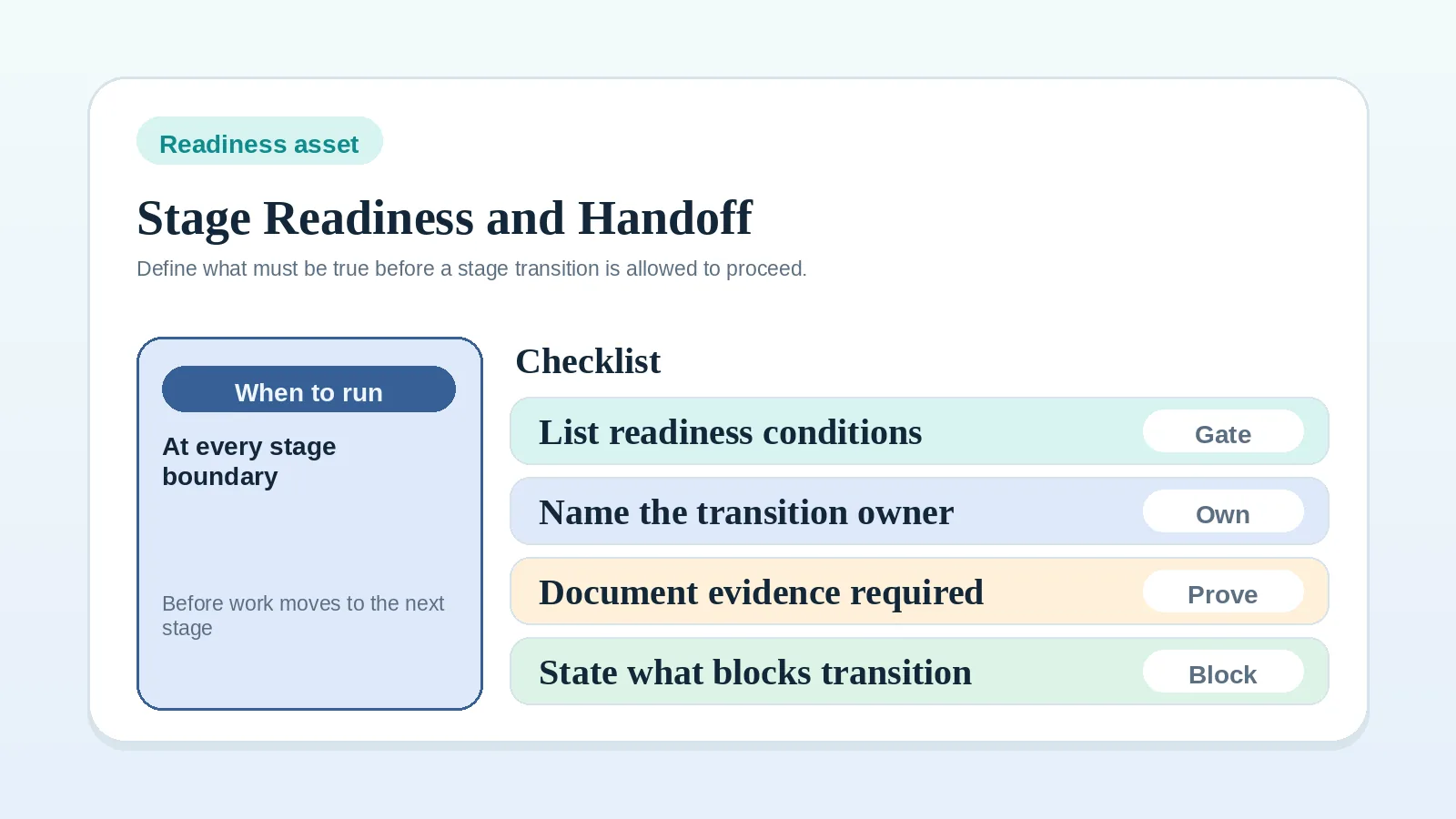
Review starts after Proposal-to-contract handoff workflow setup produces the package. It ends before Client onboarding workflow for freelancers and consultants, which starts only after approval and a signed agreement. Later scope changes go through change-request control.
Step 1: start review with one visible review state
Proposal review should start when:
- the scope draft is stable enough to evaluate,
- the client has a clear version to review,
- one response path is named,
- one next action owner is visible.
Do not send a proposal into review as a loose attachment with no review state. If comments can arrive anywhere and anyone can answer, consolidate them into one review path before revising the proposal.
Step 2: name the next action owner and approval owner
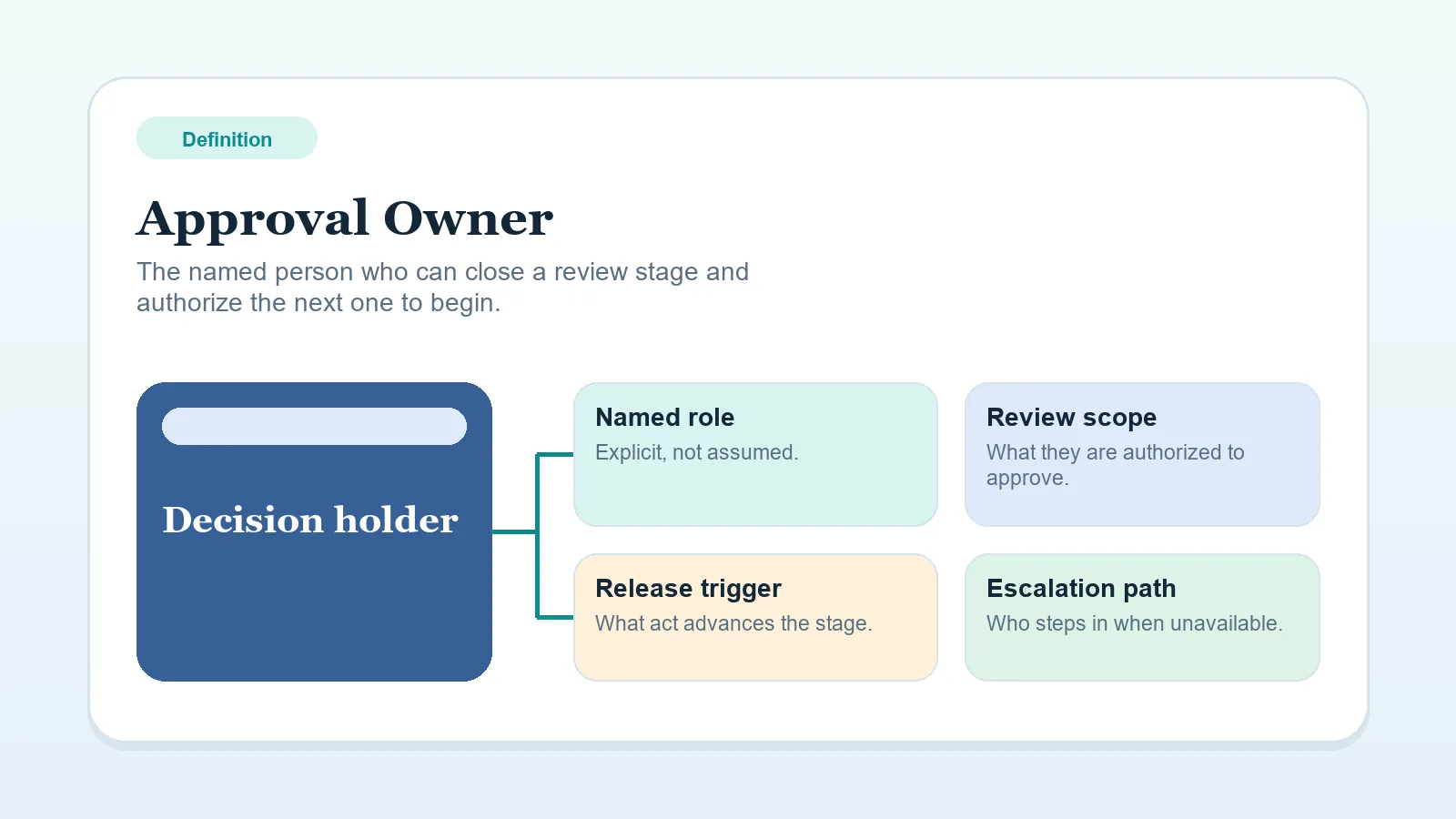
These are not always the same role.
You need to know:
- who must send the next revision or clarification,
- who can give final approval,
- where that authority is documented.
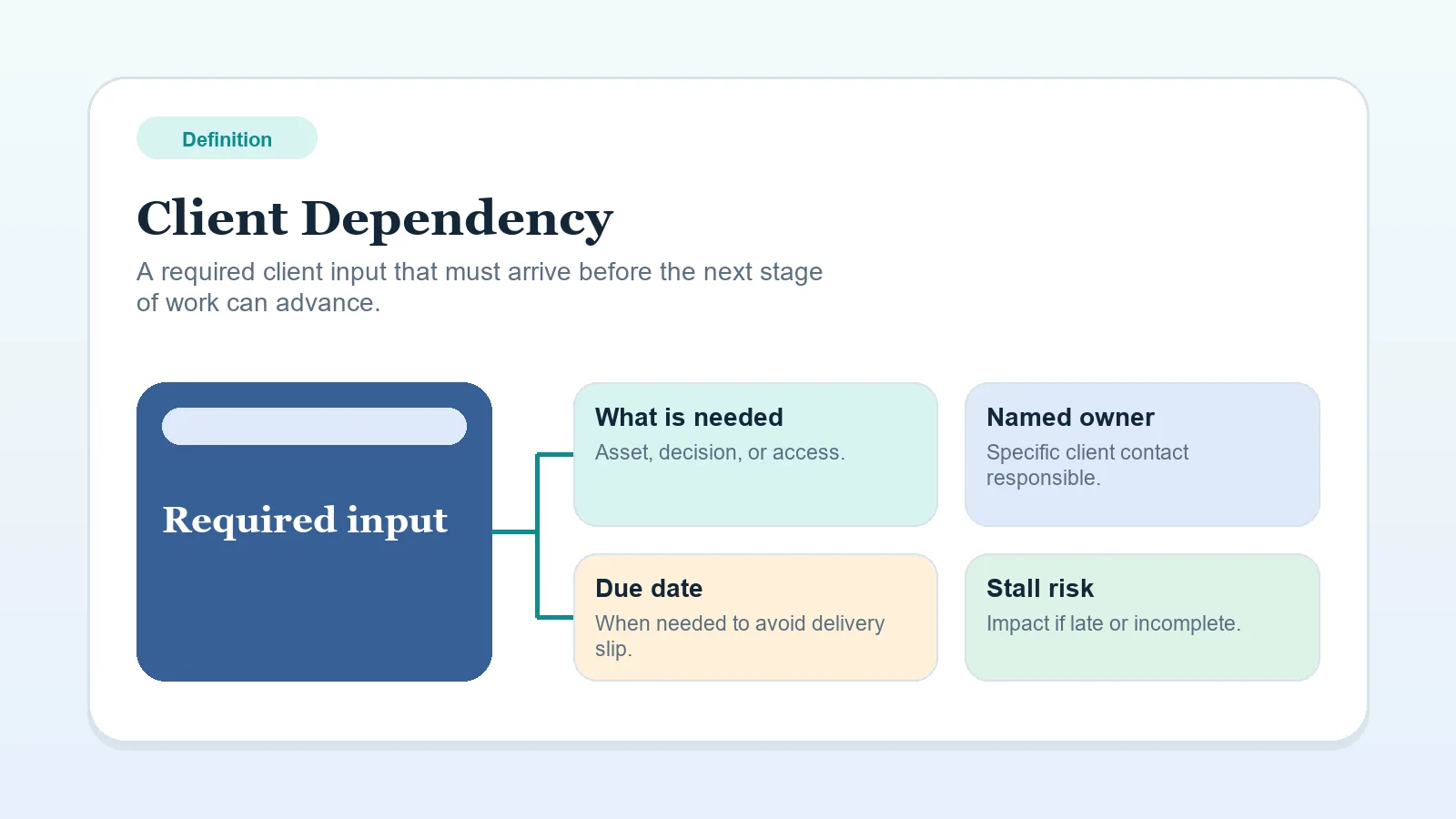
If several stakeholders are commenting, but no one can close the decision, the workflow is still open. Use Approval owner when the decision-maker is fuzzy. Use Client dependency when review is waiting on client-side input rather than your own revision work.
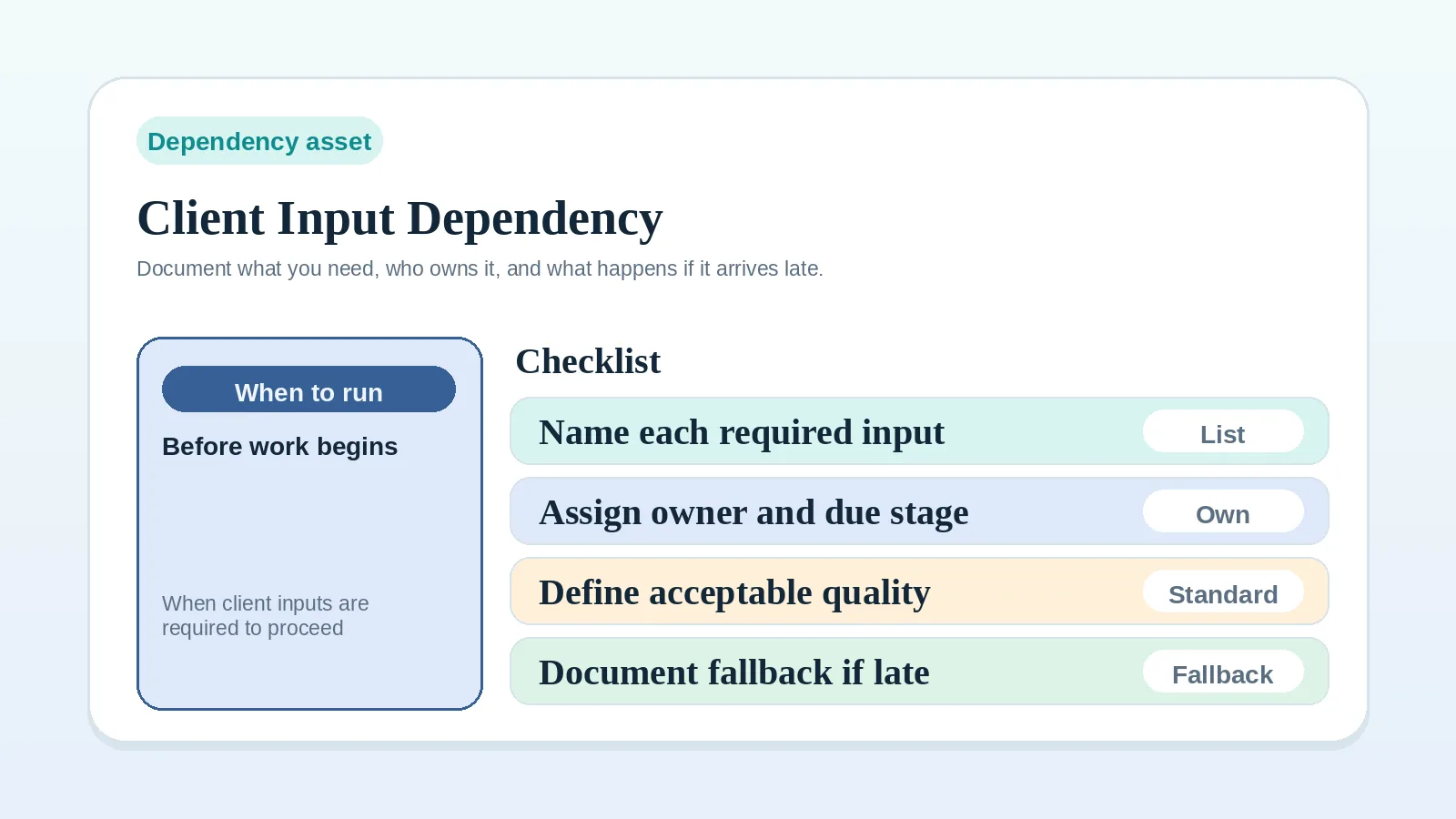
If client-side answers or materials are too vague to track, use Client input dependency worksheet for solo operators to identify and assign them before review resumes.
Step 3: capture revision requests outside chat noise
Every revision request should answer:
- what line, deliverable, timeline point, or fee item is changing,
- why the revision is being requested,
- whether the request changes the operating agreement,
- who still needs to approve the revised version.
Do not treat proposal feedback as a pile of informal comments. If the request changes scope, timing, ownership, or commercial assumptions, record it clearly before editing the proposal.
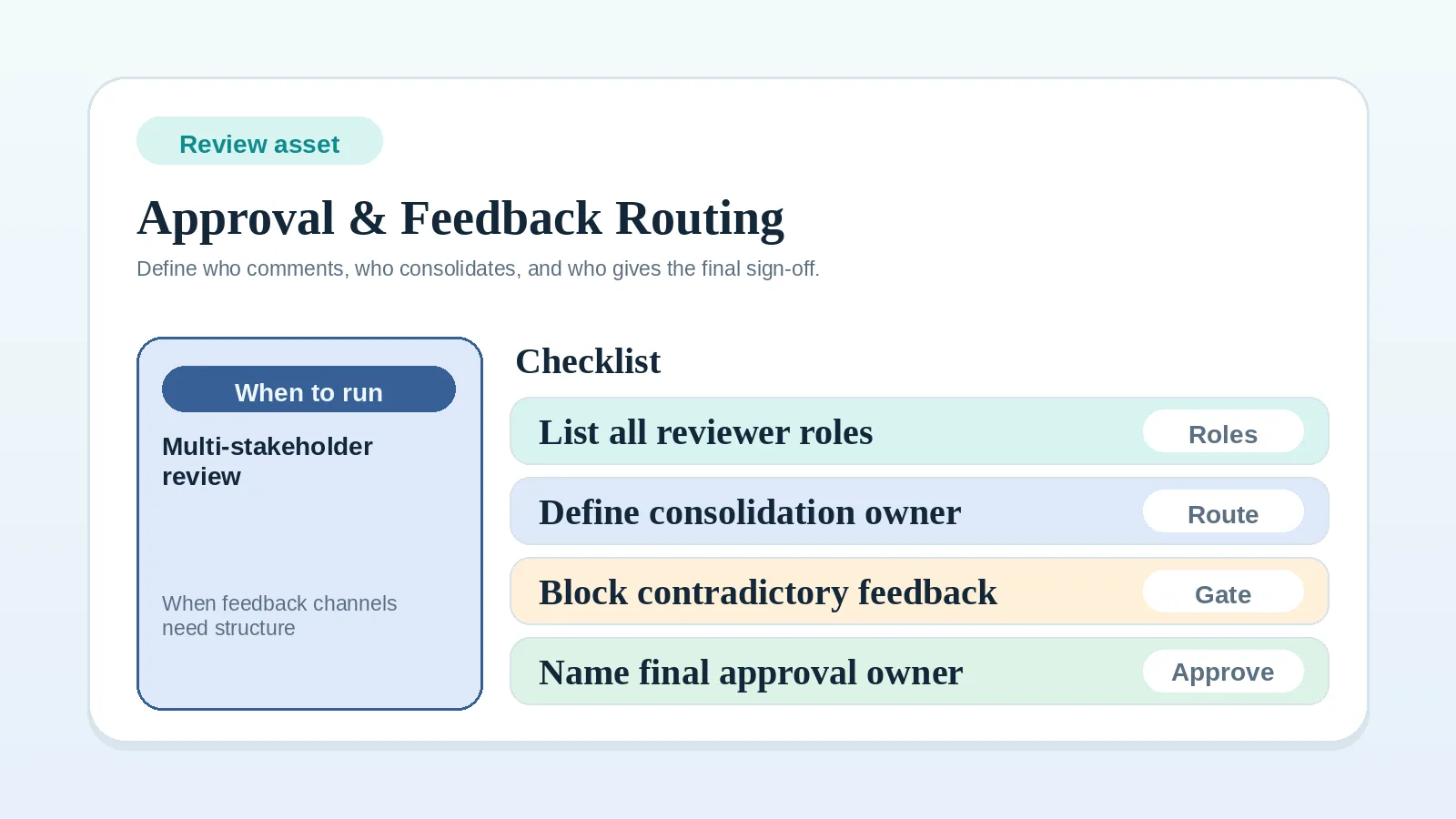
If several stakeholders are involved and the routing path itself is the problem, define it first with Approval and feedback routing worksheet for multi-stakeholder review.
Step 4: define the revision boundary
Define which clarification and revision work is included in the proposal process and what kind of change requires a new scope or commercial discussion. The agreement should state any binding revision terms.
Keep one active, consolidated set of comments. When feedback changes the offer materially or no longer fits the agreed review boundary, pause line edits and reset the proposal decision with the client.
If a revision requires design, research, or other delivery work beyond the proposal discussion, agree how that work will be scoped and paid before starting it.
Step 5: distinguish proposal revision from later change requests
Use the signed agreement as the baseline for later changes. Starting delivery is not a prerequisite for change control.
Proposal revision belongs here when:
- the work is still pre-signature,
- the client is clarifying or reshaping the proposed agreement,
- no live delivery plan has started yet.
Use change-request control when:
- the proposal has already been approved,
- the agreement is signed,
- a new ask would alter the agreed scope, fee, or timeline.
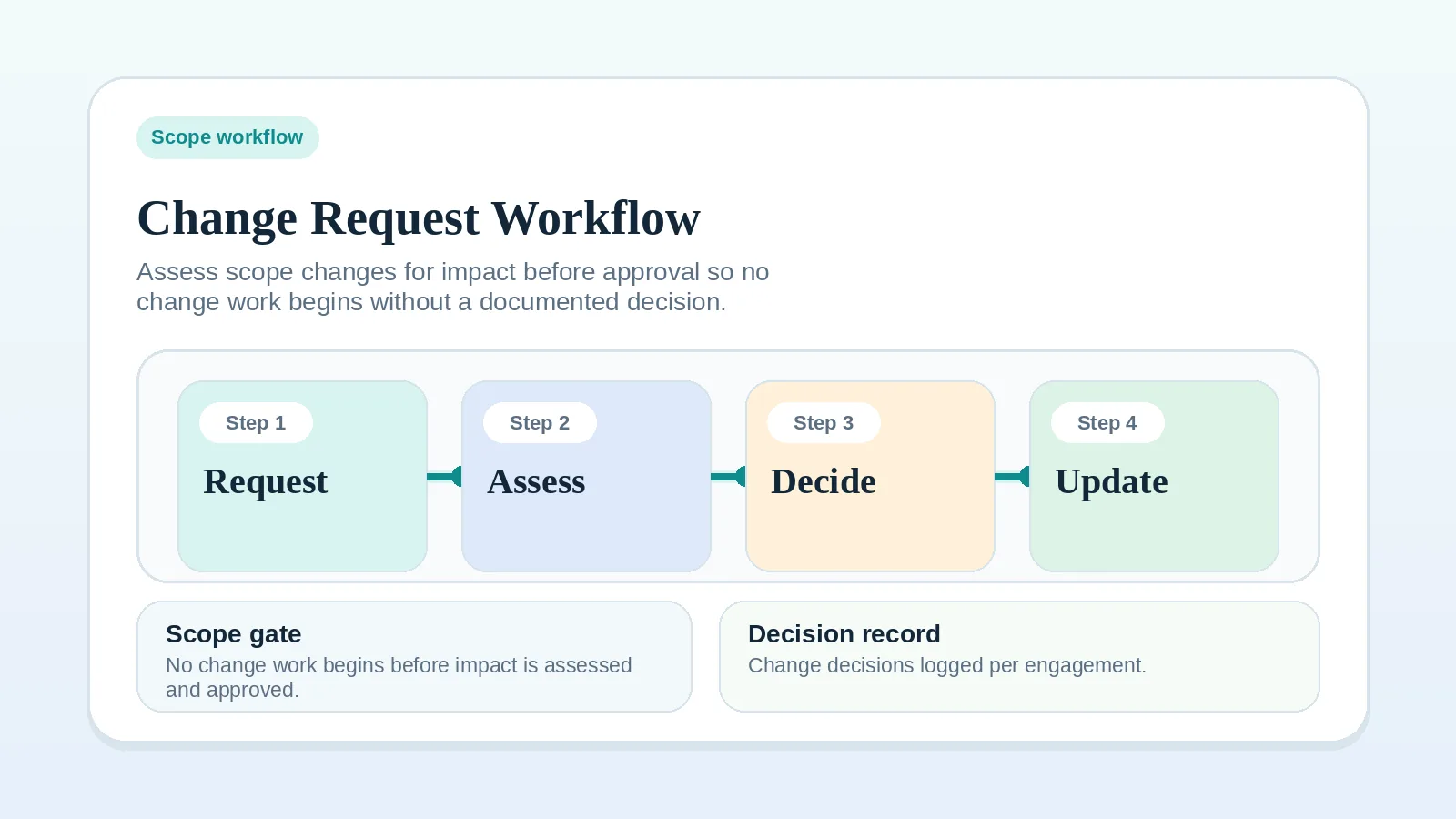
Use Change request workflow for freelancers and consultants for those changes. If work has started without settled terms, clarify and record the existing commitments before deciding how to handle a new request.
Step 6: define what counts as final approval
Final approval should mean:
- the client has accepted the proposal version in review,
- the approval owner is explicit,
- the agreed scope and terms are stable enough to sign,
- the next move is contract execution or, after signing, onboarding setup.
Do not infer final approval from silence. Follow the approval terms in the agreement, and record which version the approval covers. Informal positive feedback does not settle the decision when the agreed process requires an explicit response.
Store the approval event in the same place that will later support onboarding and billing. If approval is hard to locate in an inbox, link or copy it into the project record before the next stage.
Minimum approval record:
- the approved version or link,
- the approval owner,
- the approval date,
- the scope or pricing boundary that was accepted,
- the next move after approval.
Step 7: transition from approval to contract and onboarding
Once approved:
- lock the reviewed version,
- carry forward the final scope and exclusions,
- carry forward approval owner and stakeholder map,
- carry forward dependencies that still affect kickoff,
- carry forward billing triggers that were agreed in review.
Then move to Client onboarding workflow for freelancers and consultants only after the terms are approved and the agreement is signed.
If kickoff criteria remain unclear, document the kickoff readiness rule with Project start handoff readiness worksheet before kickoff starts.
What to do when proposal review stalls
Proposal review can stall when:
- the next action owner is unclear,
- the approval owner is unclear,
- a client dependency is blocking the decision.
If review stalls:
- restate the exact decision still needed,
- name the owner,
- name what the stall is blocking,
- set one visible follow-up point.
Match the next resource to what the stall has become:
- silence during review: FAQ: what should I do when a client goes silent during review?;
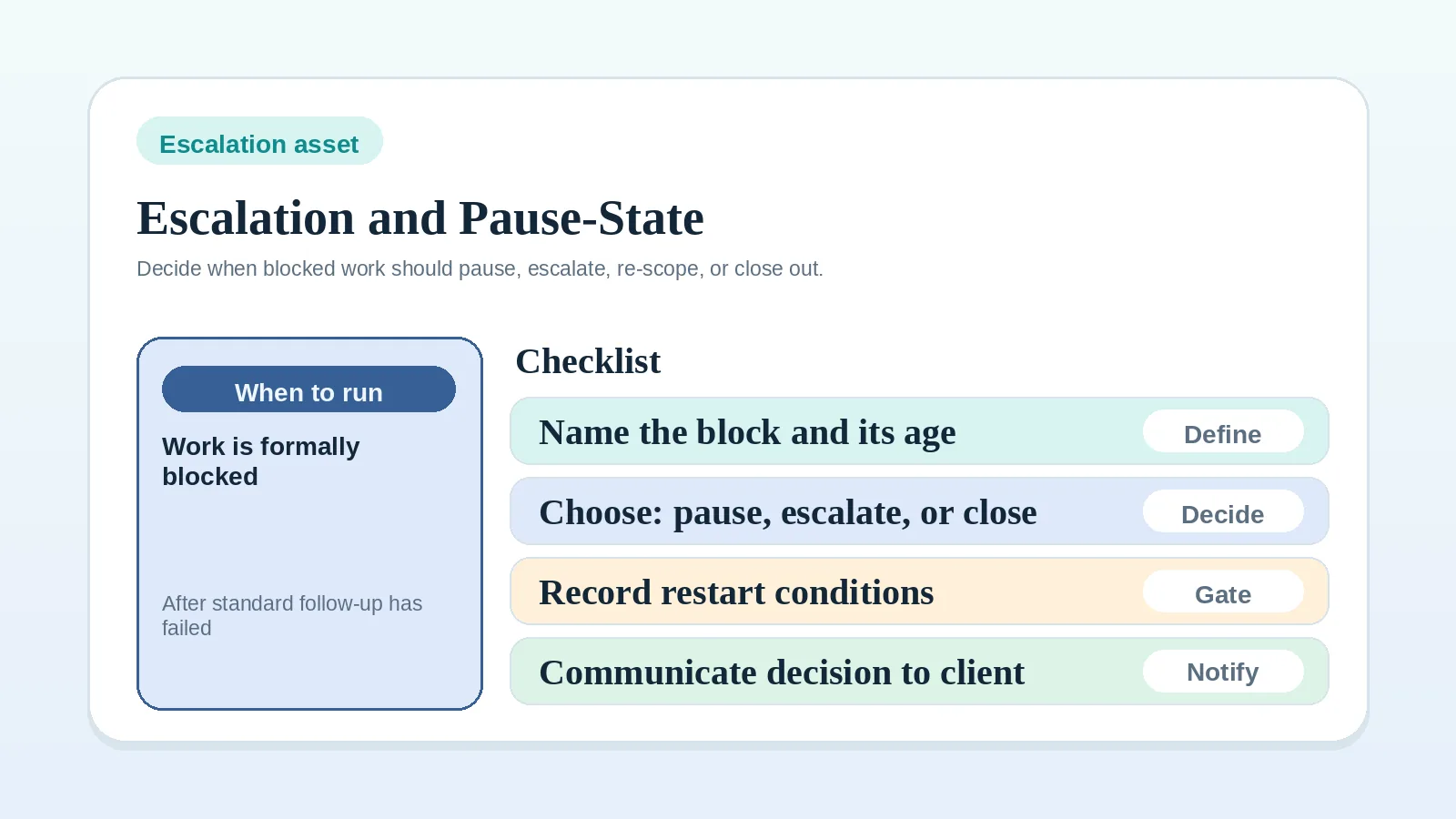
- a pause or escalation condition defined for the engagement: Escalation and pause-state worksheet for solo operators;
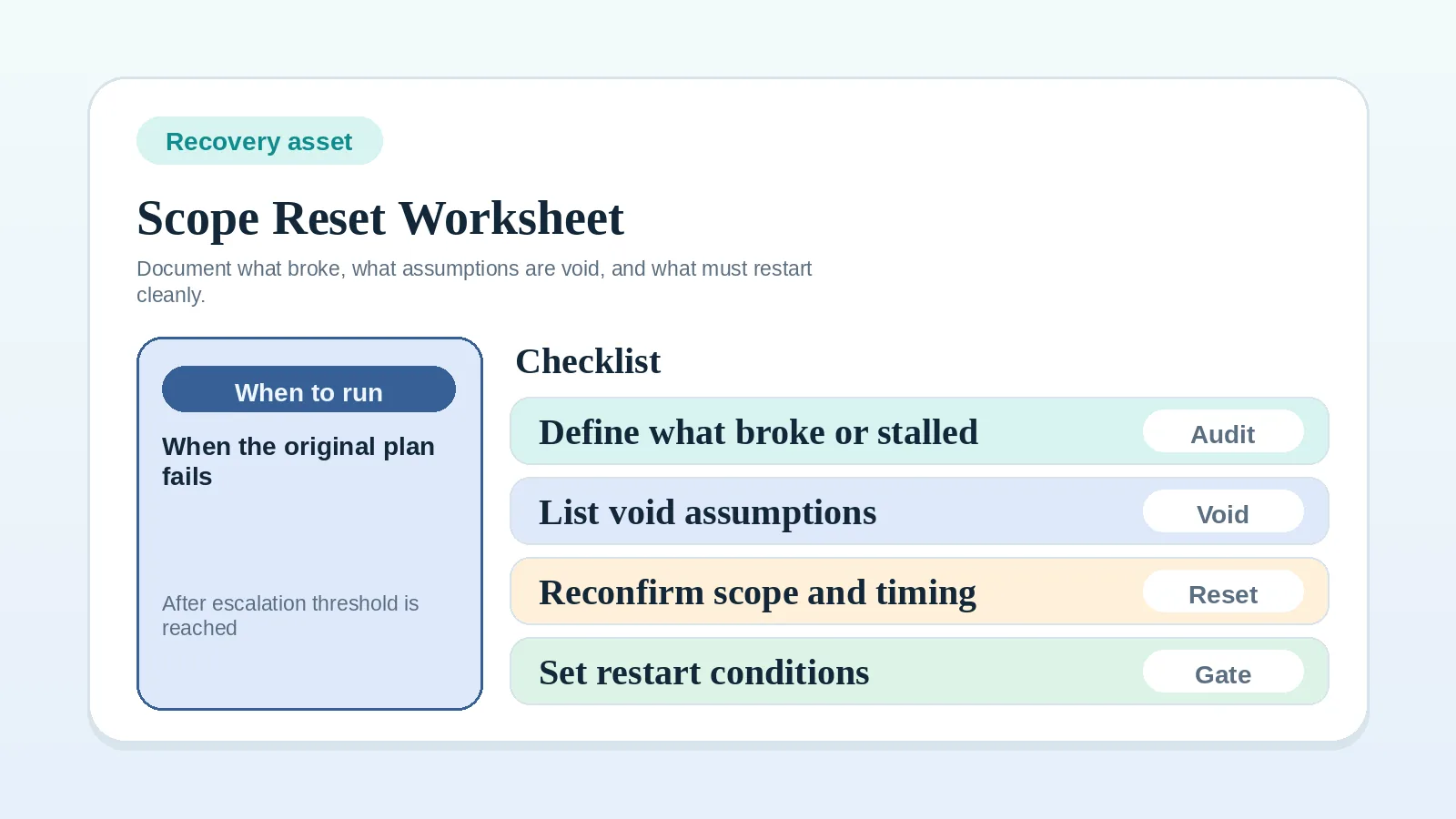
- revision churn or conflicting input that has broken the review plan: Scope reset and recovery worksheet for solo operators, before treating the next round as normal;
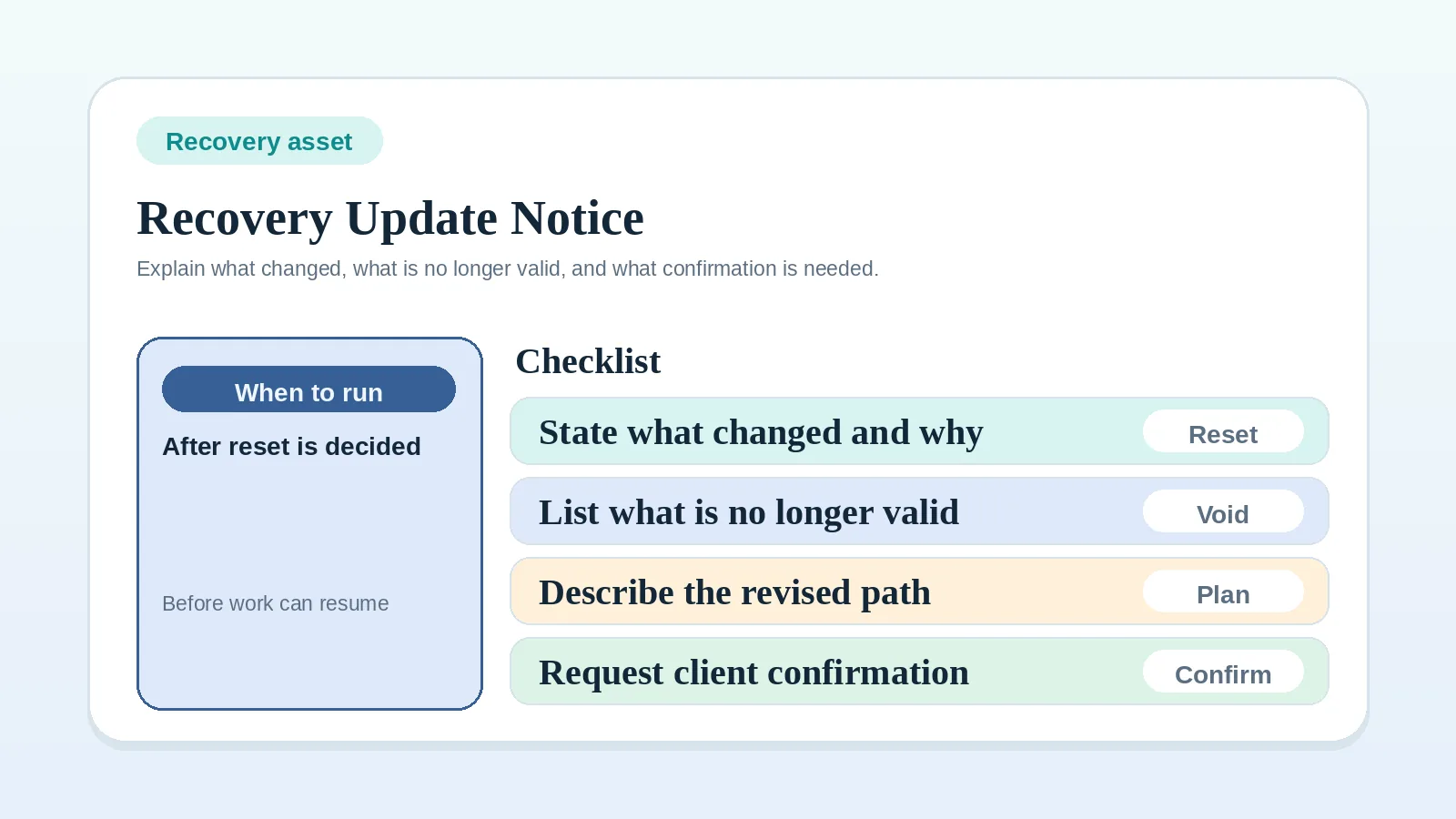
- a decided reset that stakeholders need to hear in one message: Recovery update template for delayed projects.
Practical review map
| Phase | Main question | Output |
|---|---|---|
| Review start | Is there one clear version under review? | Visible review state |
| Revision capture | What exactly is changing? | Logged revision request |
| Owner check | Who must respond and who can approve? | Clear next action and approval owner |
| Round control | Is this still ordinary review or a reset conversation? | Bounded review sequence |
| Final approval | What version is accepted? | Stable approved proposal |
| Transition | What moves into contract and onboarding? | Approved version and, after signature, the onboarding inputs |
Where proposal review loses state
- comments arrive from several stakeholders with no final approver,
- revision requests are answered in chat but not reflected in the actual proposal record,
- proposal edits continue after the team is already preparing kickoff,
- no one can tell whether the latest version is still under review or already approved,
- pre-signature revisions turn into post-signature delivery changes without a decision.
Controlled review outcome
The proposal can move into contract and onboarding when:
- proposal review starts and ends in a visible state,
- revision requests are captured clearly,
- approval authority is explicit,
- final approval can be pointed to without guesswork,
- onboarding starts from an approved and signed agreement.
After approval and signature, continue to Client onboarding workflow for freelancers and consultants.