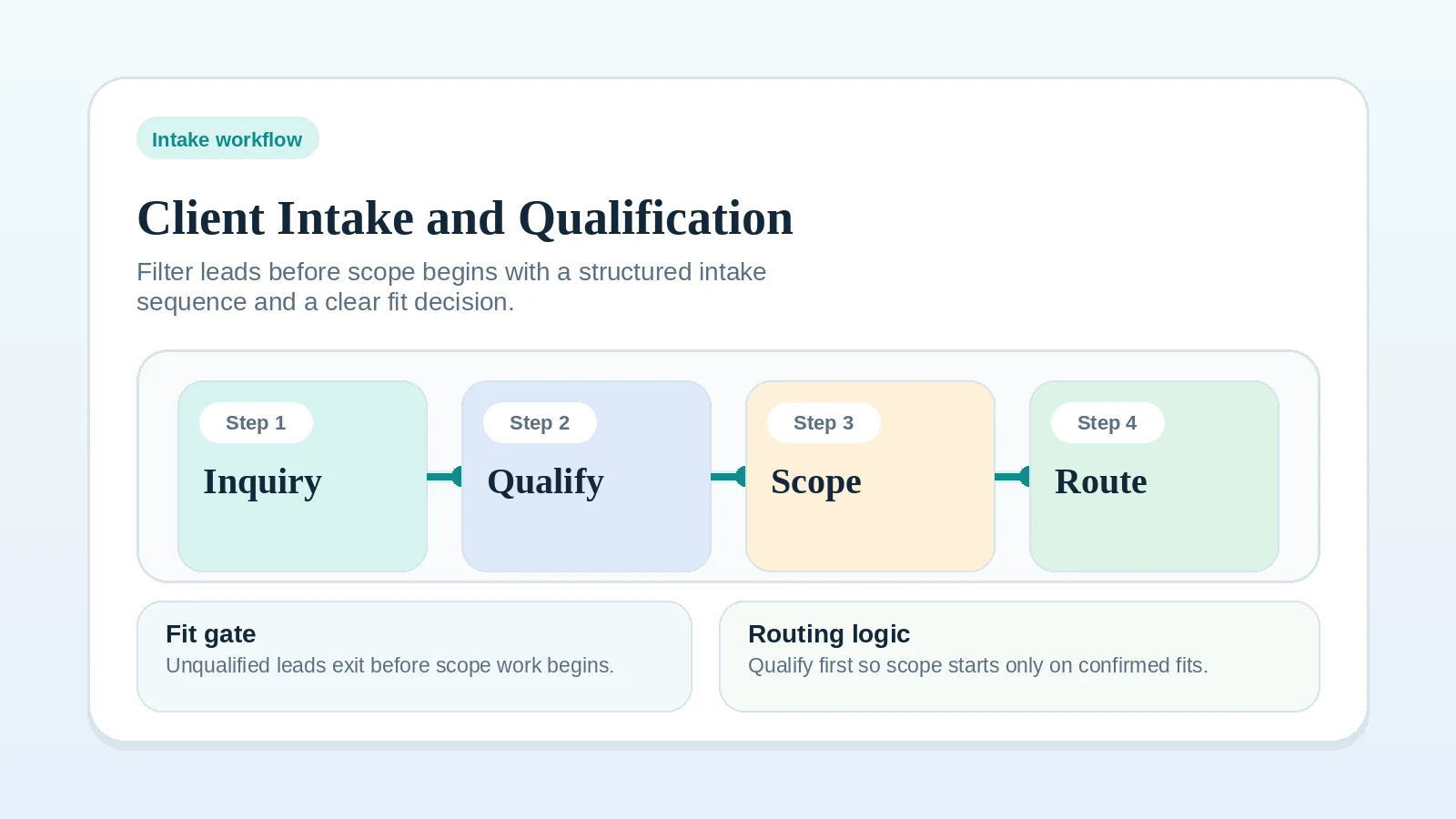
An intake workflow should decide which inquiries warrant a discovery call. It captures the information needed to reject, nurture, or advance a lead before proposal and delivery work begins.
Tighten intake first if your calendar fills with low-fit calls, proposals get drafted for weak opportunities, or delivery starts with missing context. The guide assumes you have mapped the full lifecycle and that lead quality, qualification, or the location of intake status is the first bottleneck.
The decisions intake must support
An intake workflow:
- filters out work that should never reach discovery,
- captures the information required for a useful sales conversation,
- protects delivery capacity from poor-fit engagements,
- hands the right context into proposal and contract work.
Lead collection is incomplete until each inquiry receives a routing decision.
Outcome definition
By the end of intake, every lead should have one outcome:
- Reject politely (not a fit),
- Nurture for later (timing mismatch), or
- Book discovery (qualified now).
Step 1: define required intake fields
Collect only data you will use in a decision:
- service needed,
- timeline expectation,
- budget range,
- decision-maker status,
- current blockers,
- desired outcome.
If a field does not affect go/no-go, remove it.
Collect implementation detail later, during onboarding.
Step 2: build qualification criteria
Use a simple fit rubric and define what each label means for your service:
| Dimension | Not a fit | Needs review | Ready to proceed |
|---|---|---|---|
| Service fit | Outside scope | Partial fit | Matches the offered service |
| Budget fit | Below the stated floor | Budget needs clarification | Within the stated range |
| Timeline realism | Conflicts with a firm constraint | Feasible only if assumptions change | Fits available capacity and dependencies |
| Decision readiness | Gathering general information | Stakeholders or criteria are unclear | Decision path and next step are known |
Reject or nurture a lead when a non-negotiable criterion is not met. Review mixed results manually. Book discovery when the required fit criteria are met and the call has a defined purpose.
Step 3: add decision tree logic
- If a required budget or timeline condition is not met, reject the inquiry.
- If the service fits but the timing does not, nurture the lead for later.
- If the required fit criteria are met, offer discovery booking.
Apply the same documented criteria to each inquiry.
Step 4: decide where intake status lives
Before you add forms, routing rules, or booking links, decide where intake status should be updated:
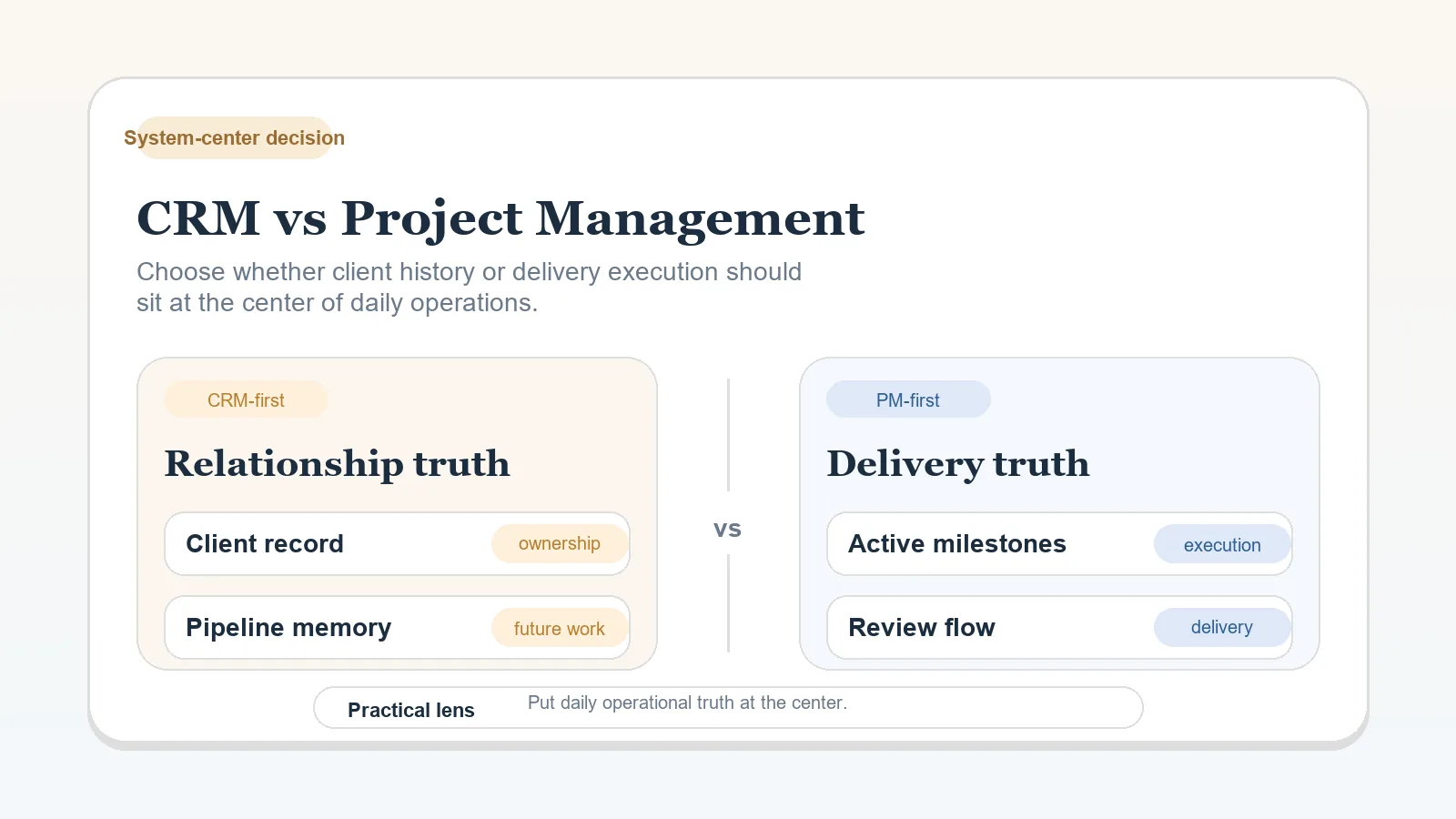
- If sales volume is the main complexity, a CRM-first flow may make sense.
- If delivery workload is the main complexity, a PM-first flow can still work as long as pre-sale status is visible.
- If you cannot explain where “qualified and ready for proposal” lives today, you do not yet have a system of record.
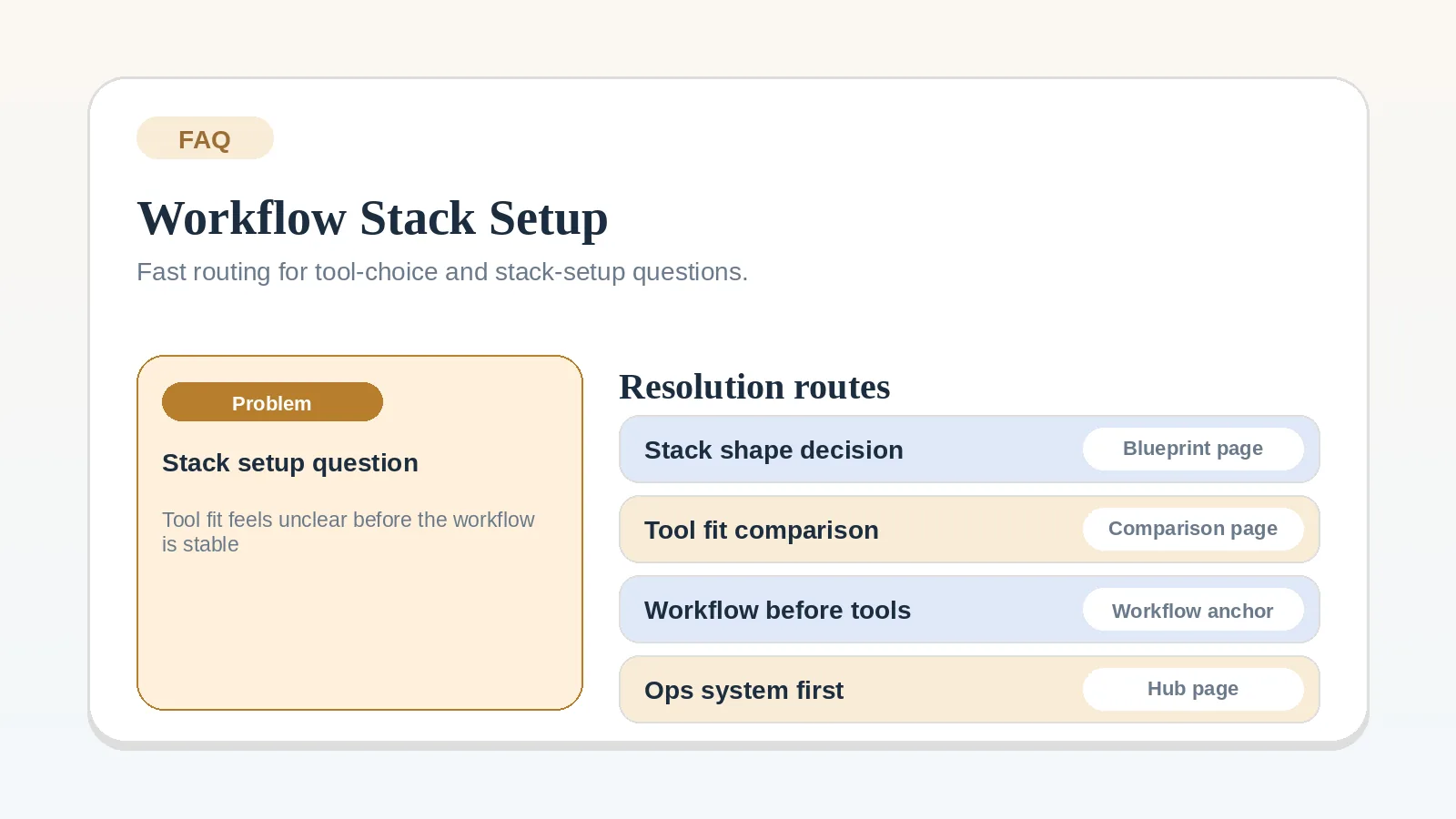
Use System of record if you need the definition, then use CRM vs project management for client workflows to make the actual operating decision.
Step 5: hand off to proposal and contract work
For discovery-qualified leads, pass these fields forward:
- core goals,
- scope constraints,
- key deadlines,
- stakeholders,
- decision criteria.
Do not start proposal drafting until this handoff packet exists.
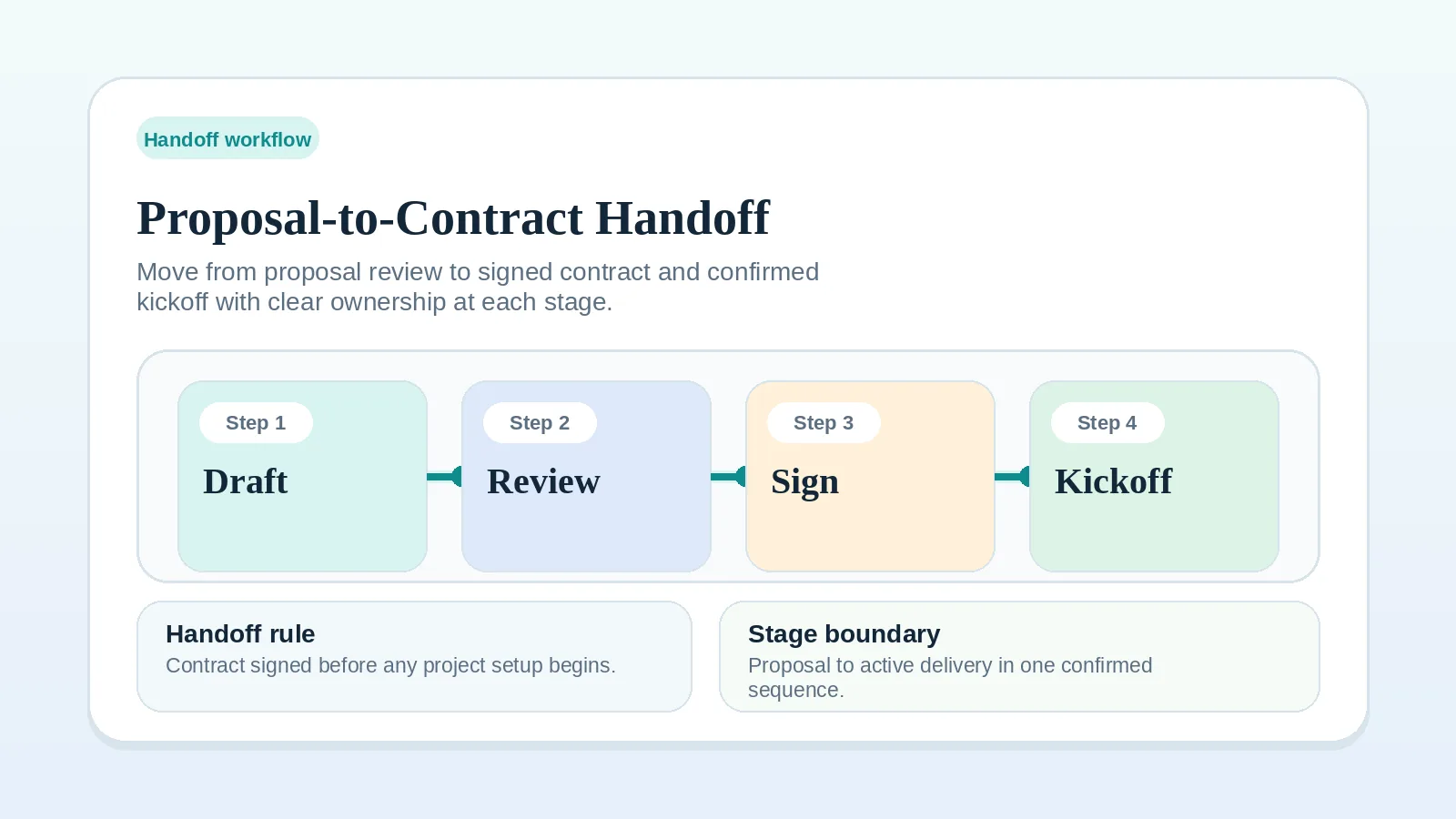
Once a lead qualifies, continue with Proposal-to-contract handoff workflow setup.
Signs the intake rules need revision
Revise the intake rules if:
- you regularly make exceptions for leads that miss a non-negotiable fit criterion,
- discovery calls are used to gather basic qualifying information,
- proposals include assumptions that were never captured during intake,
- the client says yes, then onboarding reveals major missing context.
Intake mistakes and corrections
- Asking questions without using the answers: remove fields not tied to qualification criteria.
- Booking every lead before applying fit criteria: apply the documented criteria before scheduling.
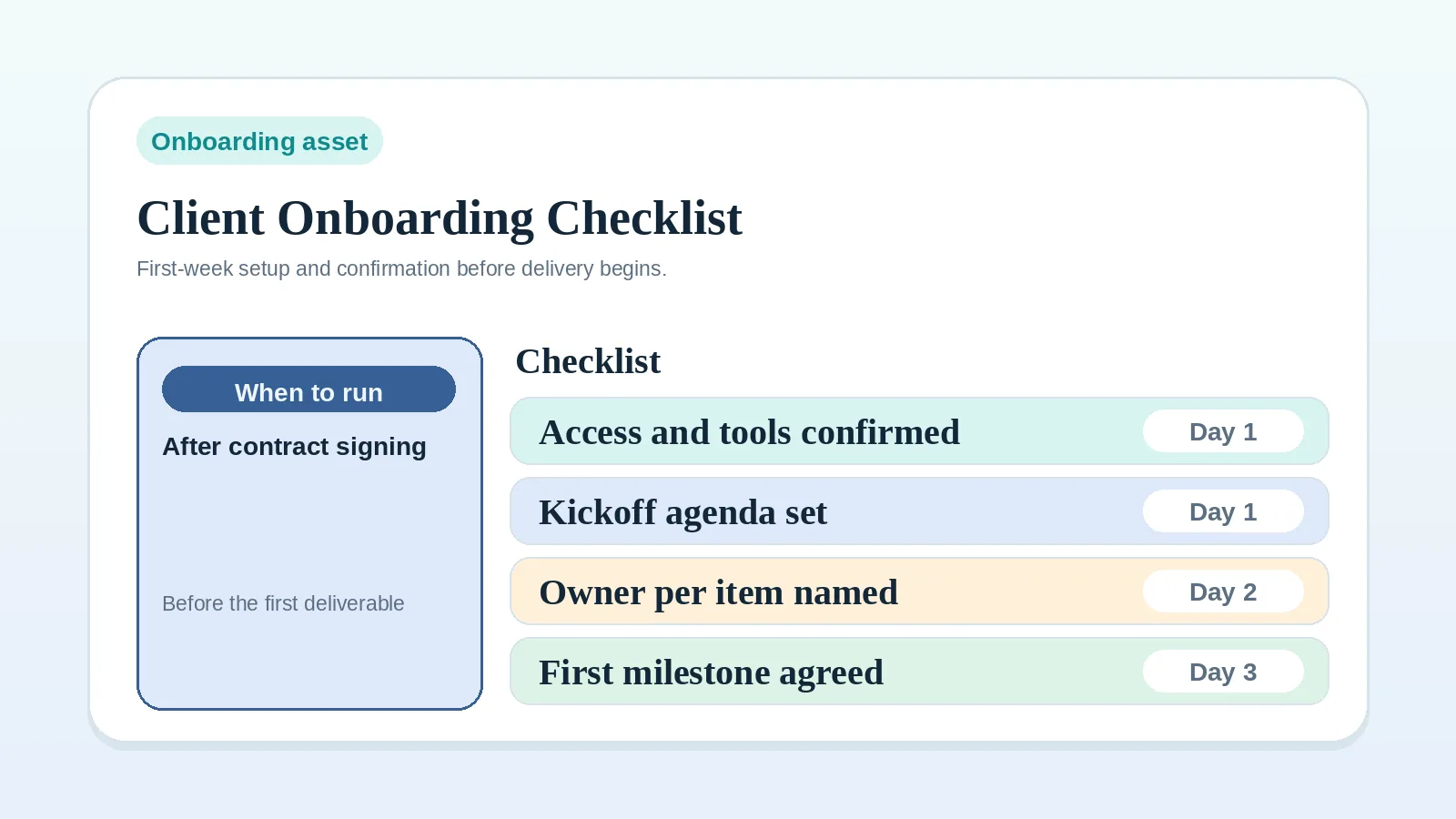
- Mixing intake and onboarding details: keep intake focused on the fit decision, then use the onboarding checklist after signing.
Tool and system notes
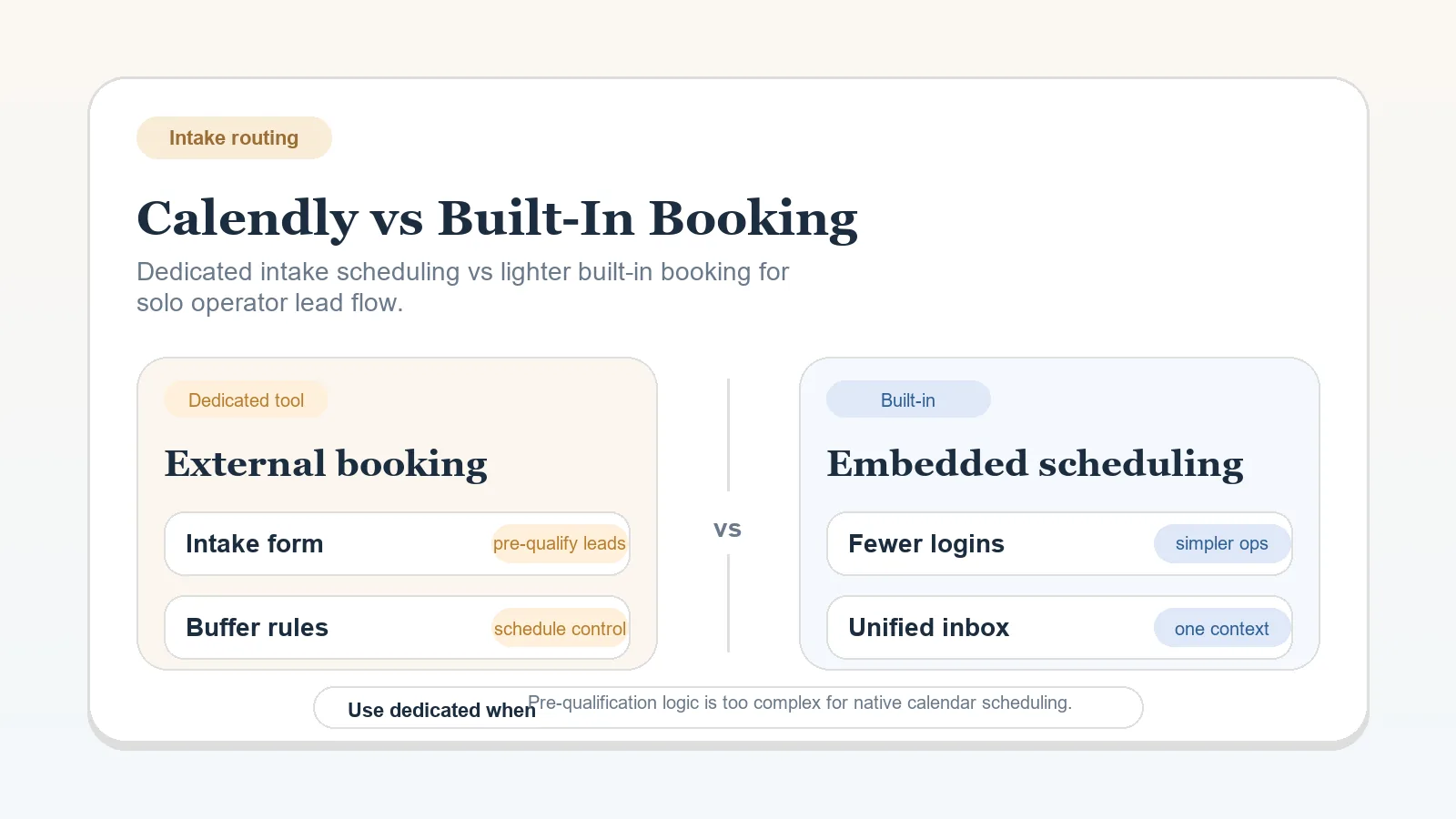
If calendar control, rather than qualification, is the main intake friction, compare Dedicated booking tool vs built-in scheduling.
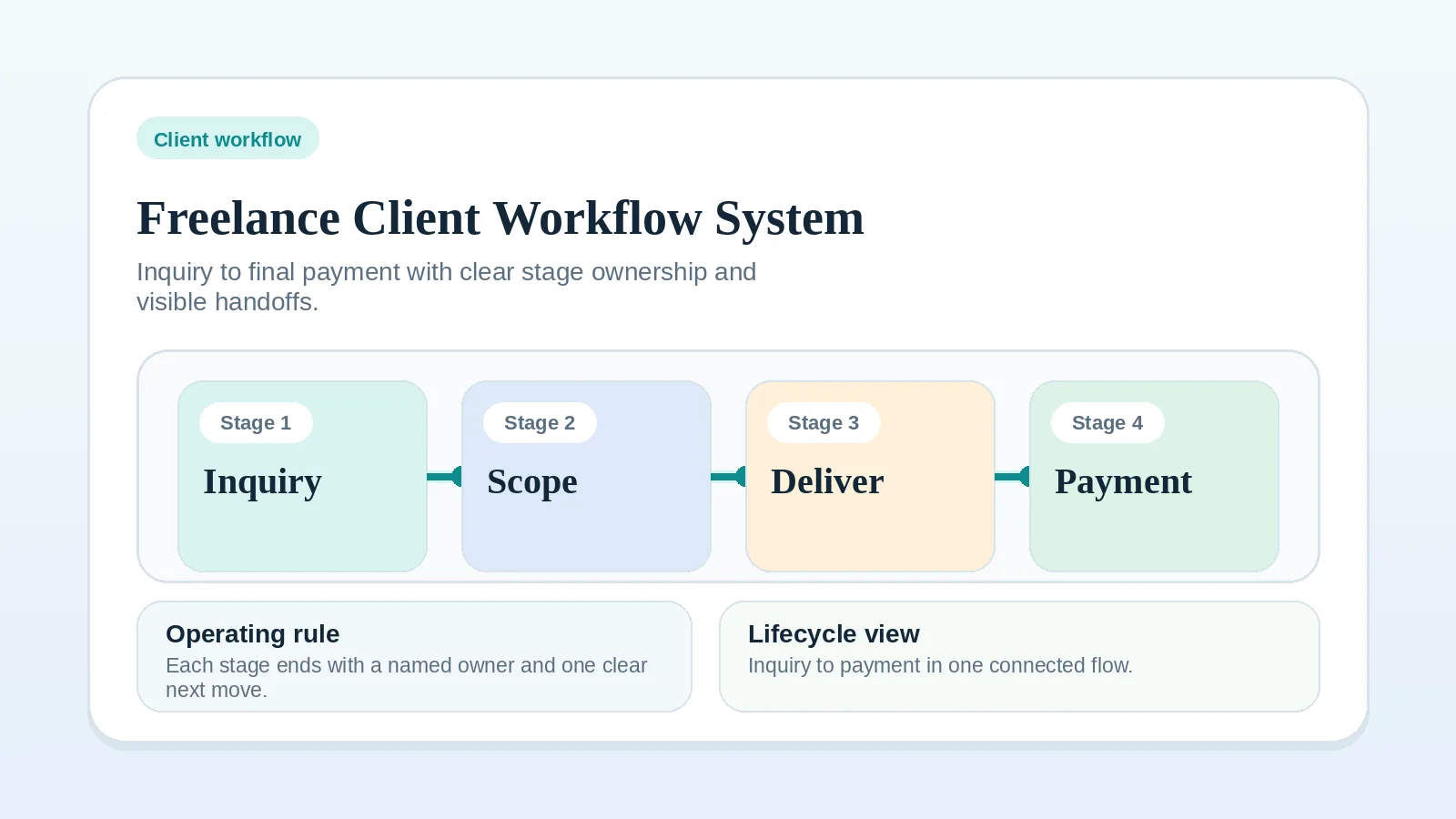
For full process context, see Freelance client workflow system: inquiry to final payment.
Intake setup checklist
- Define minimum service-fit criteria.
- Set budget floor and timeline boundaries.
- Create intake form with required decision fields.
- Apply the fit rubric to a small set of recent inquiries.
- Adjust the criteria based on recorded outcomes.
- Connect qualified leads to the proposal handoff path.
- Prepare the signed-client transition with Client onboarding checklist for freelancers and consultants.