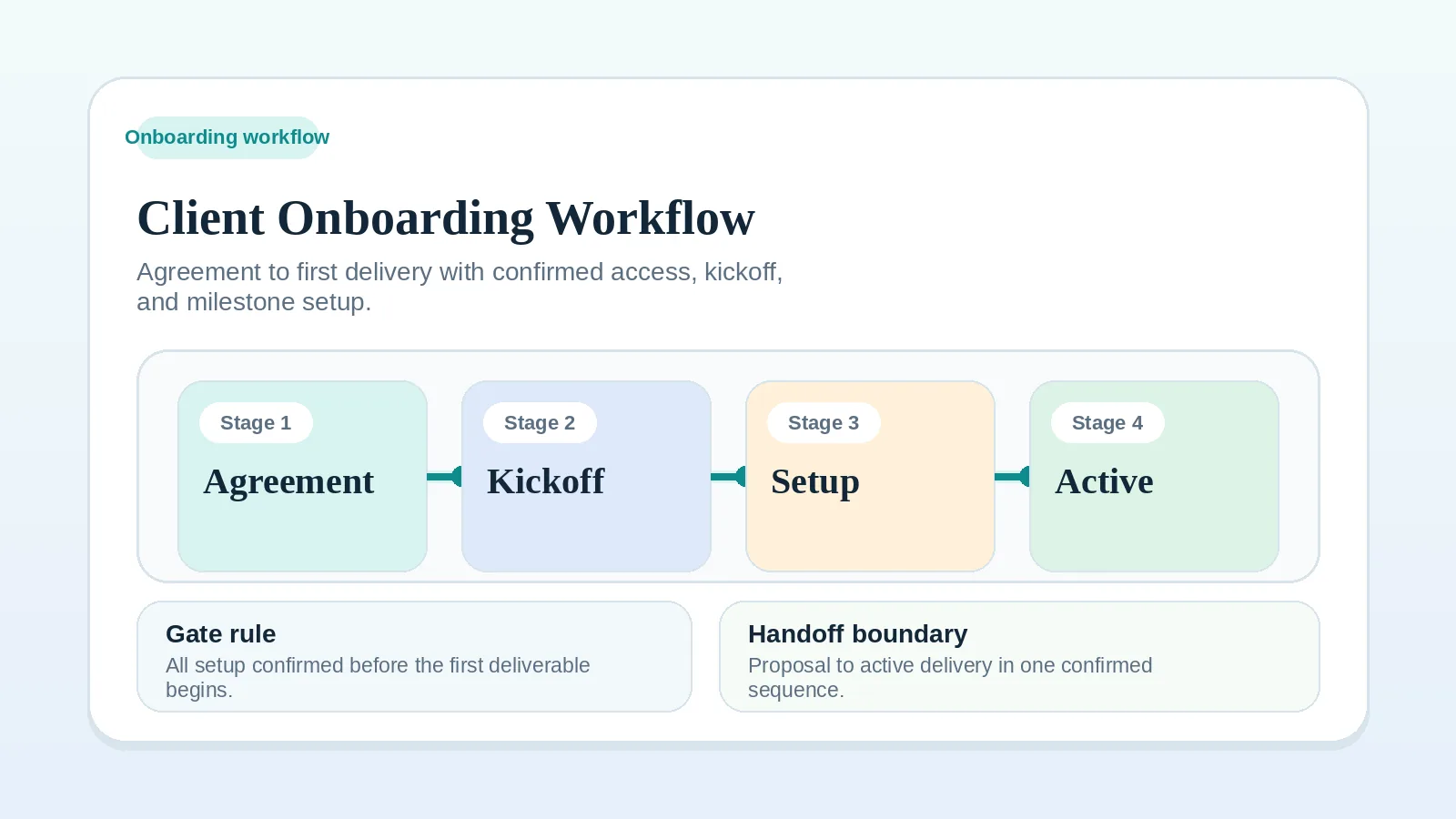
Onboarding converts a signed agreement into a project record that can support active delivery. It carries scope, owners, dependencies, approval rules, and billing triggers into the working system.
Finish onboarding before work begins. A welcome message can be part of it, but it does not replace the operational setup.
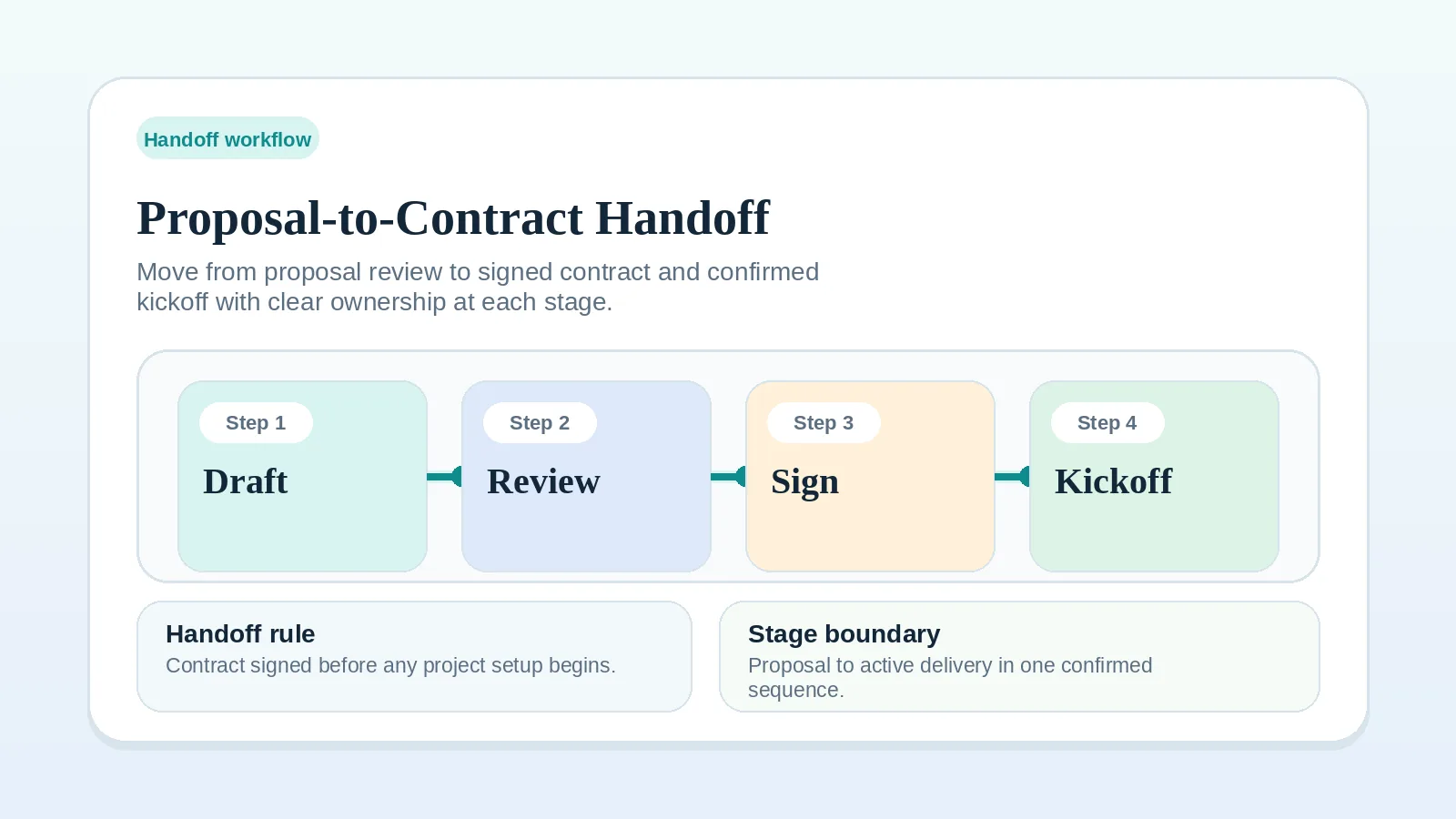
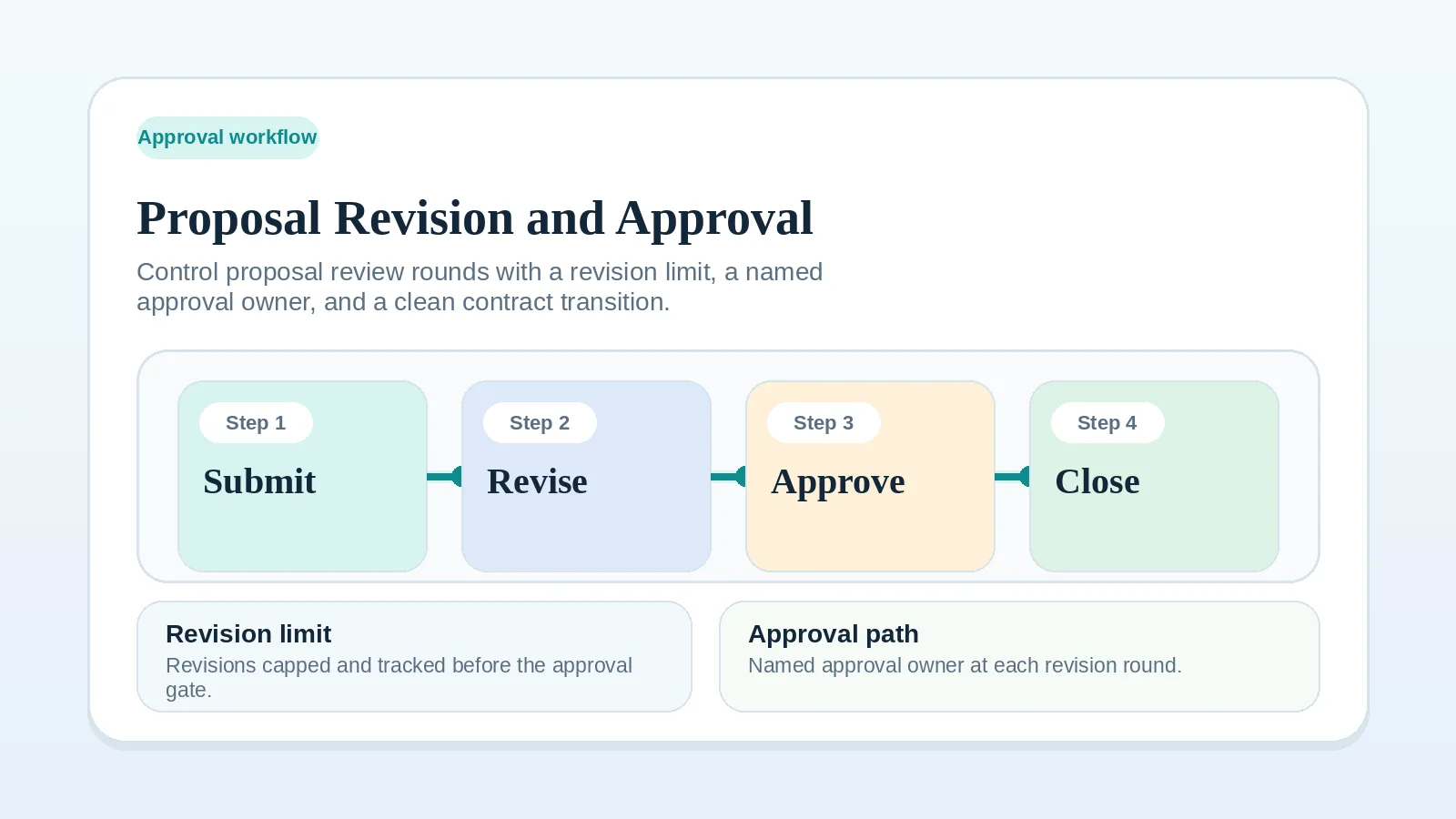
If scope, timeline, or commercial rules are still unsettled, fix Proposal-to-contract handoff workflow setup first. If the proposal is still under review or revision before signature, use Proposal revision and approval workflow first.
Who needs this onboarding workflow
- freelancers and consultants starting scoped client work,
- operators who want to resolve kickoff questions before delivery,
- businesses where access, approvals, or communication rules remain unclear after signing.
Required onboarding outputs
By the end of onboarding, the project should have:
- one clear scope record,
- a live first milestone,
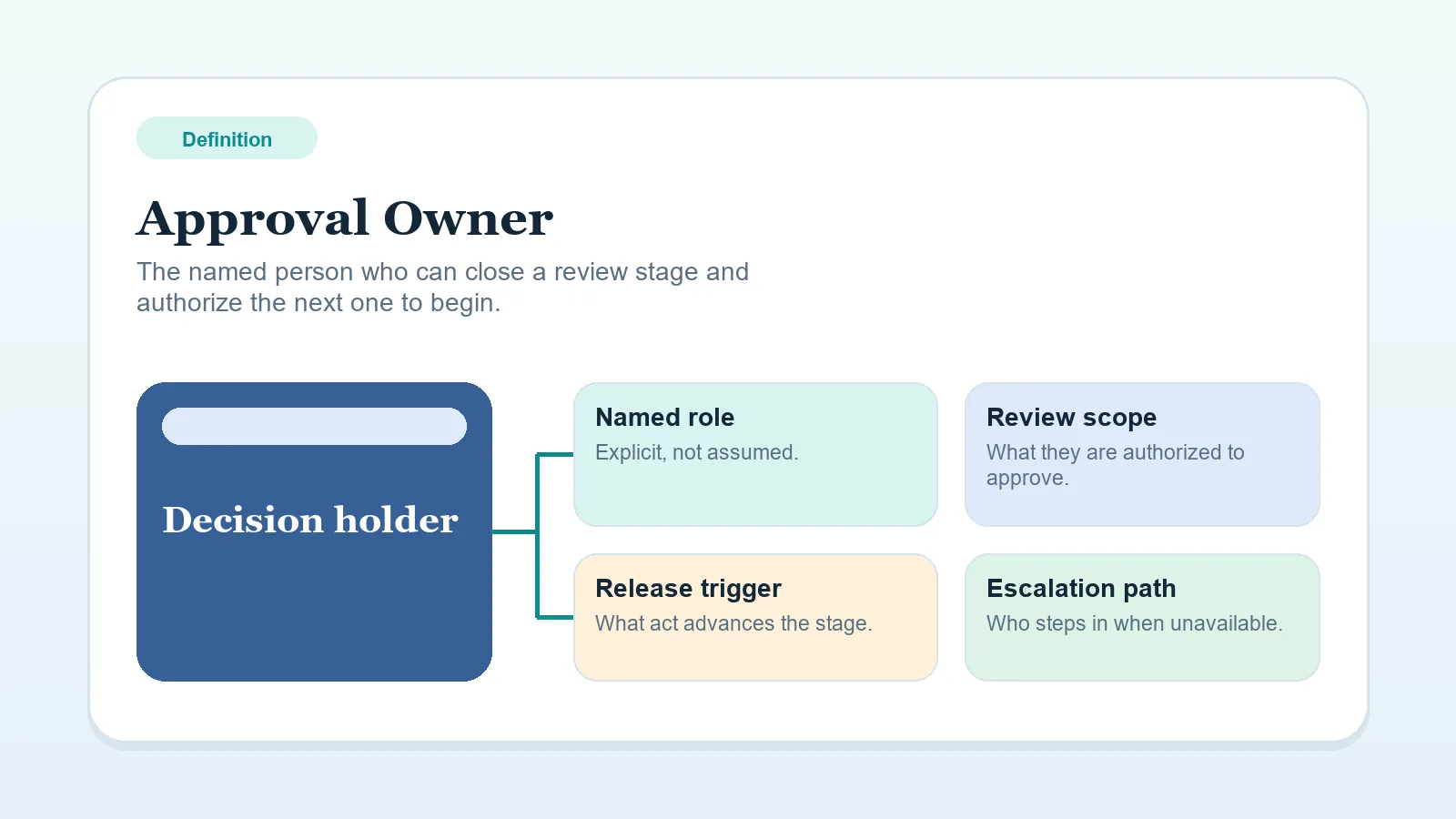
- one named approval owner,
- an agreed communication rhythm,
- a visible billing trigger for the first invoice event.
If any item is missing, record the blocker and its owner. Start only work whose required inputs are ready, or document an agreed change that defines what can proceed and what remains blocked.
Where onboarding sits in the sequence
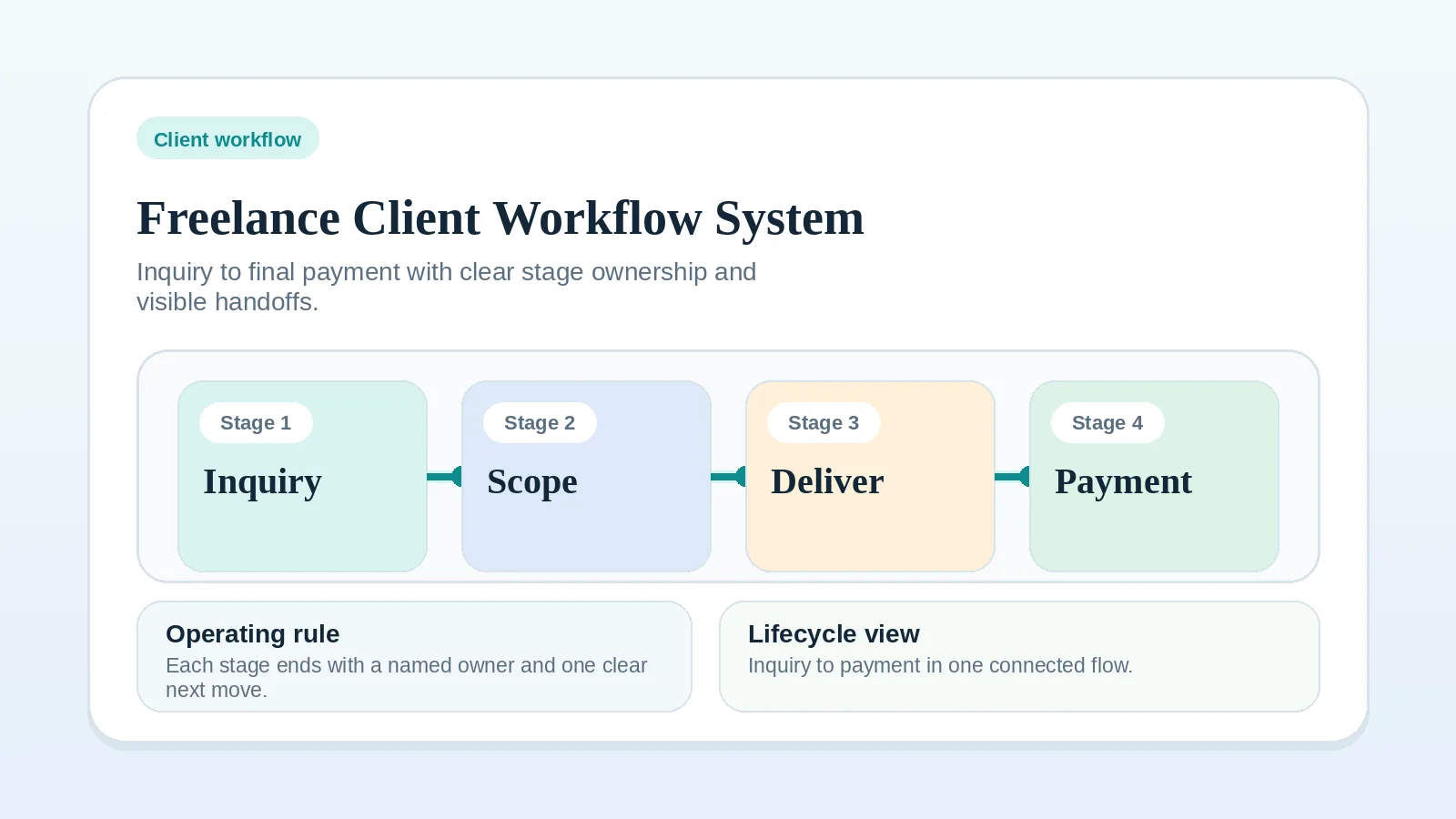
Onboarding follows proposal review and signature. It ends when milestone delivery can start from a usable setup. For the full lifecycle model, use Freelance client workflow system: inquiry to final payment.
Step 1: translate the signed agreement into a working project record
Move these items out of proposal language and into the live delivery system:
- final deliverables,
- exclusions,
- milestone sequence,
- owners,
- dependencies,
- invoice trigger points.
The working project record should live in the system that will hold milestone status later. Choose one authoritative project record instead of moving delivery between duplicate records.
Step 2: confirm access, assets, and blockers before kickoff
Collect:
- required logins or invitations,
- files, brand assets, or source materials,
- stakeholder contact details,
- any missing items that block the first milestone.
Treat missing inputs explicitly. Do not rely on the kickoff call to surface all blockers that affect kickoff.
If a required item is missing, log it as a blocker with an owner and a due date. “Waiting on client” is not enough. Name the exact dependency and who is responsible for resolving it.
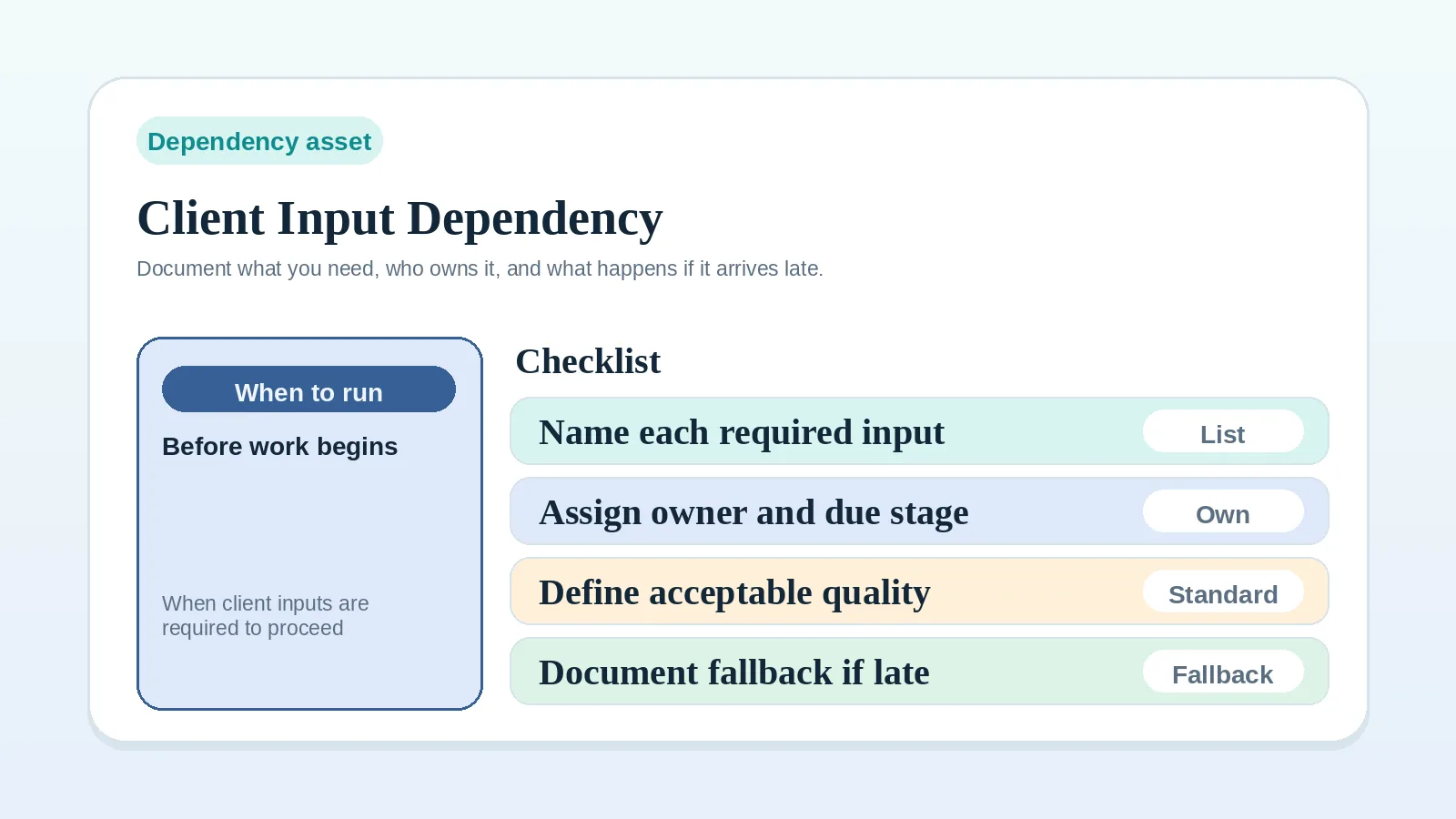
If the client-side inputs themselves are still too vague to track cleanly, document them with Client input dependency worksheet for solo operators before scheduling kickoff.
Step 3: set communication and approval rules
Define:
- the main update channel,
- the default update cadence,
- who can approve deliverables,
- response timing agreed for the engagement,
- how blockers or urgent issues are escalated.
If the project has more than one stakeholder, name the final approval owner early. If that role is unclear, use Approval owner before active delivery begins.
This is also the stage to define where routine updates live. When status requests and replies spread across channels, the working record becomes harder to maintain.
Step 4: activate the first milestone
A project is not fully onboarded until the first milestone is usable.
That means:
- the milestone is visible in the system of record,
- the owner is clear,
- the due date is visible,
- dependencies are named,
- the completion standard is known.
Use this test: can you open one project record and see the first milestone, the owner, the due date, the dependency list, and the review point without opening a contract PDF or searching chat?
Step 5: align commercial controls with delivery
Before onboarding ends, confirm:
- when the first invoice is triggered,
- whether any payment required before delivery has been received,
- how invoice timing connects to the milestone,
- what happens if a client dependency pauses the work,
- how scope changes will be handled once delivery is active.
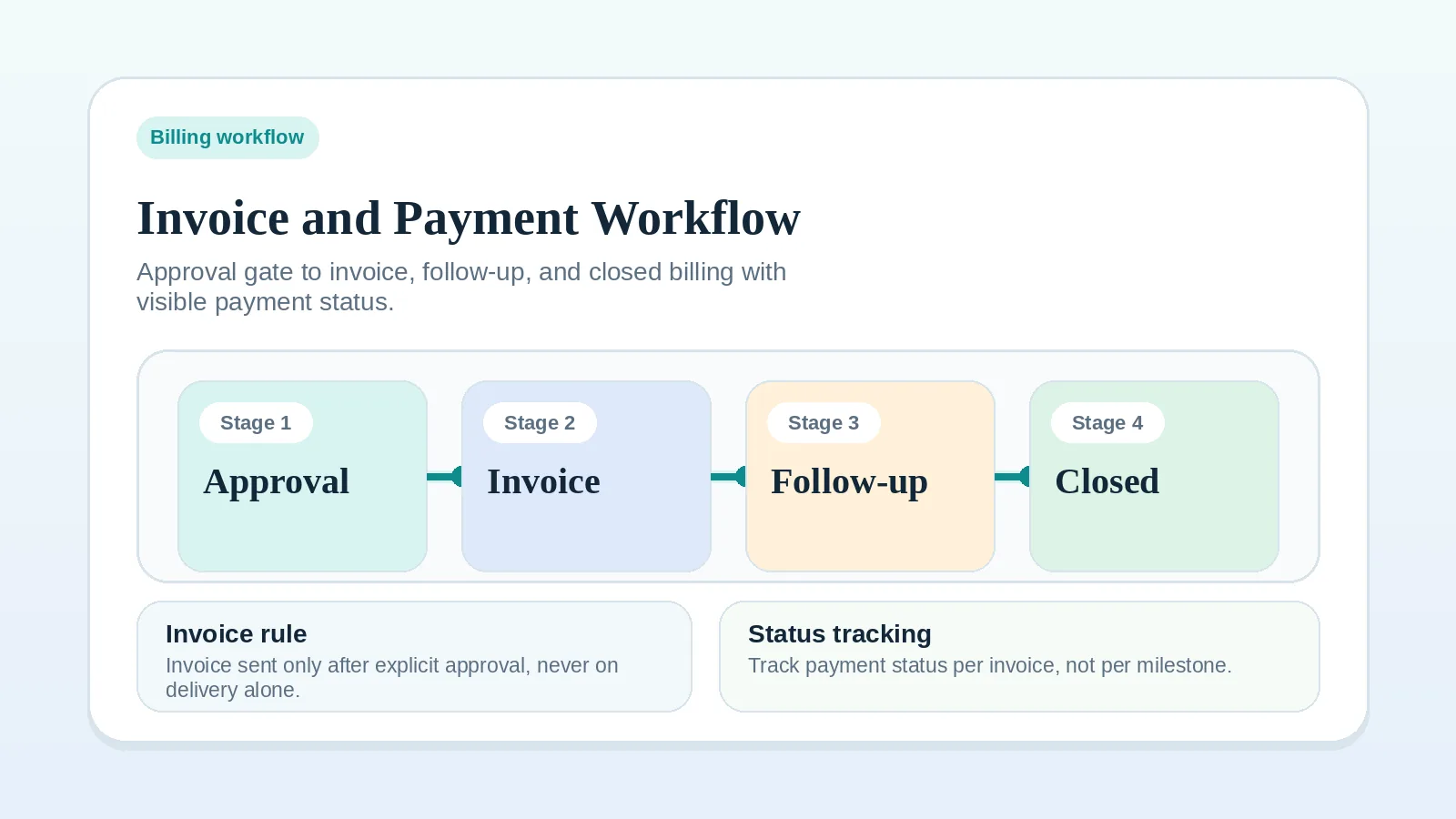
If those rules live only in the contract PDF, move the operational signals into the active project record. For the billing process, use Invoice and payment workflow setup.
Kickoff readiness test
Do not schedule active delivery until you can answer yes to these questions:
- Is the signed scope translated into the live system of record?
- Are the access and inputs needed for the work being started ready and checked?
- Is there one named approval owner for the first review point?
- Is the communication cadence visible and agreed?
- Is the first billing event tied to a defined milestone or kickoff trigger?
- Has any payment required before starting been received, or has a different start condition been agreed?
Resolve every blocking “no” before active delivery starts. If both parties agree to proceed with limited work, record that scope, its available inputs, the remaining blocker, and the effect on timing. Logging a missing input does not make dependent work ready.
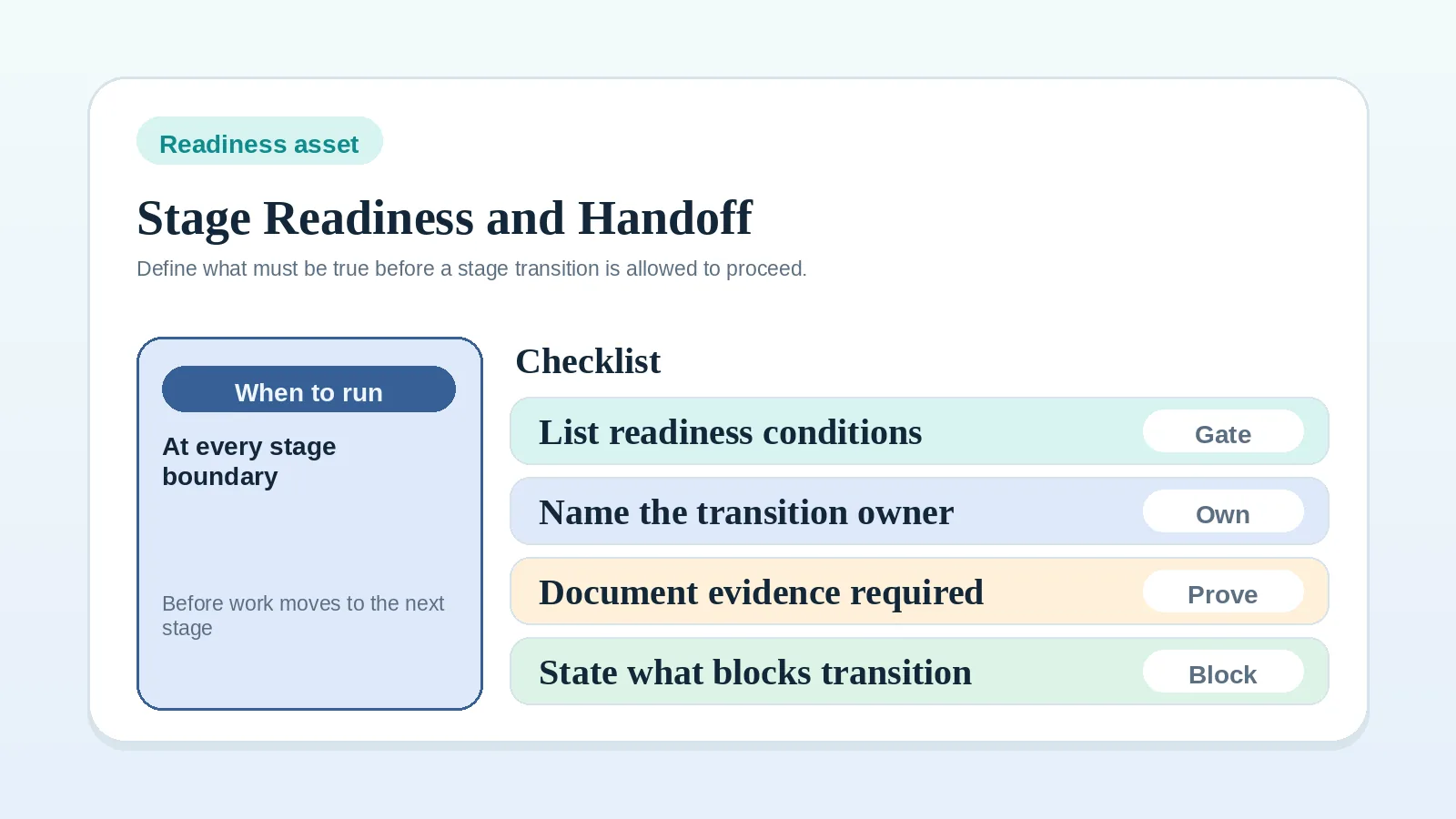
If you need to write the readiness rule down more explicitly, use Project start handoff readiness worksheet before scheduling delivery.
Kickoff sequence
| Stage | Main question | Output |
|---|---|---|
| Agreement translation | What exactly was sold? | Live scope and milestone record |
| Access and asset collection | What is still missing? | Blocker list and access status |
| Communication setup | How will updates and approvals work? | Visible cadence and approval path |
| First milestone activation | What happens first and who owns it? | Kickoff-ready project state |
| Commercial control check | What billing and scope rules are active now? | First invoice trigger and change path |
Where onboarding breaks
- kickoff happens before access is ready,
- the client assumes broad scope because exclusions never reappear in the live record,
- no one knows who must approve the first milestone,
- billing triggers are technically defined but operationally invisible,
- onboarding ends with a meeting but not with a usable project state.
Keep onboarding within its boundary
Use onboarding for:
- operational translation of the signed agreement,
- access, assets, and stakeholder readiness,
- communication and approval setup,
- first-milestone activation.
Do not try to use onboarding to:
- renegotiate scope,
- design the whole tool stack from scratch,
- fix a delivery process that has already gone off course during active delivery.
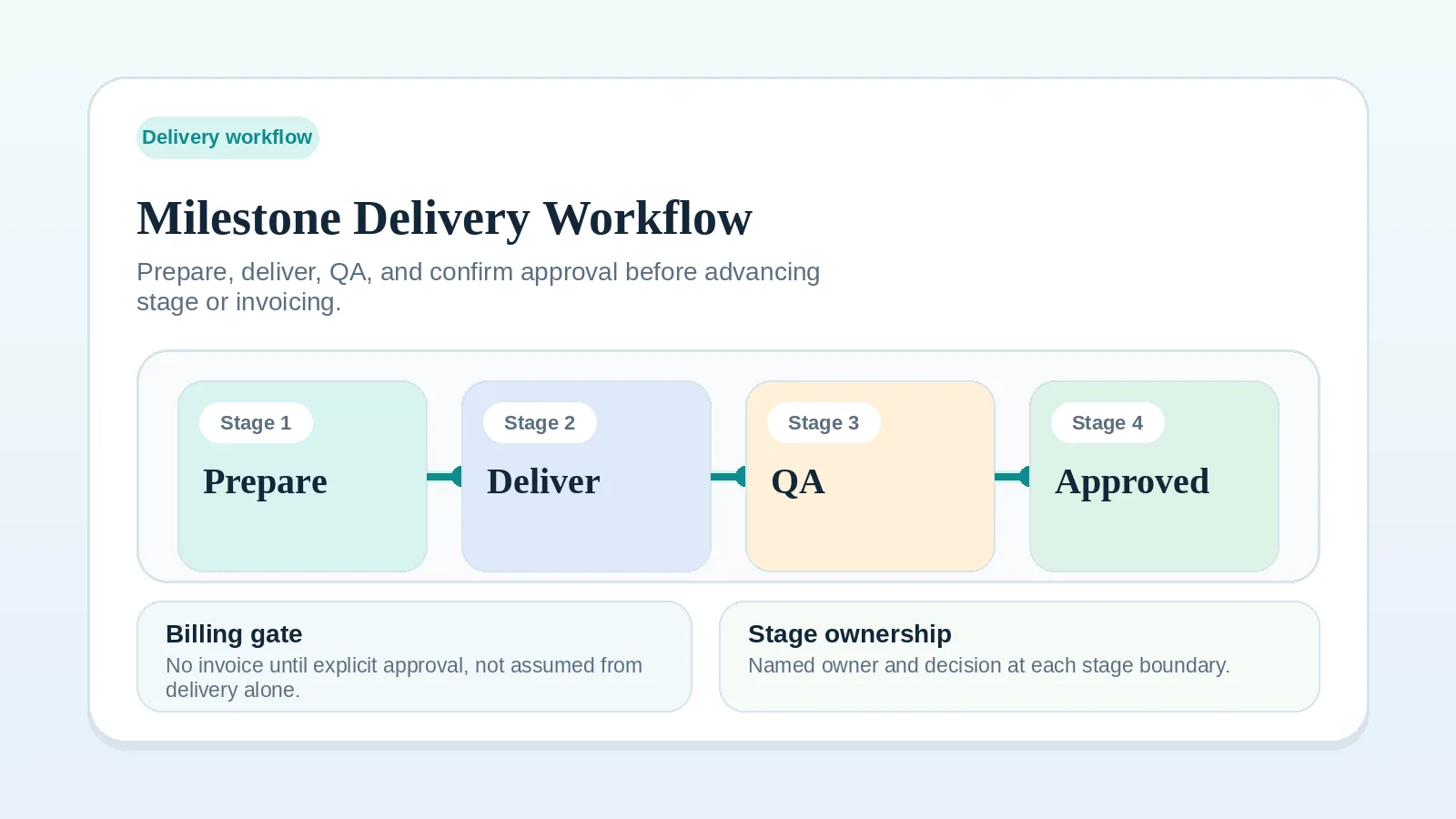
Those are better handled by Proposal-to-contract handoff workflow setup, How to choose a software stack without overbuying tools, or Milestone delivery workflow for solo service businesses depending on the unresolved issue.
Checklist and update rhythm
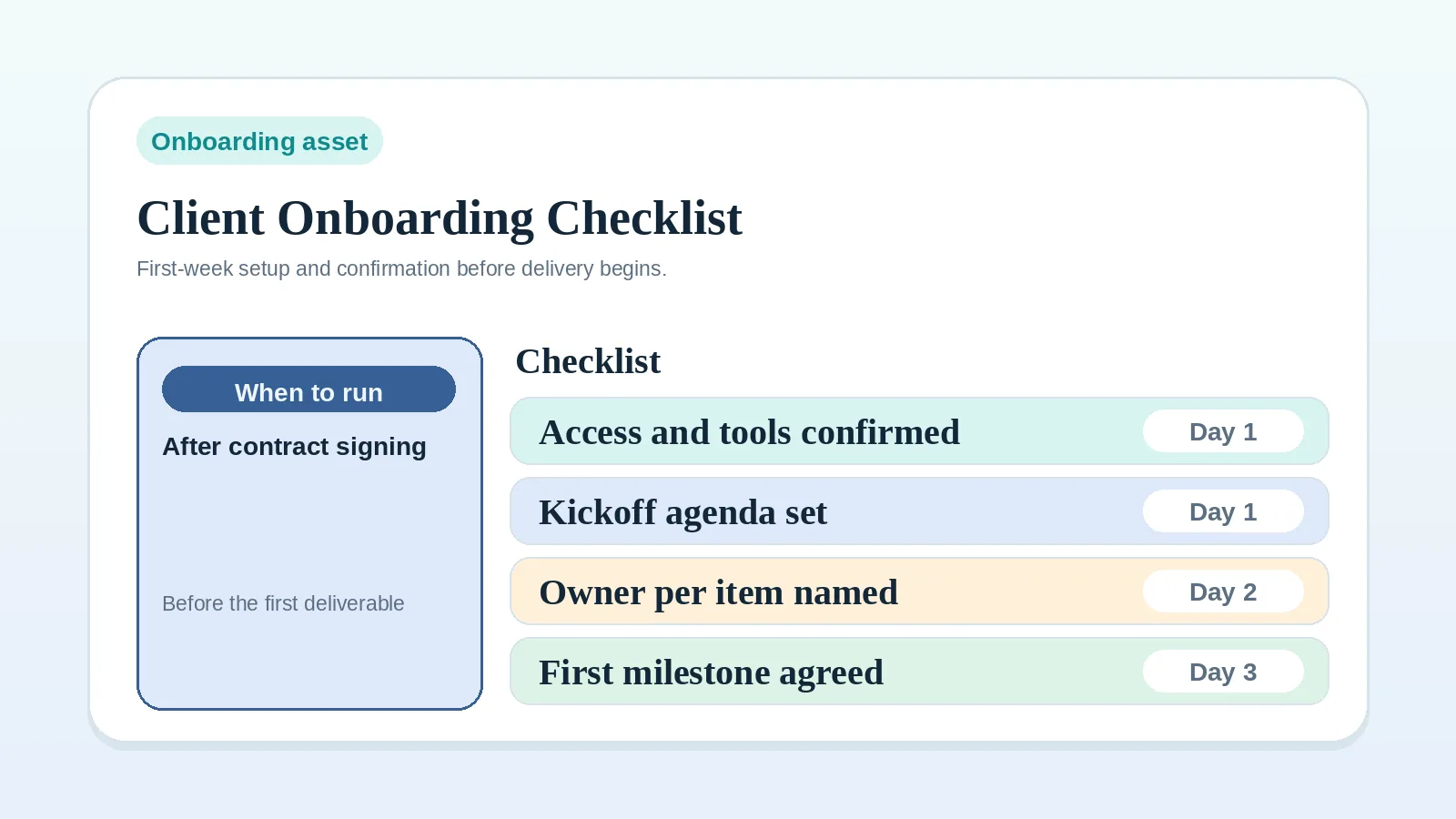
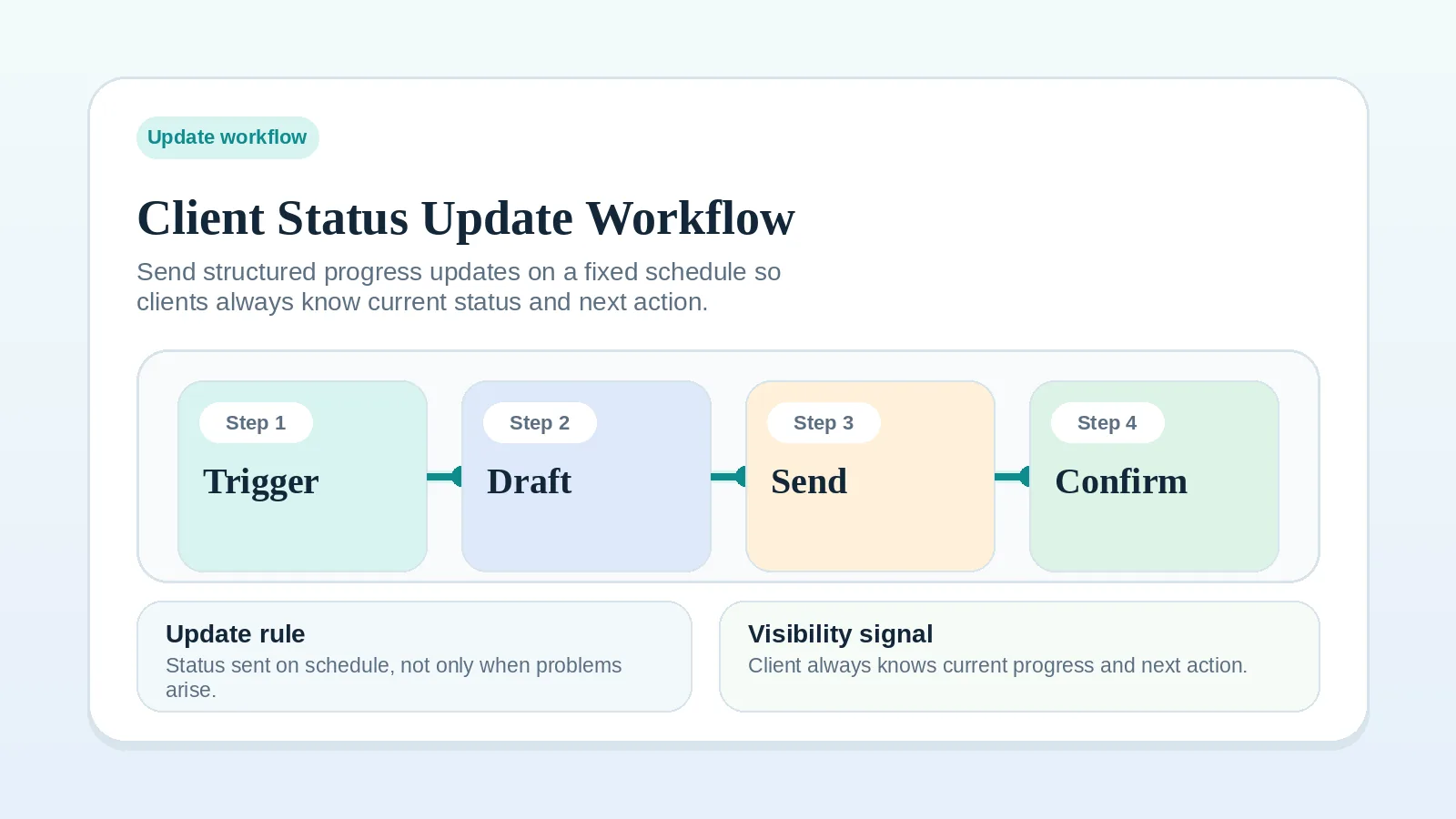
Run kickoff with the Client onboarding checklist for freelancers and consultants, and set the recurring update format with the Client status update workflow.
Onboarding completion check
Onboarding is complete after every kickoff-readiness item is either satisfied or covered by an agreed exception, and the first milestone is active in the system of record.
Once the first milestone is active, continue to Milestone delivery workflow for solo service businesses.