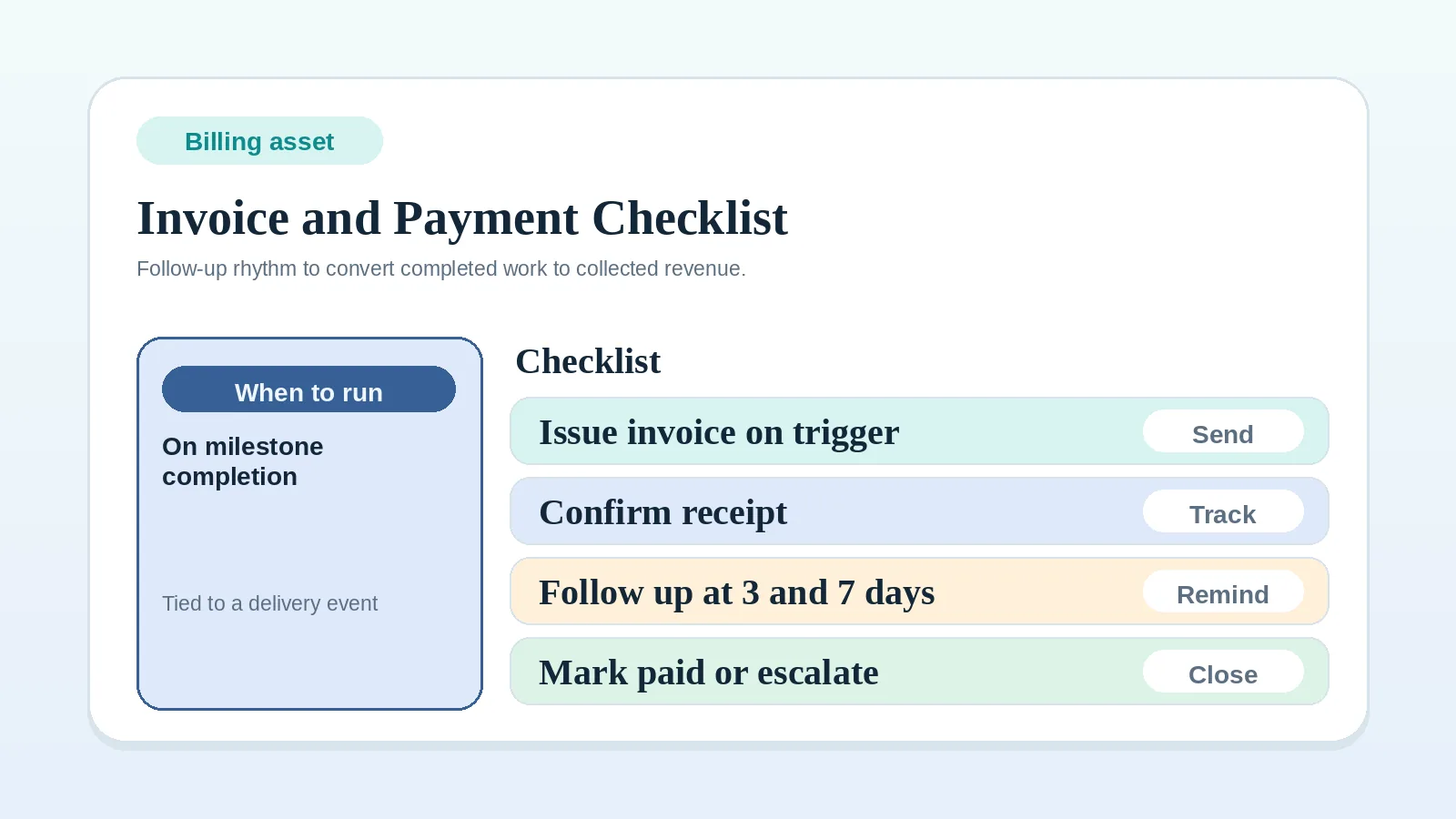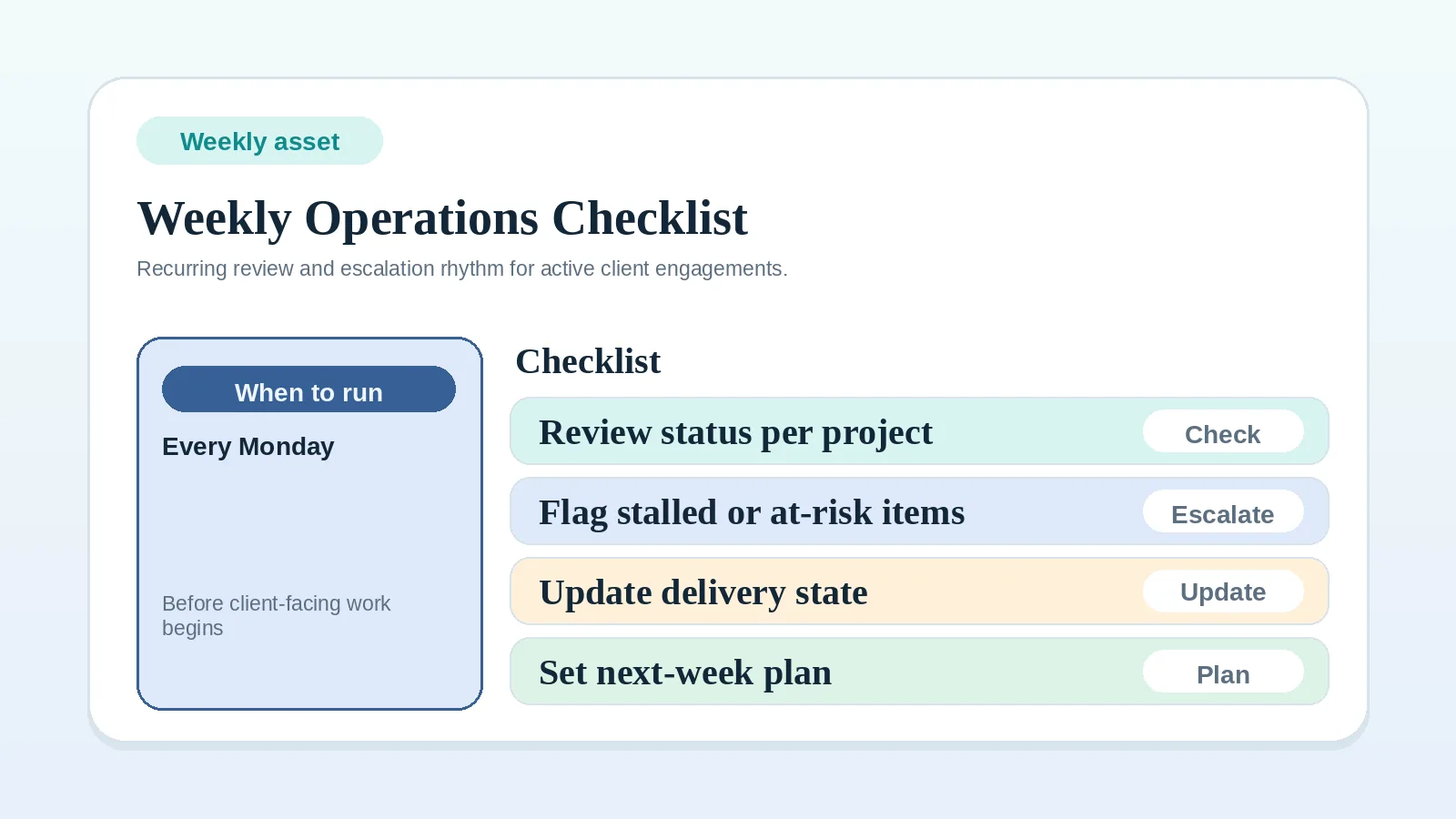
Run this review at the same point each week, working from current project and billing records. Update owners, dates, blockers, approvals, and invoice status. Keep dated reminders for actions due between reviews so an invoice or urgent client decision does not wait for the weekly check.
Define the workflow before maintaining it
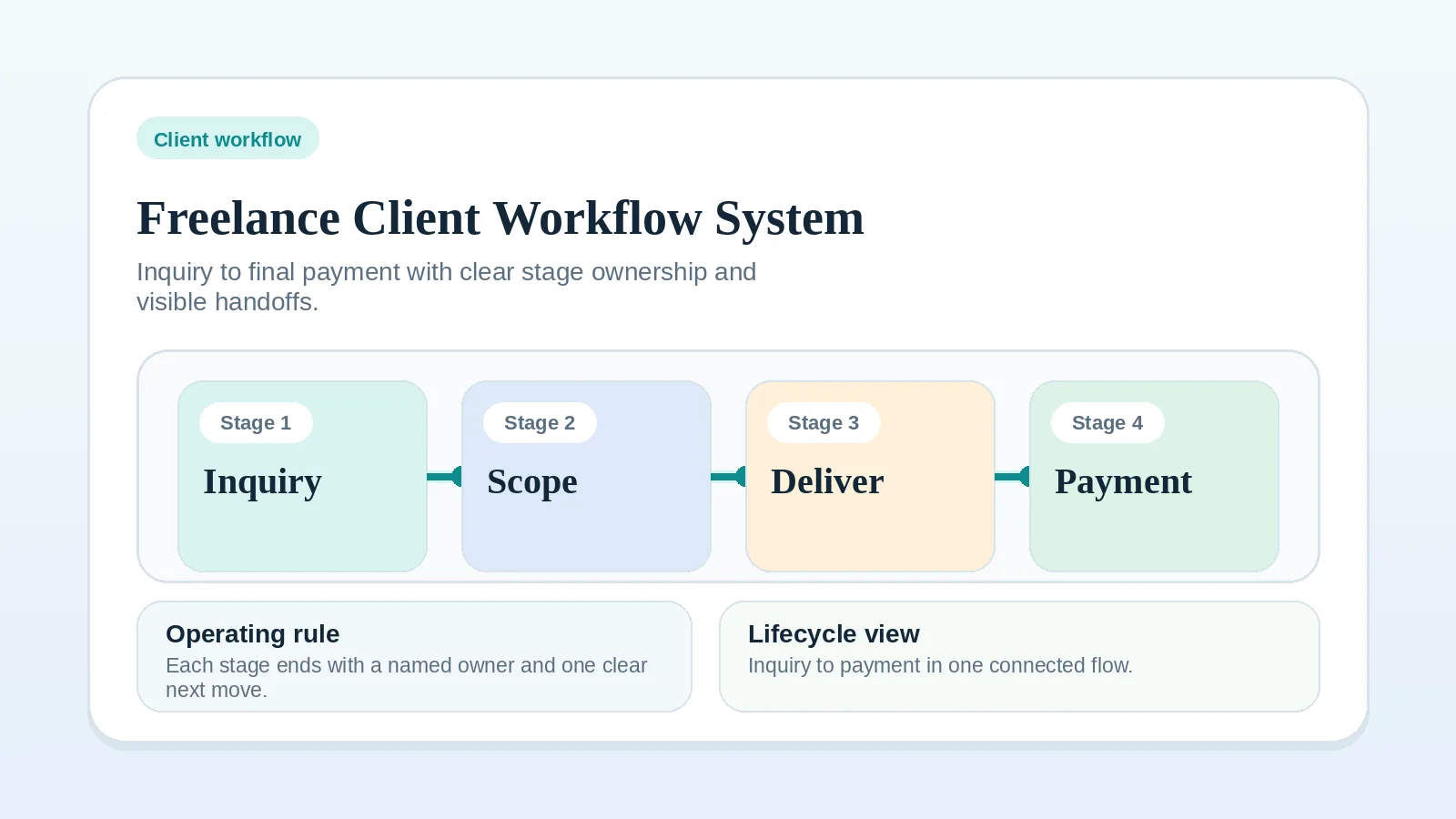
Before scheduling the review, document where current client information lives, how stages, approvals, and billing triggers work, which client updates recur, and what distinguishes blocked from waiting. If a rule is missing, define it with Freelance client workflow system: inquiry to final payment, Lean software stack blueprint for solo freelancers, or Milestone delivery workflow for solo service businesses before scheduling the review.
Weekly checklist
1) Pipeline and capacity review
- Review incoming leads and qualification status.
- Confirm which prospects need response this week.
- Confirm available delivery capacity before committing new kickoff dates.
Check whether any new work is about to be accepted without confirmed delivery capacity. If so, update the intake or scheduling decision before committing a start date.
2) Delivery status review
- Check milestone status for each active project.
- Flag blocked items and missing client dependencies.
- Confirm next deliverable owners and deadlines.
3) Client communication review
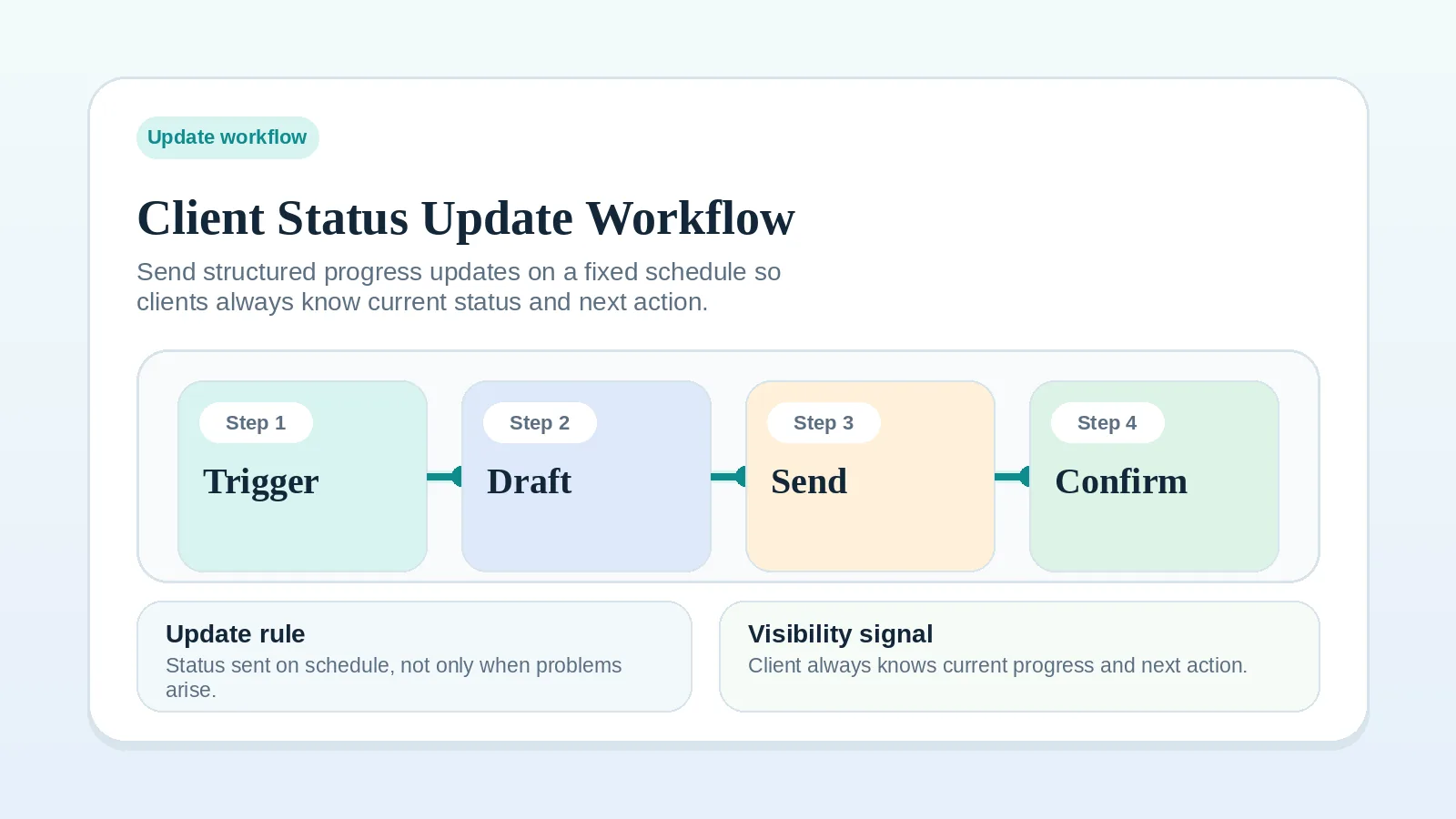
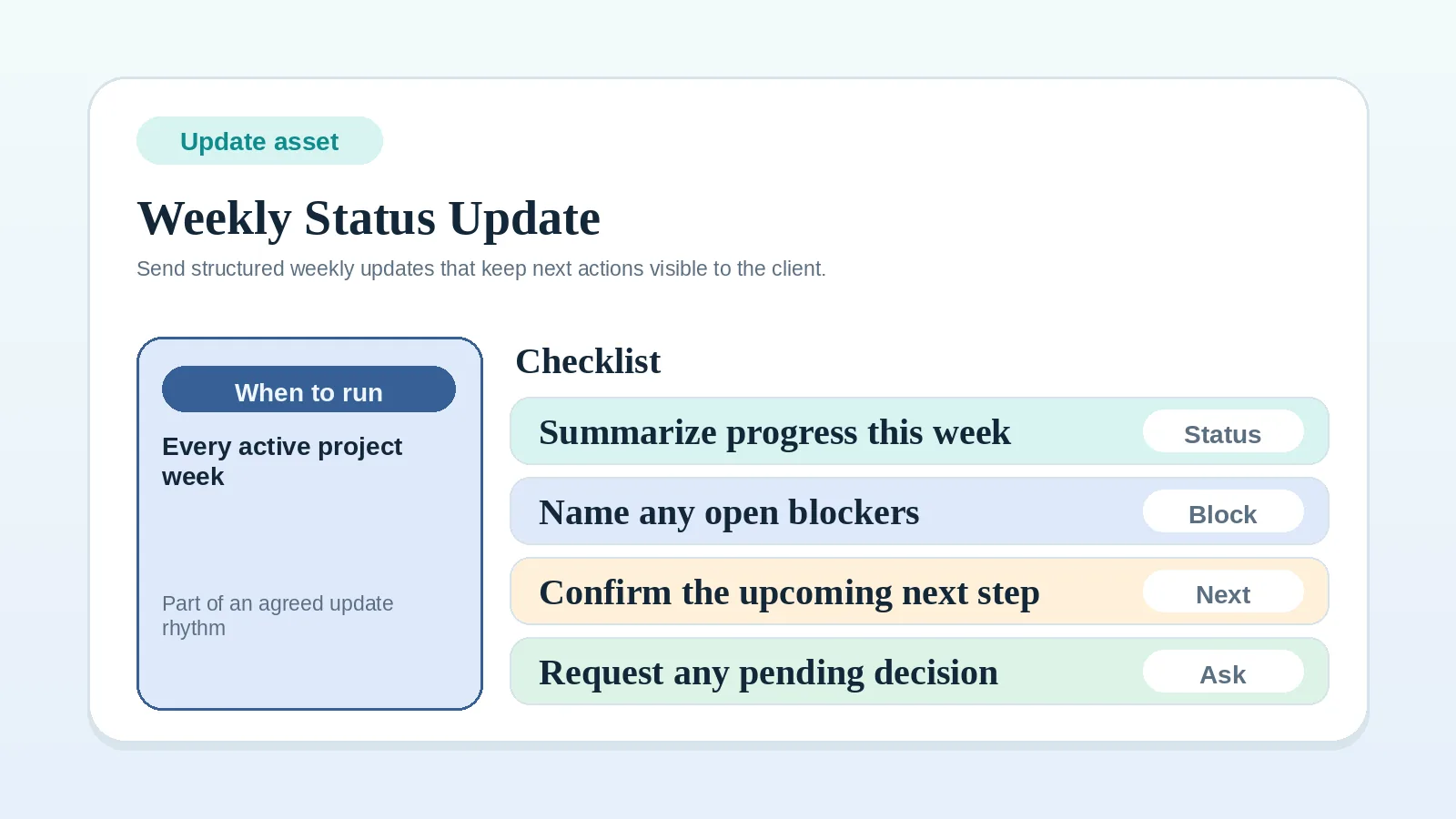
- Send status updates due under each project’s agreed cadence.
- Confirm pending approvals and follow-up deadlines.
- Log key decisions in your system of record.
Use Weekly client status update template if the team needs one consistent message structure.
4) Billing and admin review
- Check invoices due this week.
- Send invoices whose agreed triggers have occurred, including deposits, milestones, or recurring billing dates.
- Follow up on overdue payments.
5) Risk and quality review
- Review recurring issues from the past week.
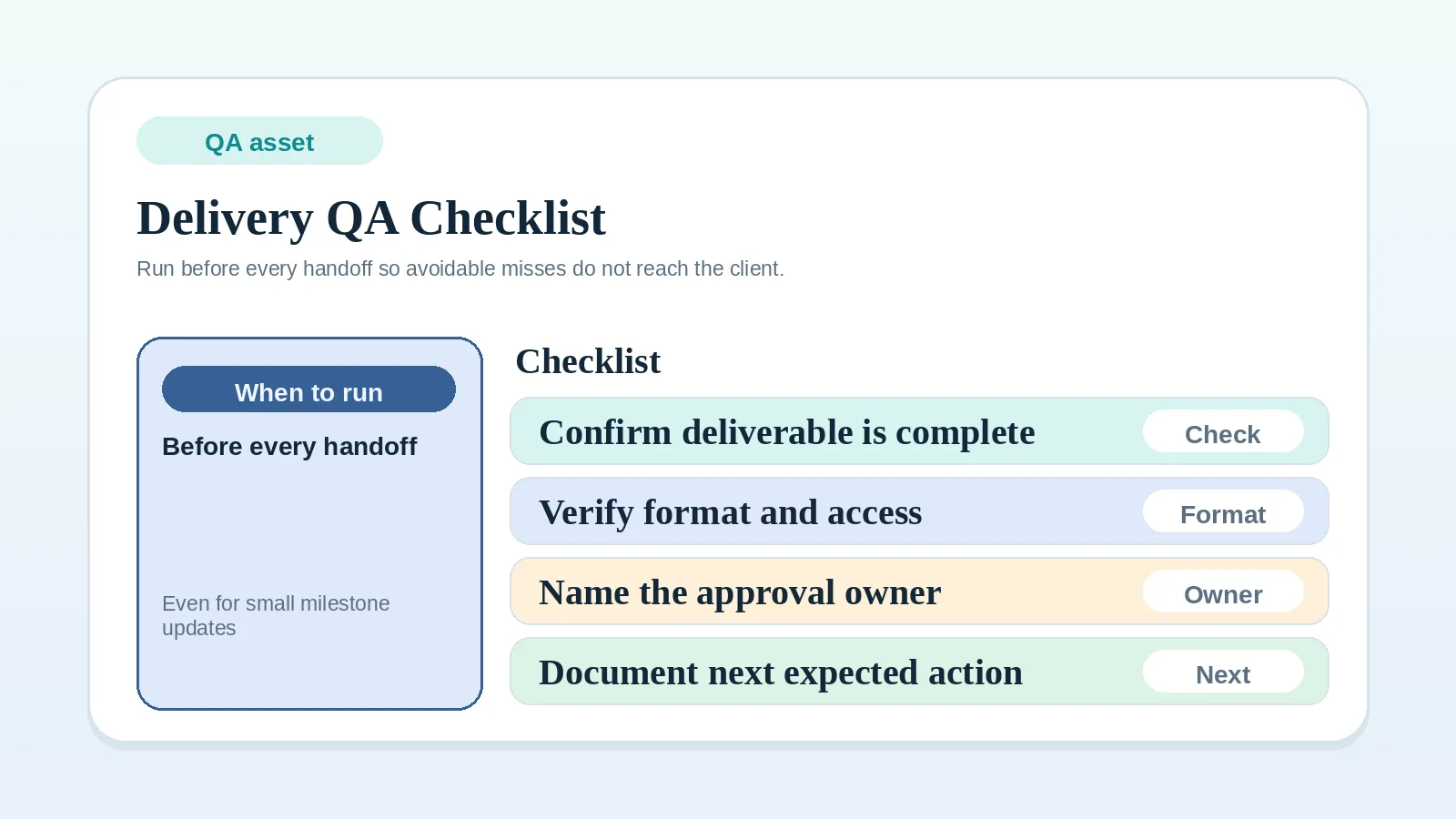
- Apply Delivery QA checklist before client handoff before final deliveries.
- Capture one process improvement for next week.
Keep the review tied to the live records
- Work from your live system of record, not from memory.
- Finish by updating the next actions directly in the tools you actually use.
If the review ends without updates in those tools, the next actions it found stay invisible.
Fix a recurring problem at its source
If this review keeps exposing the same kind of failure, fix the rule that governs that stage:
- Recurring status confusion: Client status update workflow
- Recurring blocked delivery: Milestone delivery workflow
- Recurring billing drift: Invoice and payment workflow setup
Weekly closeout questions
- Which client stage generated the most friction?
- Which handoff failed and why?
- Which repetitive task should be templated next?
Useful variations
Solo operator only
Keep only the fields needed to update stages, owners, blockers, and billing actions.
Consultant with a VA
Run the checklist together or split it clearly:
- consultant reviews decisions, risk, and approvals,
- VA prepares status, follow-up list, and admin exceptions.
Guides and records used in the review
- Weekly workflow model: Freelance client workflow system: inquiry to final payment
- Lean stack planning: Lean software stack blueprint for solo freelancers
- Delivery control: Milestone delivery workflow for solo service businesses
- Milestone billing process: Invoice and payment workflow checklist
Complete the weekly review
The review is complete when current stages, blockers, owners, approval requests, and billing actions are recorded. If it exposes a recurring process gap, assign an owner to correct the rule that governs that stage.