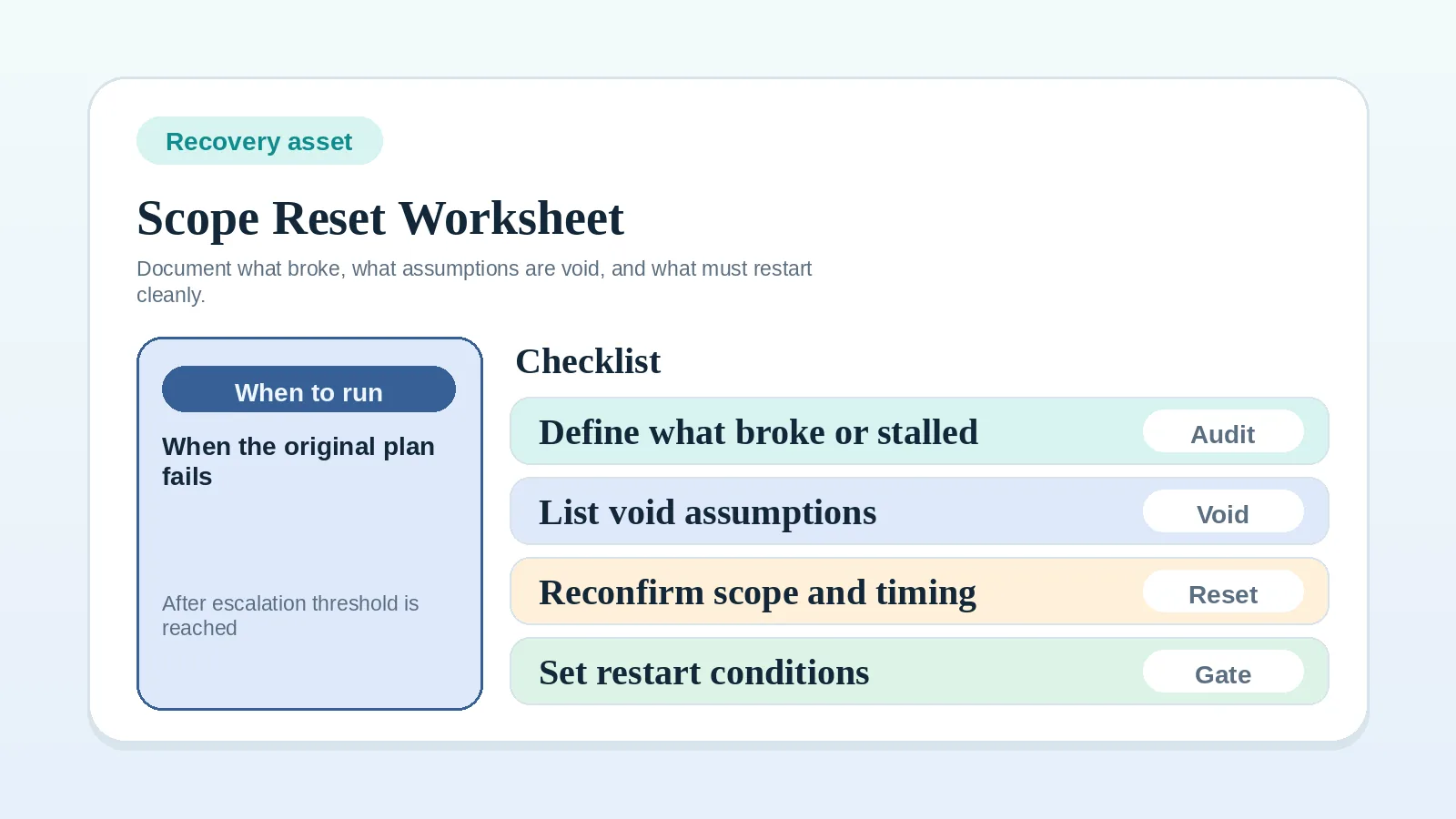
When accumulated changes have made the recorded plan unreliable, this worksheet sets a new baseline.
Record what broke, which assumptions no longer apply, what needs confirmation, and what must pause, move, leave scope, or receive new approval before work resumes.
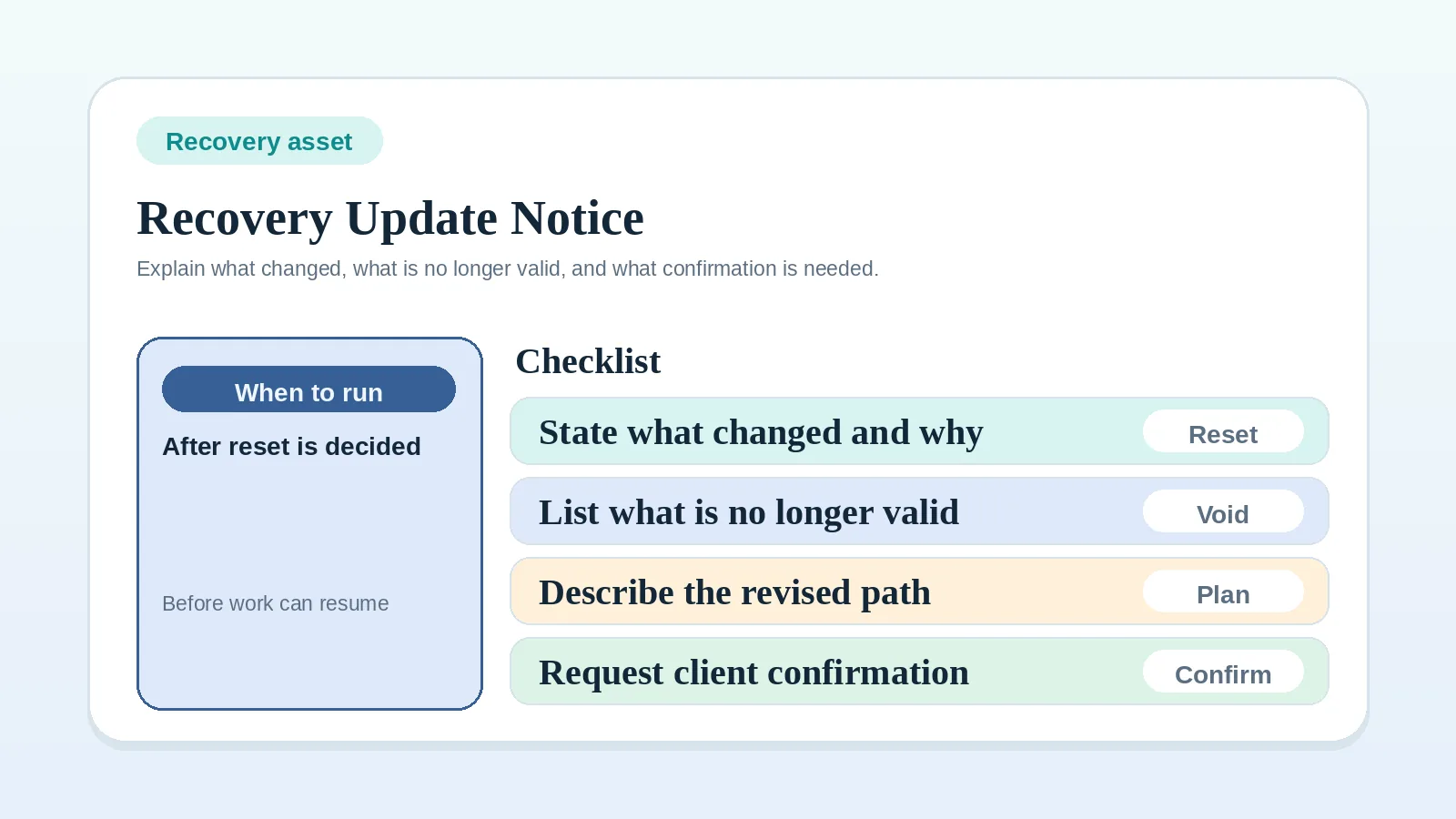
It follows escalation. If the reset is already defined and needs to be explained to the client, use Recovery update template for delayed projects next.
When the original plan no longer holds
- repeated delays have made the original timeline unrealistic,
- conflicting stakeholder input has invalidated the current plan,
- missing dependencies keep forcing improvised workarounds,
- partial delivery no longer matches the most recently approved direction,
- too many changes have accumulated without one visible reset point.
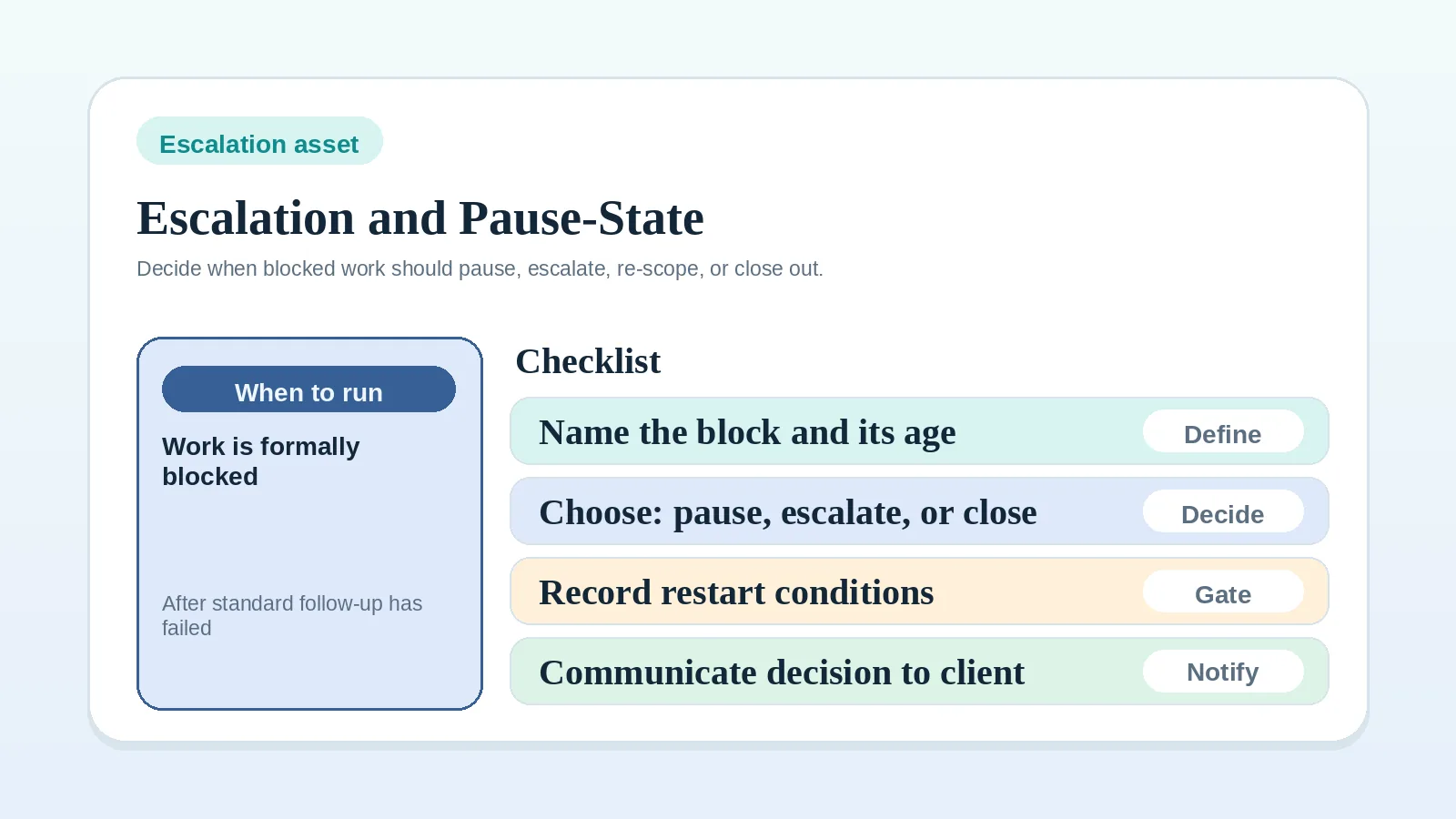
If the work is only blocked and you still need to decide whether it should pause, escalate, or wait, start first with Escalation and pause-state worksheet for solo operators.
Keep the reset bounded
The worksheet covers the affected plan only. It does not decide:
- the full client lifecycle,
- your entire pricing model,
- whether a brand-new project should be sold instead,
- the detailed execution steps for every task after the reset.
The agreement, pricing policy, and surrounding workflow still govern the available changes. This worksheet records one reset after informal adjustments are no longer enough.
Establish a new baseline
- Name one plan, milestone, or review path that is no longer valid.
- Write what failed without softening it.
- Separate what must be reconfirmed from what must be removed.
- Define the restart conditions before promising a new timeline.
When accumulated exceptions make the original plan inaccurate, draft a replacement and obtain the required approval before treating it as the active baseline.
Scope reset and recovery worksheet
| Original plan or scope being reset | What failed or drifted | Assumptions no longer valid | What must be reconfirmed | What changes now | Billing / scope implication | Communication required | Restart condition |
|---|---|---|---|---|---|---|---|
| Proposal review path | too many conflicting revisions | one approver can still consolidate input | review owner, revision boundary, decision deadline | extra review path removed, approval path reset | timeline or proposal validity may change | reset message naming owner and decision rule | one clean approval route is active |
| Active delivery milestone | repeated missing assets and late decisions | milestone can finish on original schedule | current output, dependency owner, due date, acceptance point | milestone paused, split, or re-baselined | invoice trigger or delivery date may move | explicit recovery update with revised milestone logic | revised milestone is approved and inputs needed to resume are available |
| Closeout sequence | unresolved extras and final decisions remain open | billing and offboarding can close together | final approved scope, payment rule, closeout responsibility | financial close and operational close may separate | final invoice or extra work may need reclassification | direct closeout reset note naming unresolved items | approved closeout path and payment state are clear |
Original plan or scope being reset
Name the exact thing being reset:
- proposal review round structure,
- milestone 2 delivery plan,
- final handoff sequence,
- closeout timeline.
Avoid vague labels like “the whole project” unless the whole operating plan really has to be rebuilt.
What failed or drifted
Write the failure plainly:
- approvals came from too many directions,
- dependencies kept slipping without reset,
- delivery work continued against outdated assumptions,
- too many additions were absorbed without a formal scope decision.
If the failure cannot be stated from the record, gather the missing evidence before defining the reset.
What assumptions are no longer valid
Document which old assumptions should stop governing the work:
- original due date still holds,
- one approver can still represent all stakeholders,
- the current milestone still matches approved scope,
- billing can still follow the original trigger,
- informal workarounds are still acceptable.
What must be reconfirmed
Write the minimum items that need clean confirmation before recovery:
- current approved output,
- active stakeholder or approval owner,
- dependency owner and deadline,
- revised milestone boundary,
- billing trigger,
- next visible decision point.
If any item is unresolved, keep the reset in draft and gather the missing evidence.
What is being paused, removed, rescheduled, or re-approved
Document the concrete changes:
- pause milestone work until assets arrive,
- remove unofficial revision paths,
- reschedule one delivery segment,
- re-approve the narrowed scope,
- split financial close from operational close.
Store the approved reset in the authoritative project record and mark the earlier plan as superseded. Preserve its decision history and approval evidence under the project’s record-retention rules.
Billing / scope implications
Write whether the reset changes:
- what is still included,
- what now needs a change request,
- which invoice trigger moves,
- whether extra absorbed work needs to be acknowledged,
- whether the original timing or fee assumptions are still usable.
If the plan changed but the commercial record did not, the reset is incomplete.
Communication required to reset expectations
Define what the reset message must include:
- what plan is no longer valid,
- why it is being reset,
- what is paused, removed, or re-approved,
- what the new decision path is,
- what has to happen before active work resumes.
State whether the reset is proposed or approved. A missed forecast can be marked unworkable while revised scope, fees, or dates still await agreement. Once authorized, identify which plan the reset replaces and record its effective date.
Restart conditions for the revised plan
Write what must be true before the revised plan becomes active:
- one approval path is visible,
- revised scope is accepted,
- inputs needed for the resumed work are available; later dependencies have owners and due dates,
- milestone timing is re-baselined,
- billing state matches the revised plan.
Restart only when the recorded restart conditions are met.
Situations that require a reset
Repeated delays break the original timeline
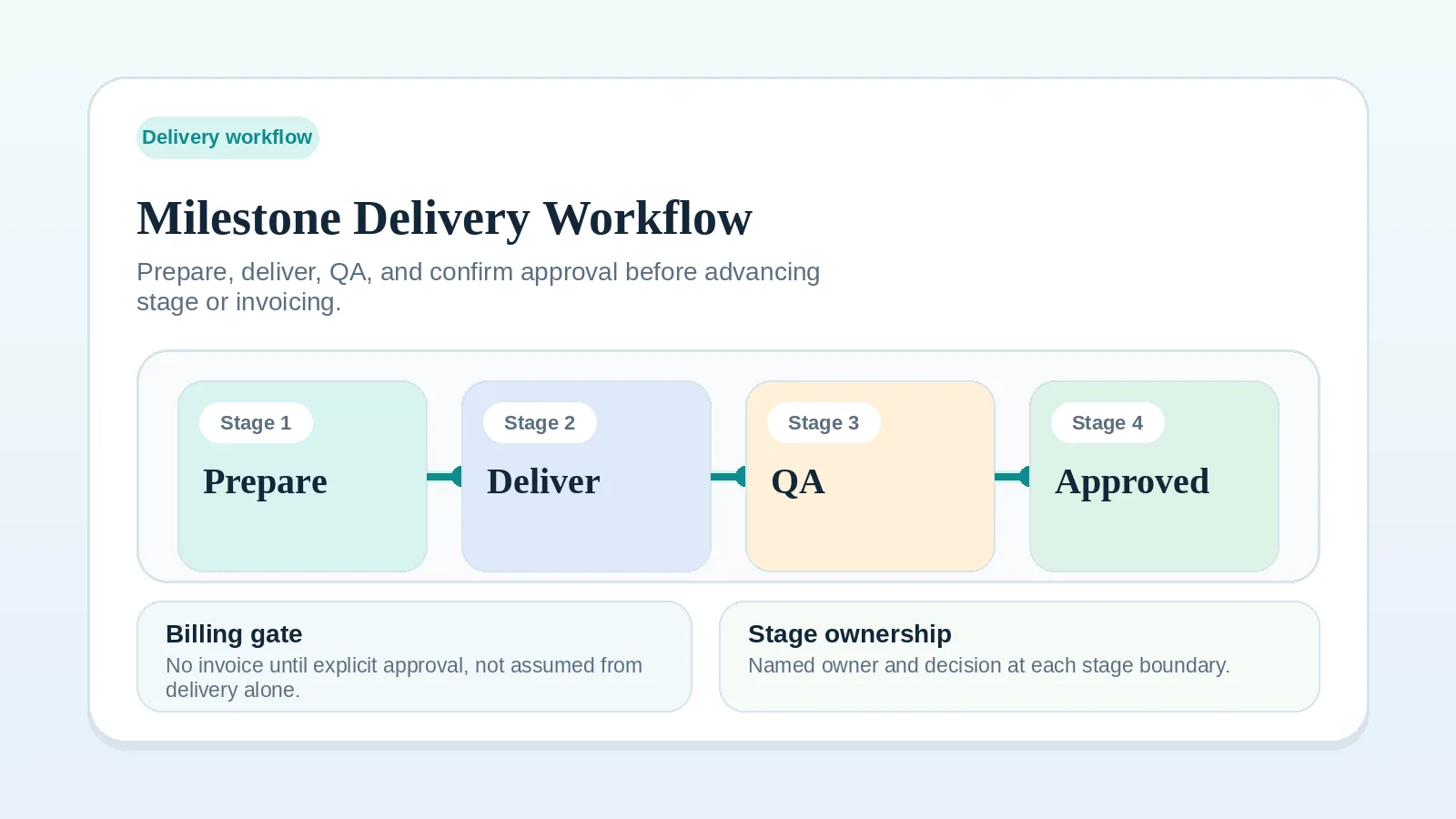
Delays have made the old plan unreliable but people still refer to it. See Milestone delivery workflow for solo service businesses and Escalation and pause-state worksheet for solo operators.
Conflicting stakeholder input invalidates the current plan
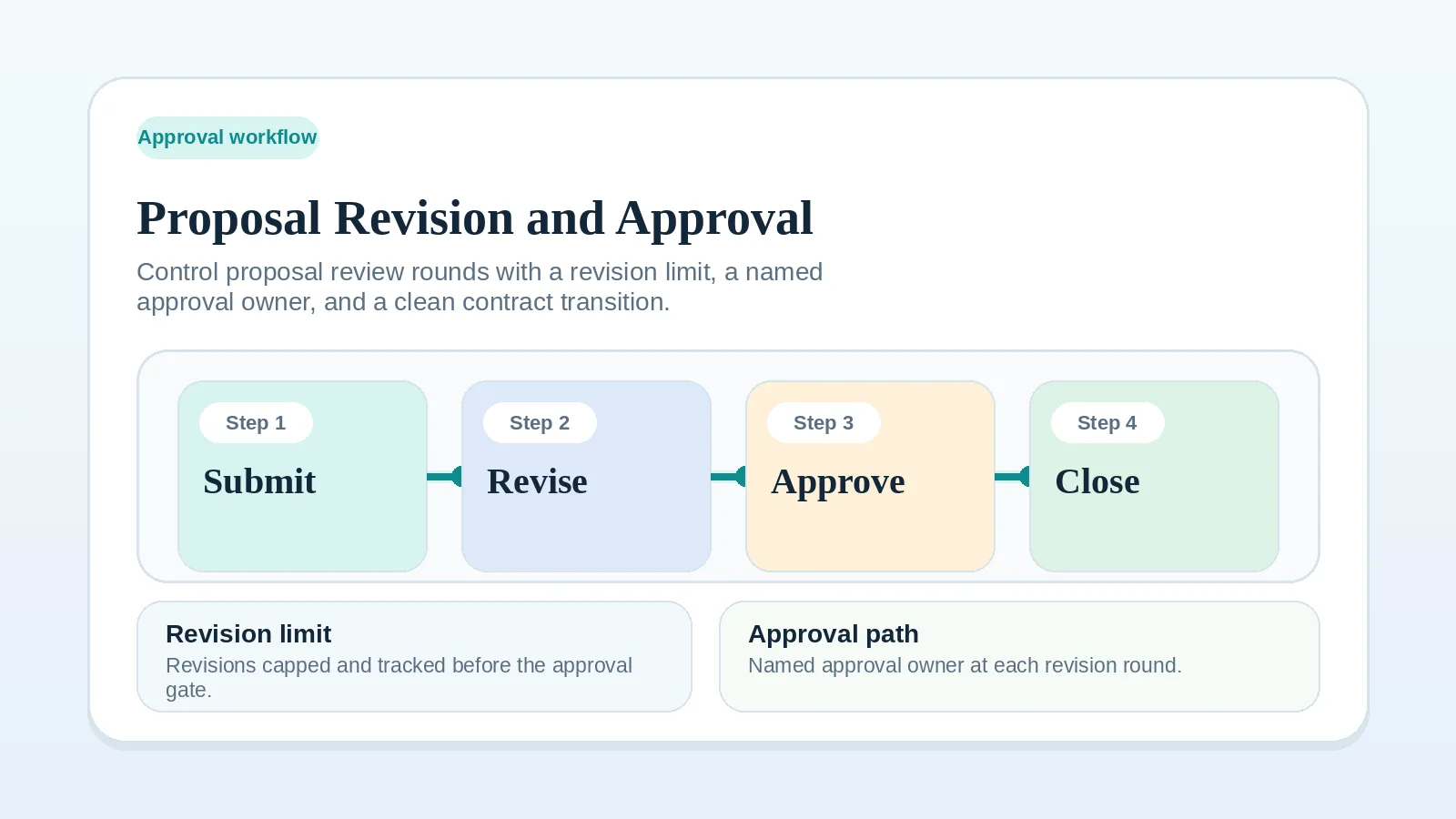
Conflicting feedback has made the current review path unreliable. See Proposal revision and approval workflow and Approval and feedback routing worksheet for multi-stakeholder review.
Missing dependencies force a re-baseline
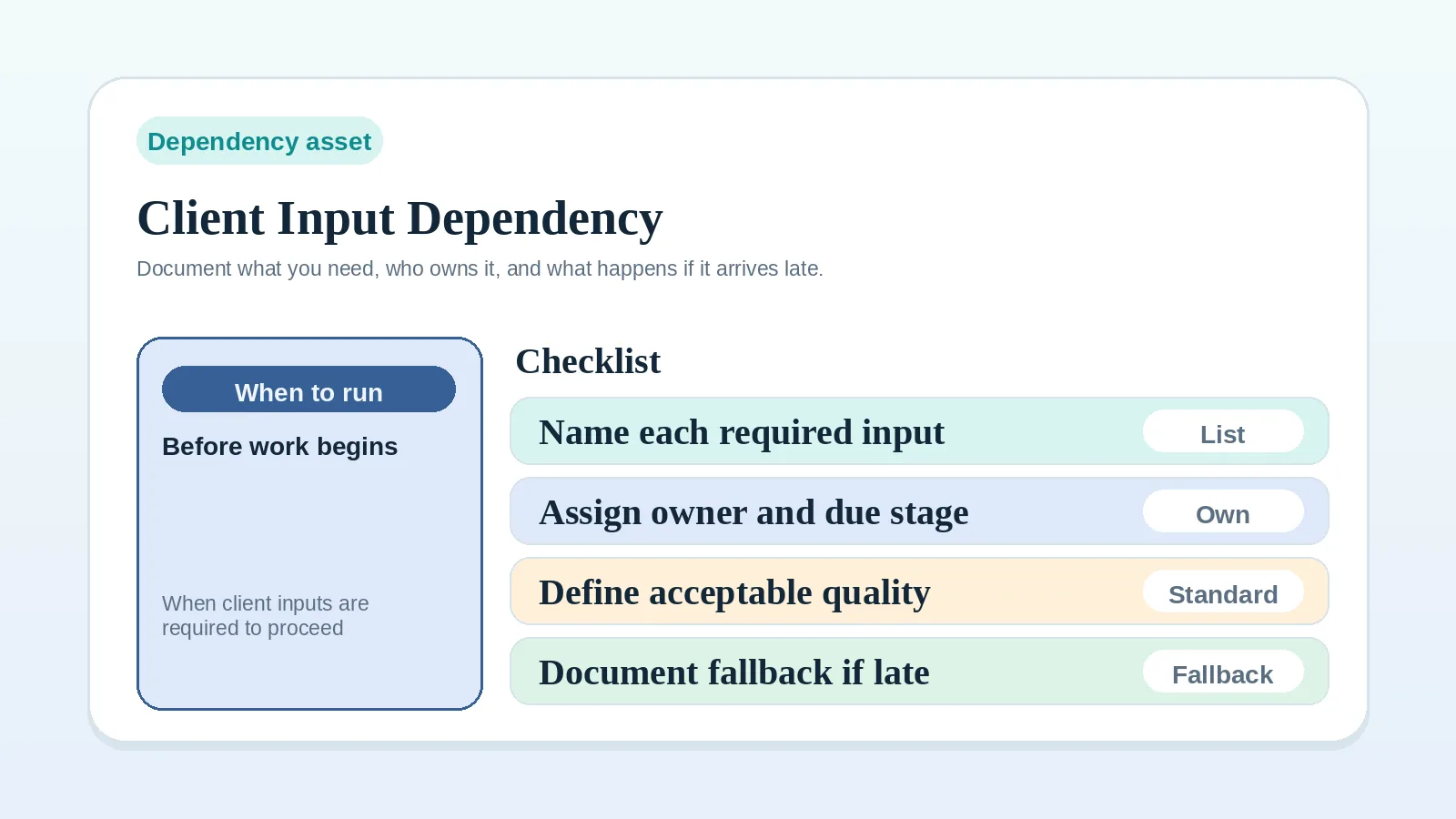
The blocked dependency is known and escalation has happened, but the original delivery path cannot resume as planned. See Client input dependency worksheet for solo operators and Project start handoff readiness worksheet.
Too many changes have accumulated without a clean reset
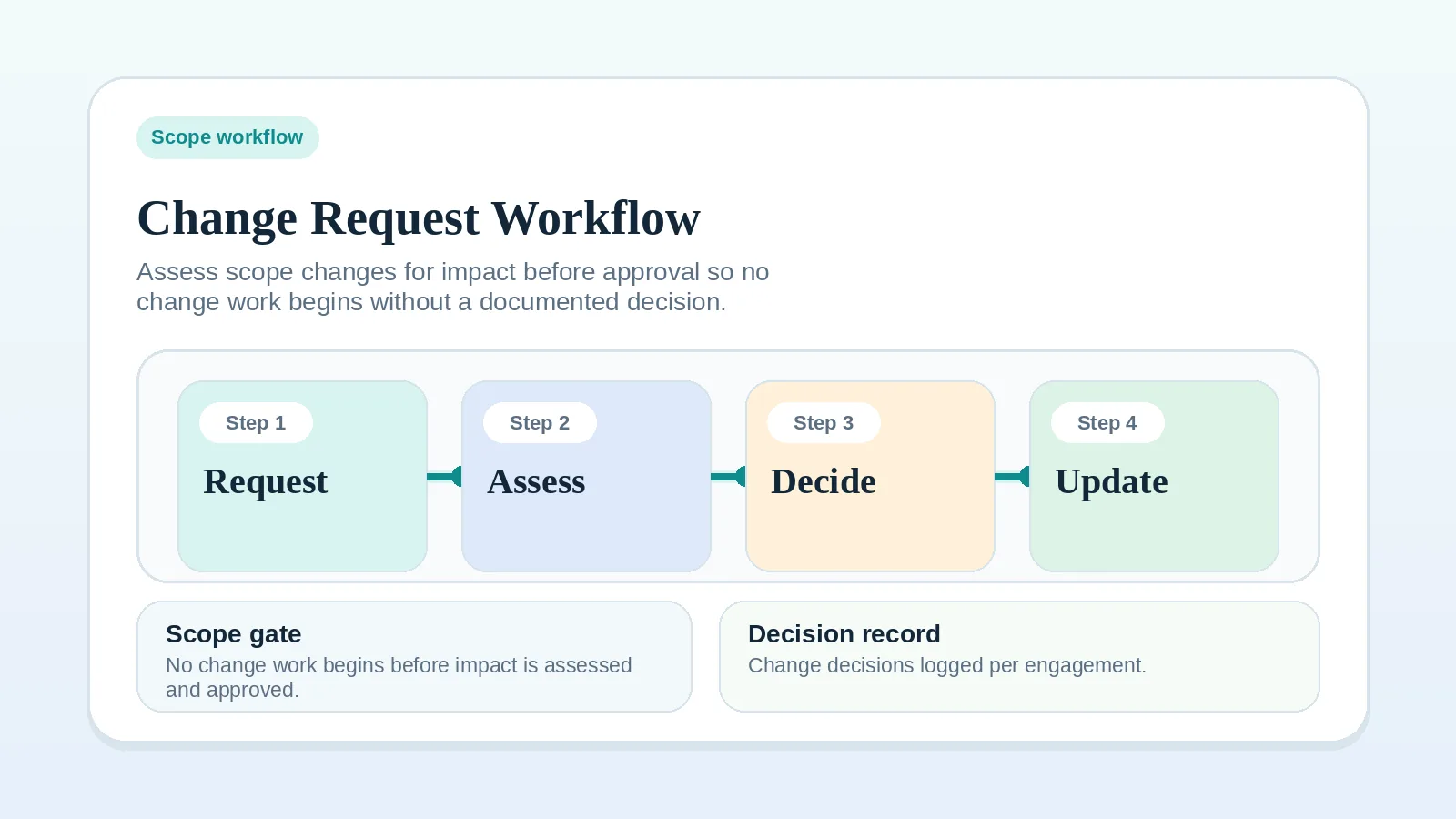
Live delivery includes unapproved additions, revised assumptions, or timing changes that need one explicit scope decision. See Change request workflow for freelancers and consultants and Client change request template.
Warning signs that informal patching is making things worse
- every update makes the plan more complicated instead of clearer,
- different stakeholders are working from different versions of scope,
- blocked work keeps resuming without a recorded restart condition,
- timeline slips are acknowledged but never re-baselined,
- extra work is being absorbed just to keep the project moving,
- no authoritative version of the active plan is identified.
Communicate and apply the new baseline
- If the main issue is live scope control, continue to Change request workflow for freelancers and consultants.
- If the reset is inside active delivery, continue to Milestone delivery workflow for solo service businesses.
- If the plan is still only blocked rather than broken, step back to Escalation and pause-state worksheet for solo operators.
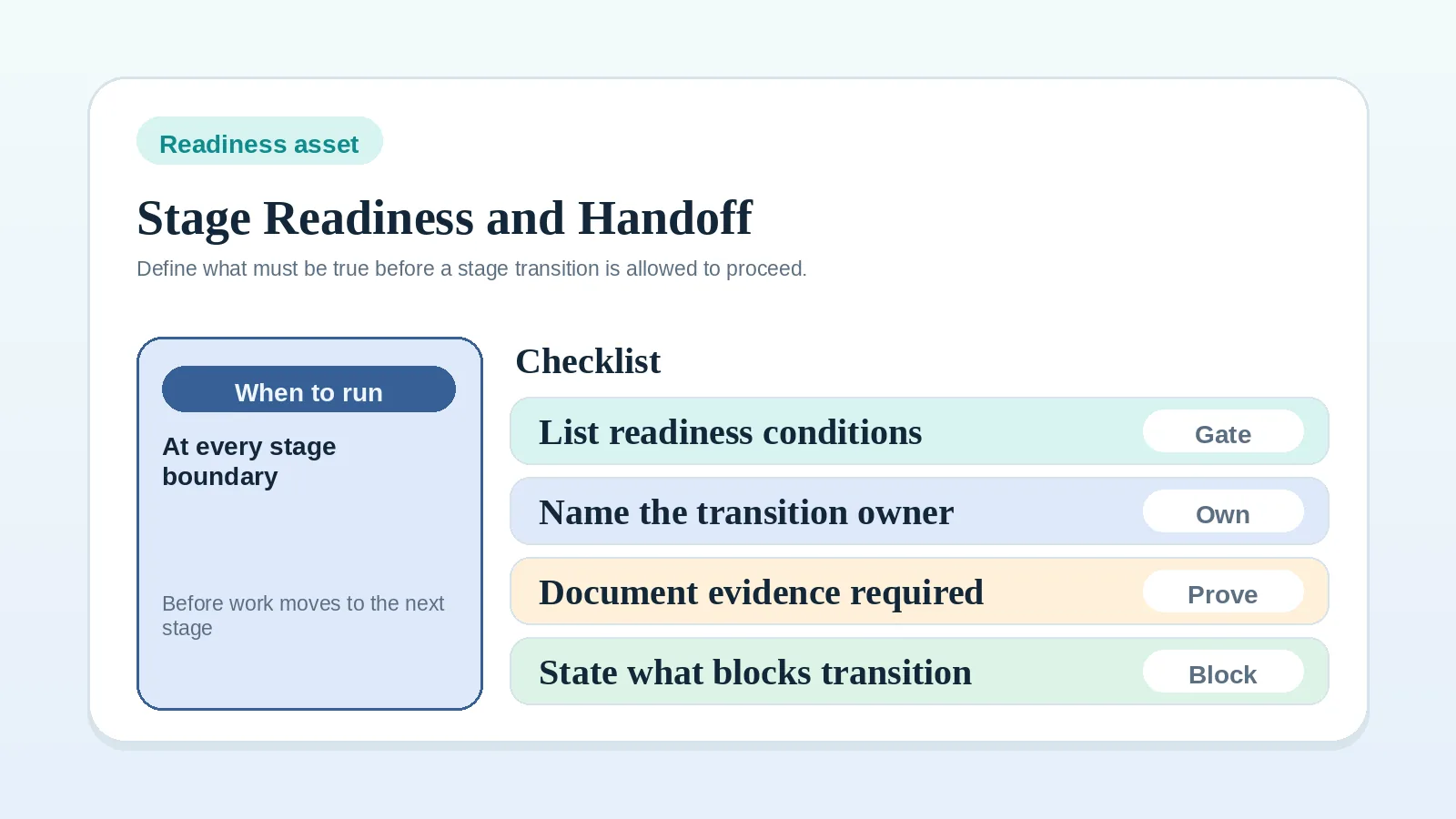
- If the revised boundary still is not ready to restart, step back to Project start handoff readiness worksheet.
Reset check
The reset is ready for approval when:
- the invalid part of the original plan is named clearly,
- the failed assumptions are visible,
- the reset actions are explicit,
- billing or scope implications are recorded,
- restart conditions are concrete enough to stop informal patching from continuing.