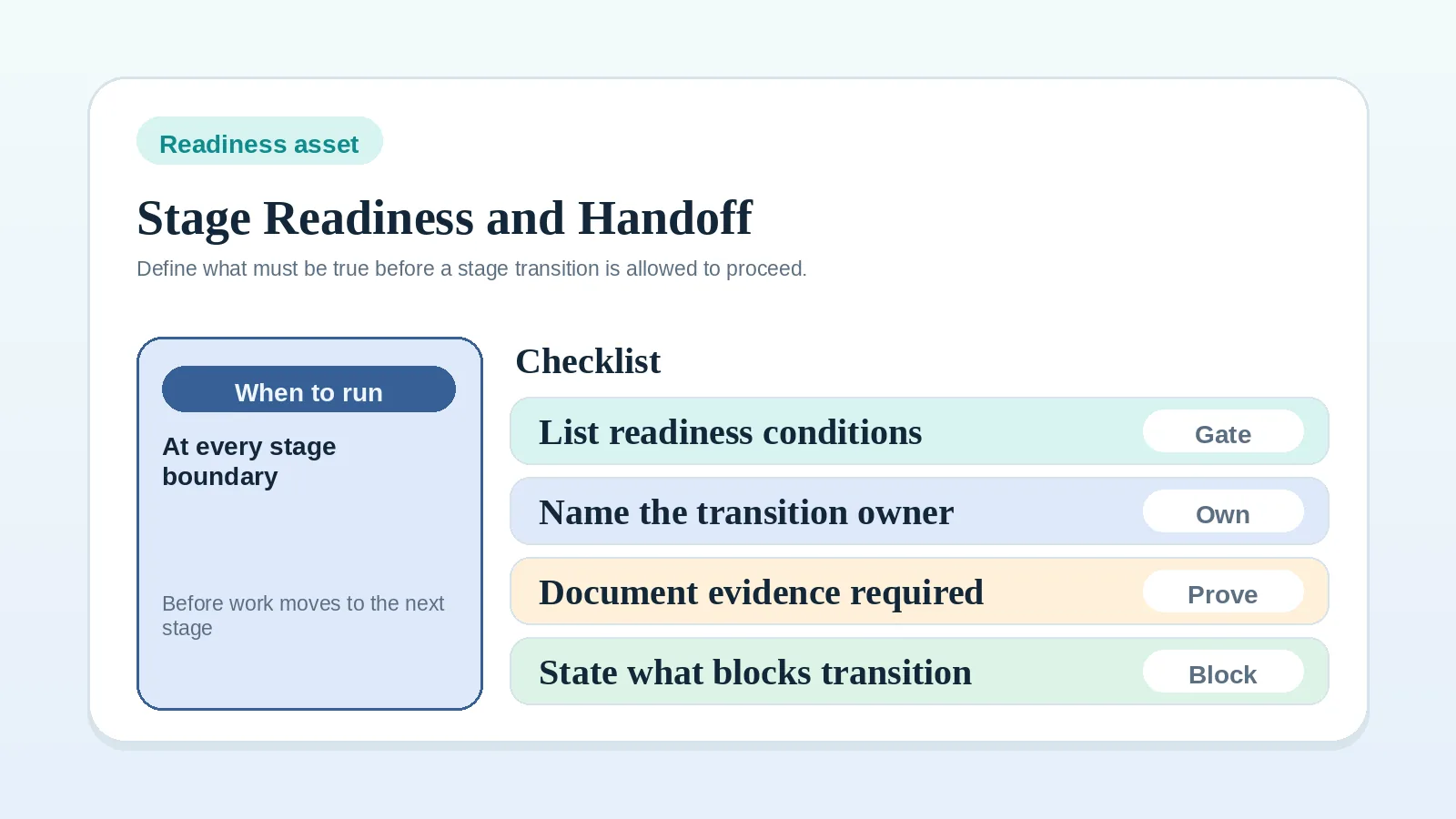
Between two defined project stages, this worksheet records what must be true before work crosses: the required inputs, approval evidence, blocked conditions, and next-action owner. If a required client item is already known, use Client input dependency worksheet for solo operators instead.
Signs the boundary needs a written rule
- kickoff begins before required inputs are recorded,
- review or billing begins without the required evidence,
- final delivery is recorded but closeout conditions remain open,
- the project record uses labels such as “basically ready” or “close enough to move” instead of verifiable criteria.
If the lifecycle method is still unclear, read Freelance client workflow system: inquiry to final payment before defining this boundary.
Decisions to settle elsewhere
This worksheet does not settle:
- the full workflow design for the whole client lifecycle,
- tool-stack structure,
- pricing or scope strategy,
- whether a change belongs in pre-signature revision or post-signature scope control.
Set those decisions in the relevant workflow, comparison, or blueprint guide. Use this worksheet only to document the transition rule between one stage and the next.
Complete the worksheet in four passes
- Pick one exact stage transition, not the whole project lifecycle.
- State the readiness rule so another person can verify it.
- Name one owner for the next move after the transition.
- Write what evidence must exist before the boundary is considered passed.
If nobody can show the required evidence, hold the affected transition and resolve the missing condition. Change the rule only through the project’s agreed decision process, with the reason and authorization recorded.
Information to gather first
- which two stages the boundary sits between,
- what the preceding stage is supposed to produce,
- who should own the first move after the boundary passes,
- what should count as valid approval.
If the preceding output or next-stage trigger is undefined, document that rule before completing this worksheet.
Record the handoff boundary
| Stage transition | Required inputs | Approval / signoff needed | Next action owner | Blocked / waiting condition | Evidence required before transition |
|---|---|---|---|---|---|
| Proposal approved to onboarding ready | signed scope, kickoff dependencies, stakeholder contacts | approval owner confirms final version | consultant or operator | waiting on access, deposit, or final stakeholder input | approved proposal record, kickoff-ready project record |
| Delivery complete to invoice ready | milestone output, QA pass, agreed billing trigger | acceptance or other evidence required by the agreement | operator billing owner | review pending, rework open, dependency unresolved | deliverable link, QA note, visible milestone status |
| Invoice closed to offboarding ready | payment received or financial close rule met | billing state confirmed | operator or account owner | invoice overdue, procurement delay, unresolved extra request | payment status, closeout record draft, next-step state |
The rows are examples, and the order differs between projects. A deposit or recurring invoice may be due before delivery. Operational closeout may proceed separately from an open financial record when the agreement permits it. Record only the conditions that govern the transition being checked.
Stage transition being documented
Write the transition in this format:
- from which stage,
- into which stage,
- what the transition event actually is,
- what becomes true as a result of it.
Avoid vague labels like “project starts” or “wrap up begins.” Use a visible transition such as:
- proposal approved to onboarding ready,
- first milestone active to delivery underway,
- delivery complete to invoice ready,
- invoice closed to offboarding ready.
Required inputs before handoff
List the exact items that must exist before the transition can happen.
Examples:
- signed agreement or approved proposal version,
- required client assets or access,
- milestone output or review package,
- invoice trigger event,
- final files or handoff materials.
Inputs should be specific enough that a second person could verify them without guessing what “mostly ready” means.
Define related rules in their own records:
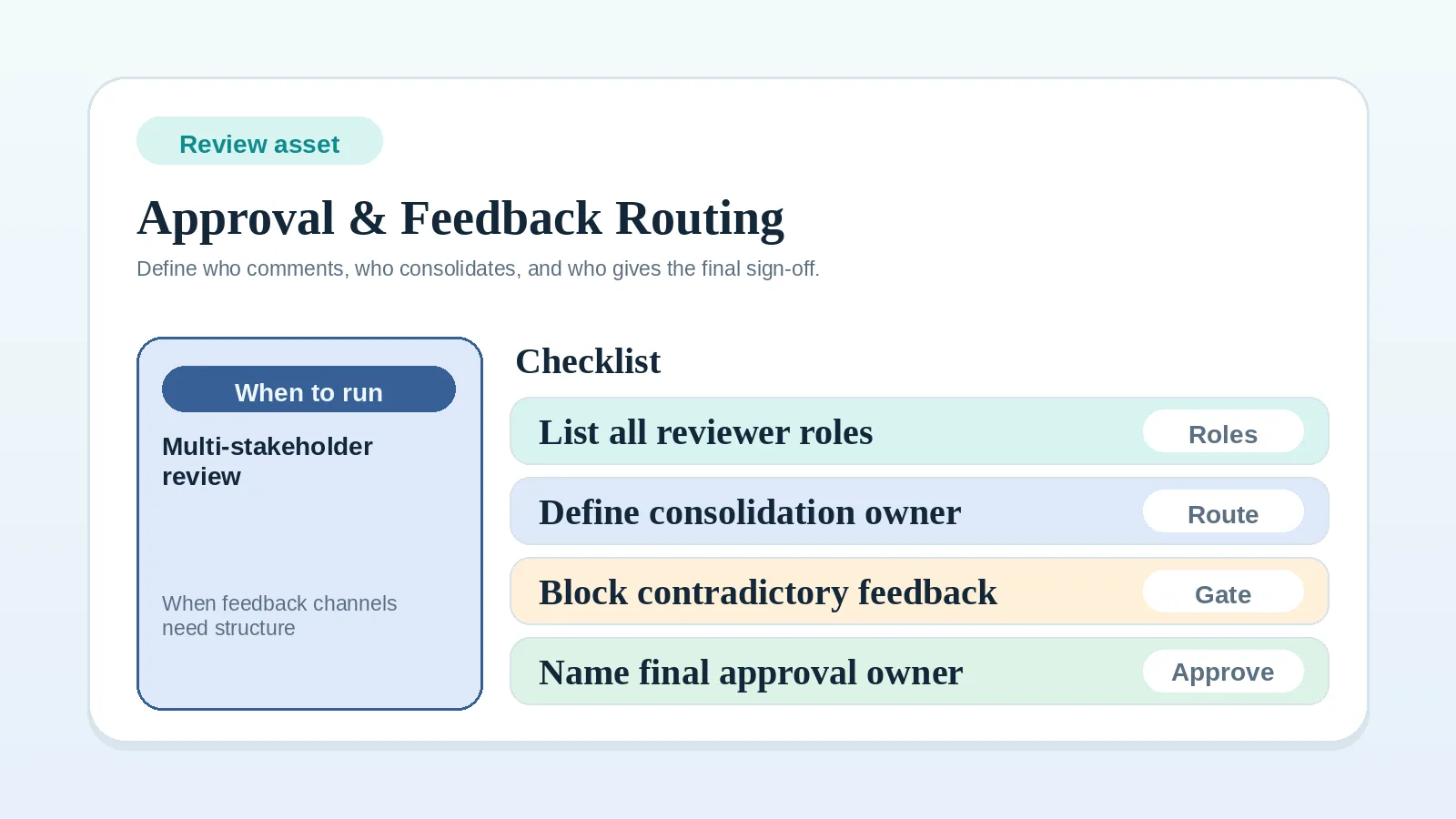
- several reviewers feeding one decision: Approval and feedback routing worksheet for multi-stakeholder review;
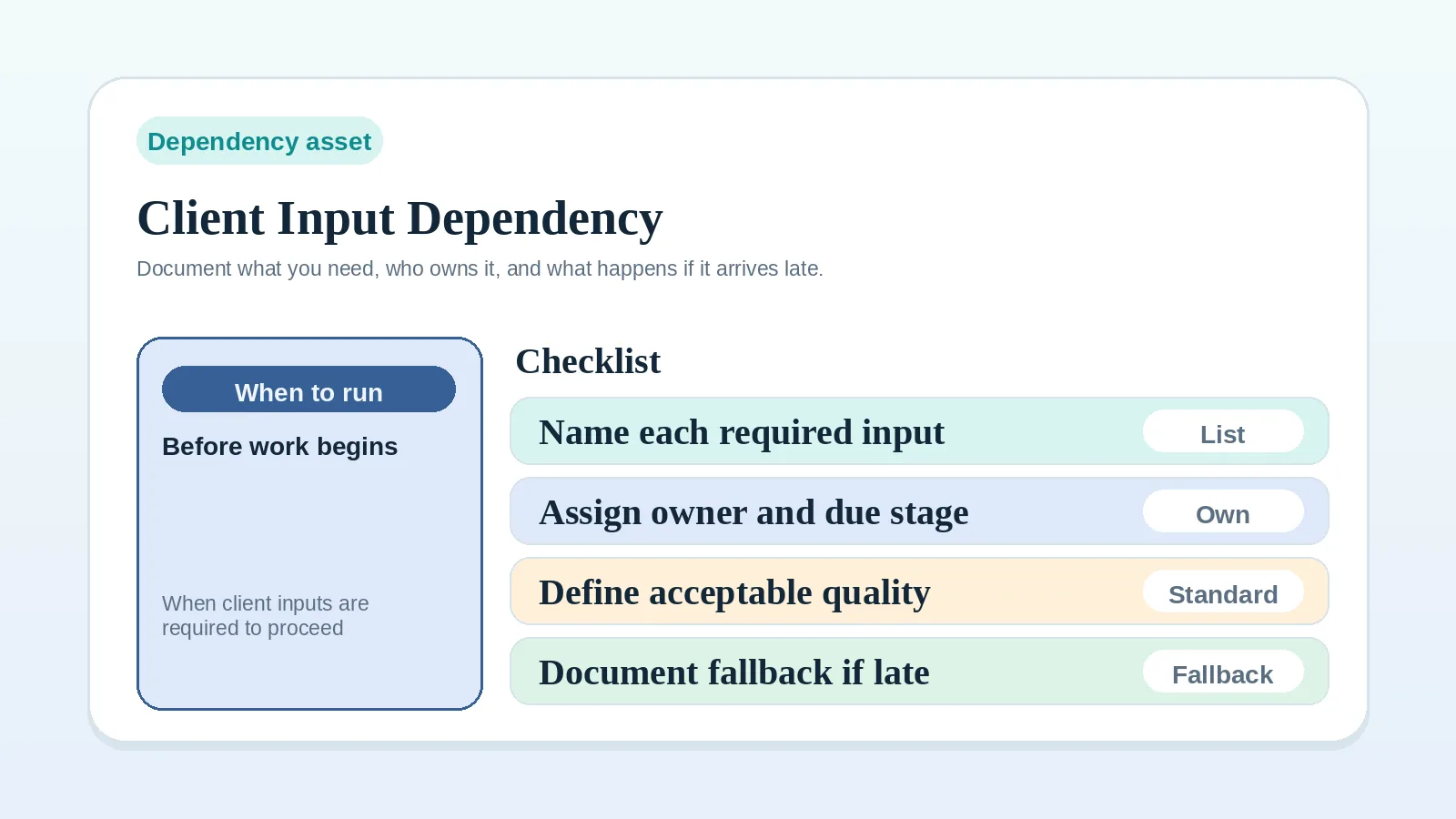
- missing client-side materials, answers, or access: Client input dependency worksheet for solo operators;
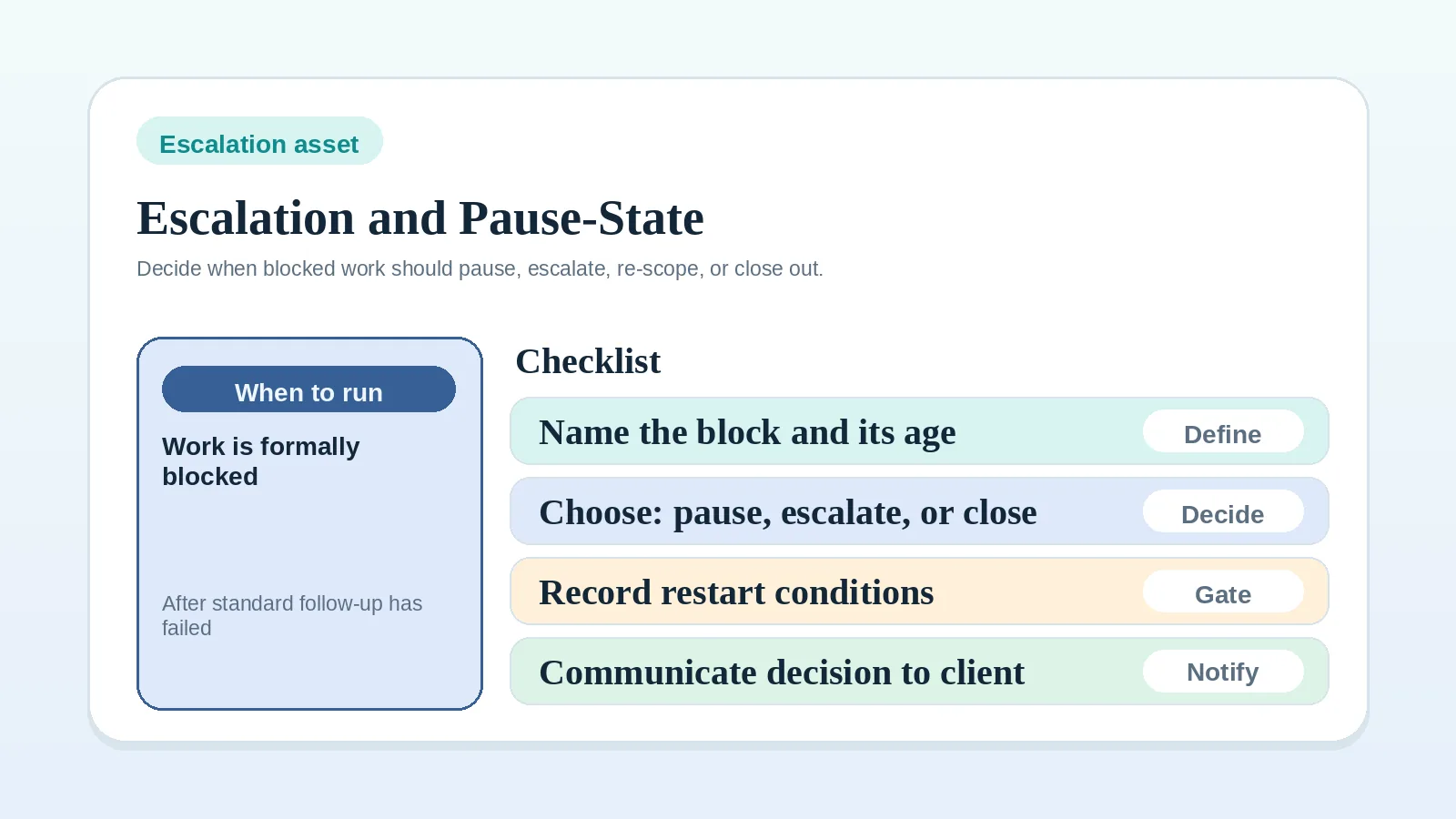
- a boundary blocked beyond an acceptable waiting window: Escalation and pause-state worksheet for solo operators;
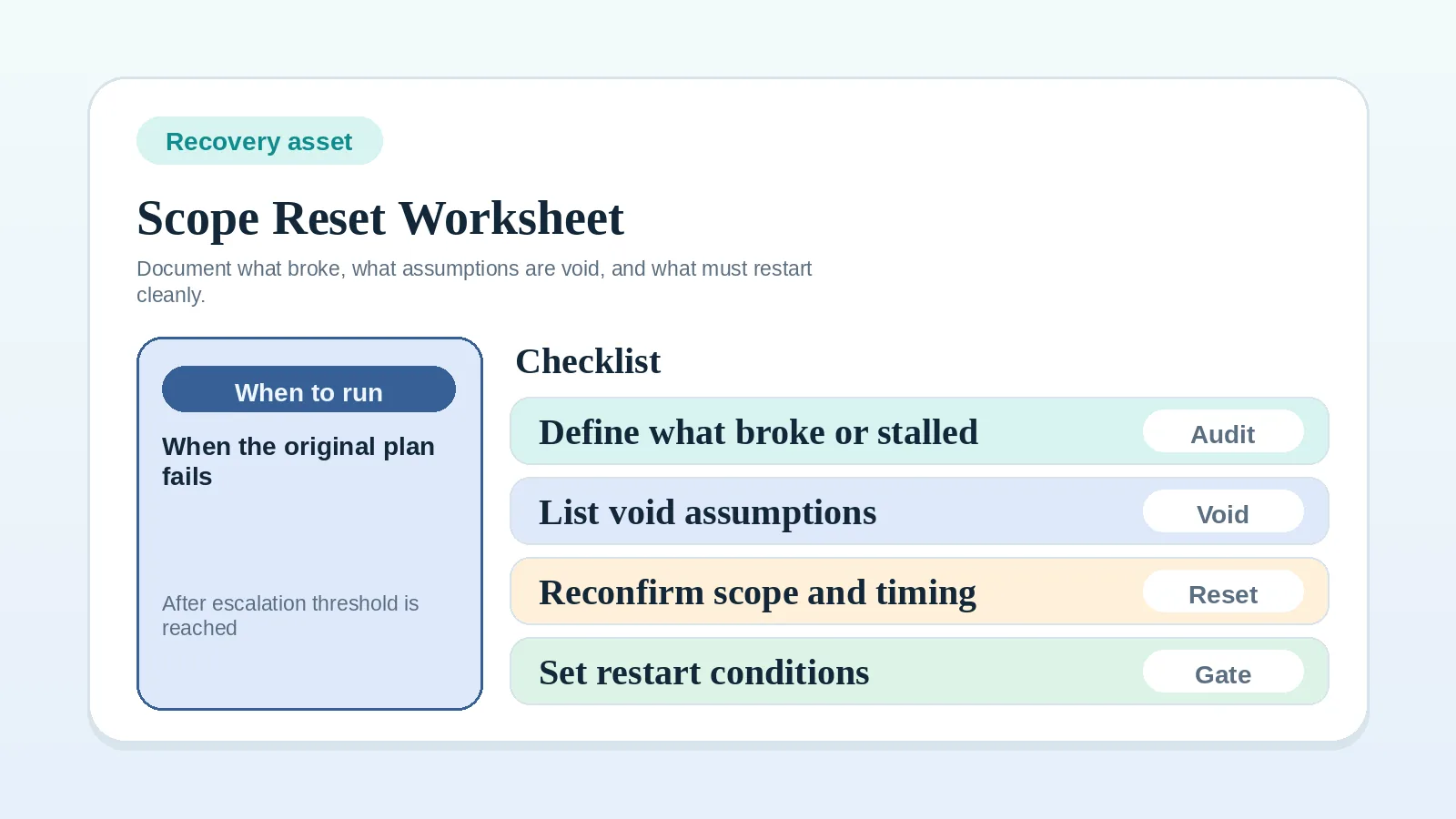
- a transition plan that is no longer reliable because work has already crossed the line: Scope reset and recovery worksheet for solo operators.
Required approval or signoff
Define:
- who has authority to approve the transition,
- what message or action counts as approval,
- what does not count as approval.
Examples:
- named approval owner accepts the final proposal version,
- milestone review result is logged explicitly,
- finance state is confirmed before closeout messaging starts.
Use the approval rule in the signed agreement and documented project process. Do not infer approval from silence unless a valid governing rule explicitly permits that treatment.
Owner of next action
For the chosen transition, write:
- who owns the first action after the boundary,
- what that action is,
- when it should happen,
- what they need in hand to do it cleanly.
Without a named owner, an approved transition can still stall before the next action begins.
Blocked or waiting conditions
Define the conditions that should stop the transition.
Examples:
- proposal approved but deposit still missing,
- delivery ready but client review question not explicit,
- invoice sent but payment still open,
- offboarding planned but signoff still unclear.
If a block exists, keep the stage visibly blocked until the missing condition is resolved.
Evidence required before transition
Document what proof should exist before the boundary is passed.
Examples:
- approved proposal version,
- kickoff-ready project record,
- milestone QA record,
- client approval note,
- sent invoice with due date,
- closeout record with final files linked.
Copy the evidence into the authoritative record before passing the boundary.
What to do if the boundary is not met
- Keep the current stage marked as blocked instead of marking the next stage as started.
- Name the missing requirement directly.
- Name one owner for resolving the block.
- Set the next review point instead of letting the issue drift into silence.
Example: do not start delivery because “the client said yes in principle” if that work’s approved scope, access, or payment conditions are still incomplete. Onboarding tasks that collect those inputs may already be authorized; keep their status separate from delivery readiness.
Example boundaries
Proposal approval to onboarding
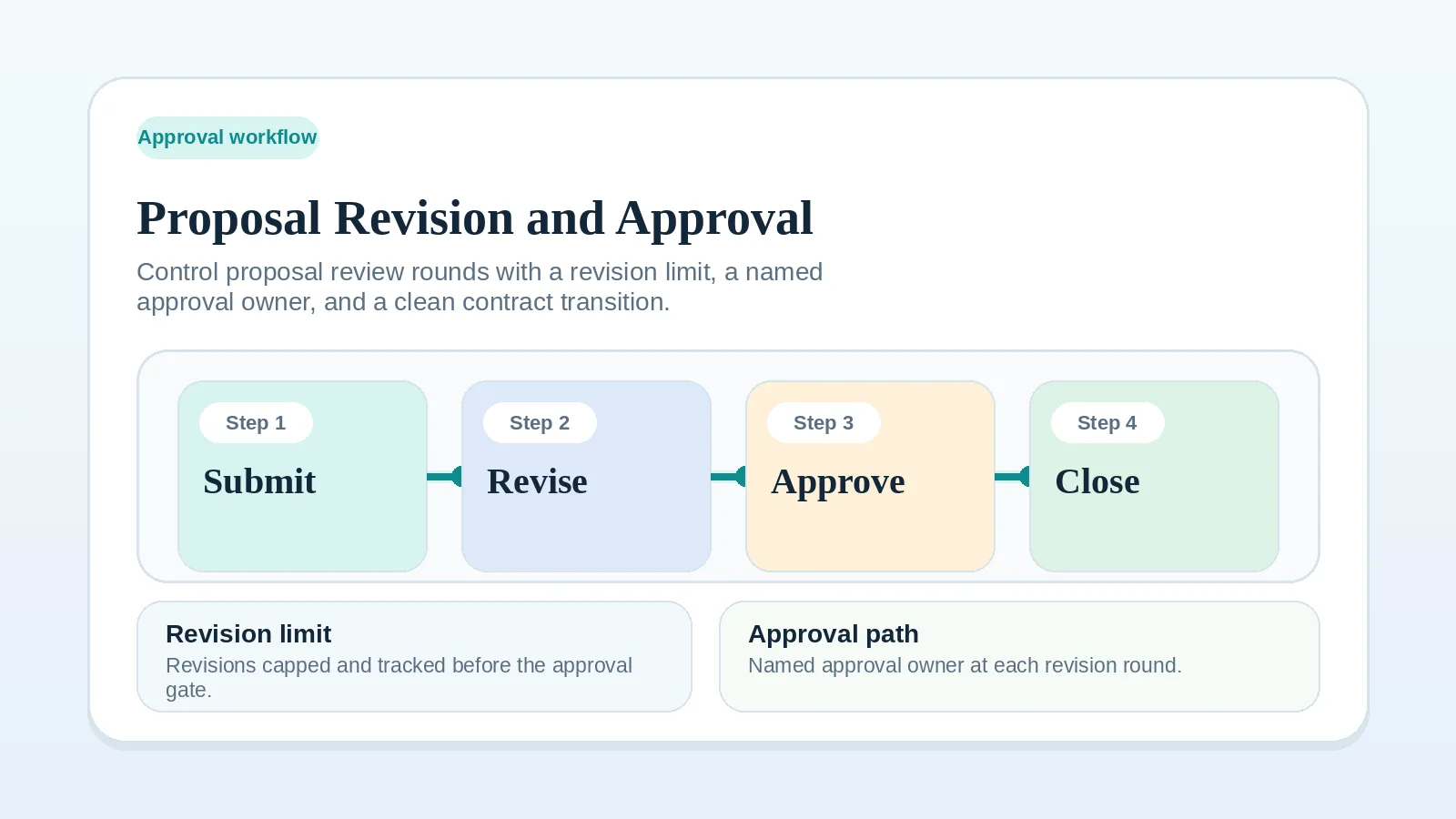
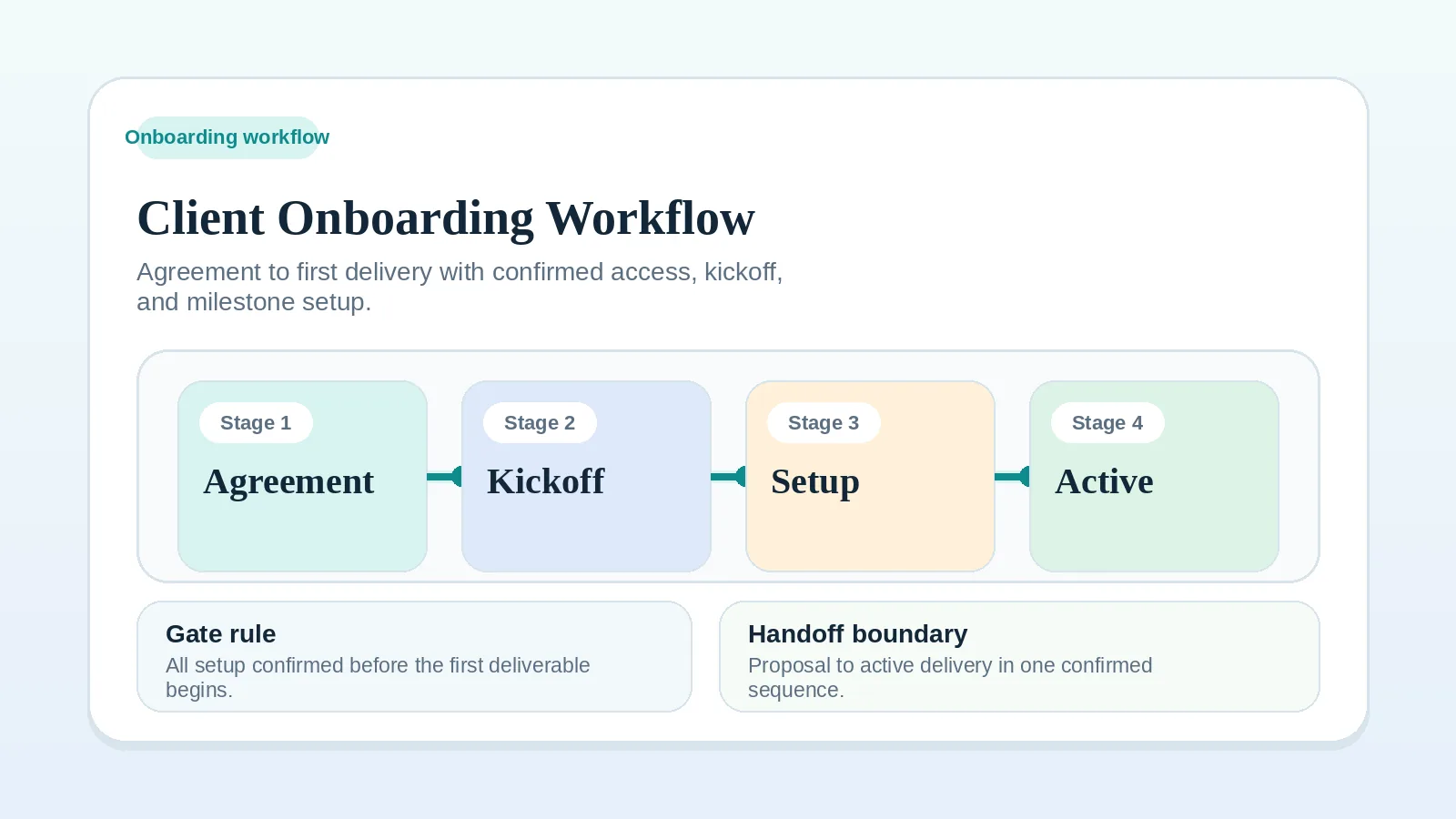
Kickoff depends on an approved agreement, access, payment condition, or other recorded start requirement. See Proposal revision and approval workflow and Client onboarding workflow for freelancers and consultants.
Delivery completion to invoicing
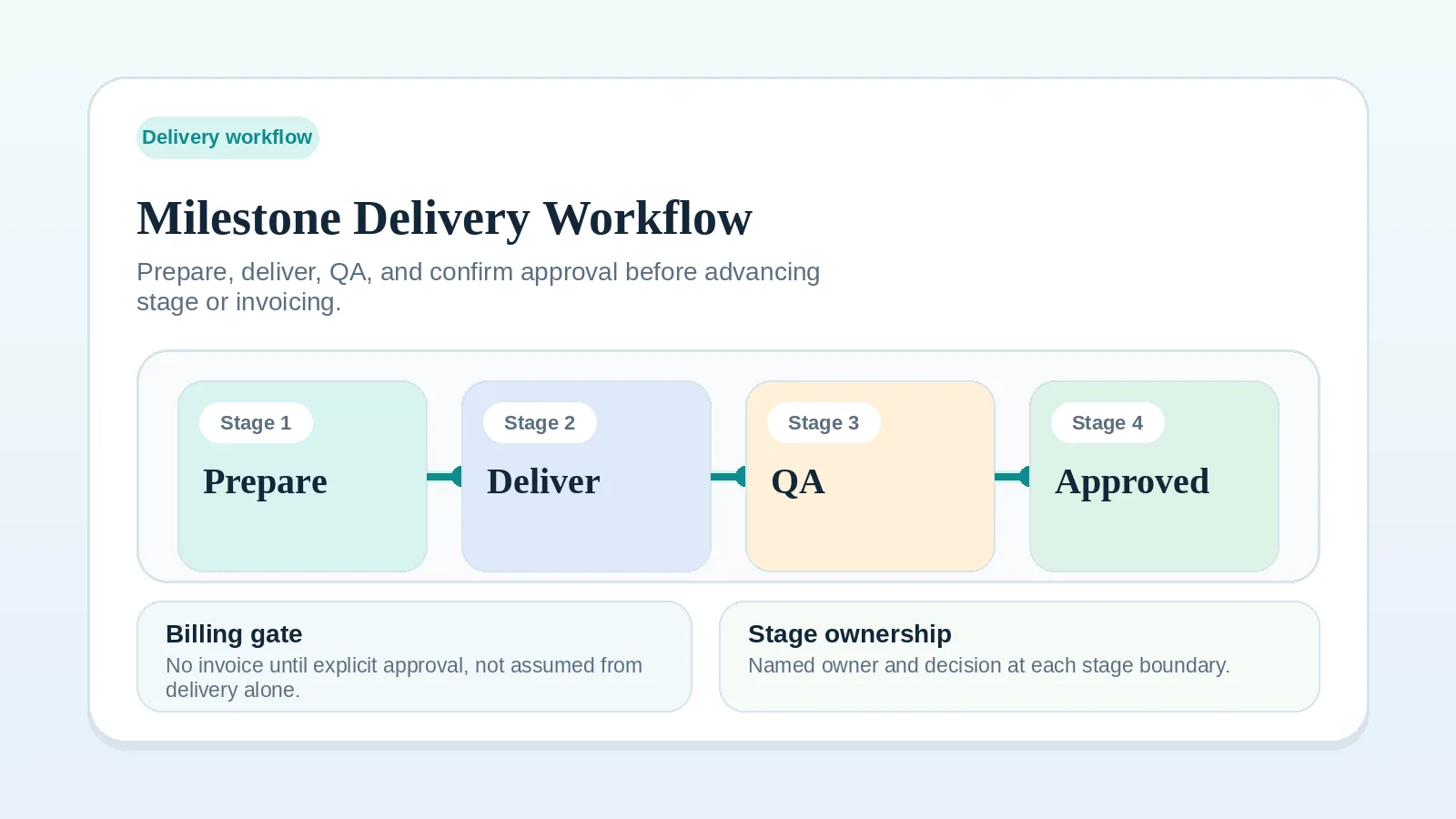
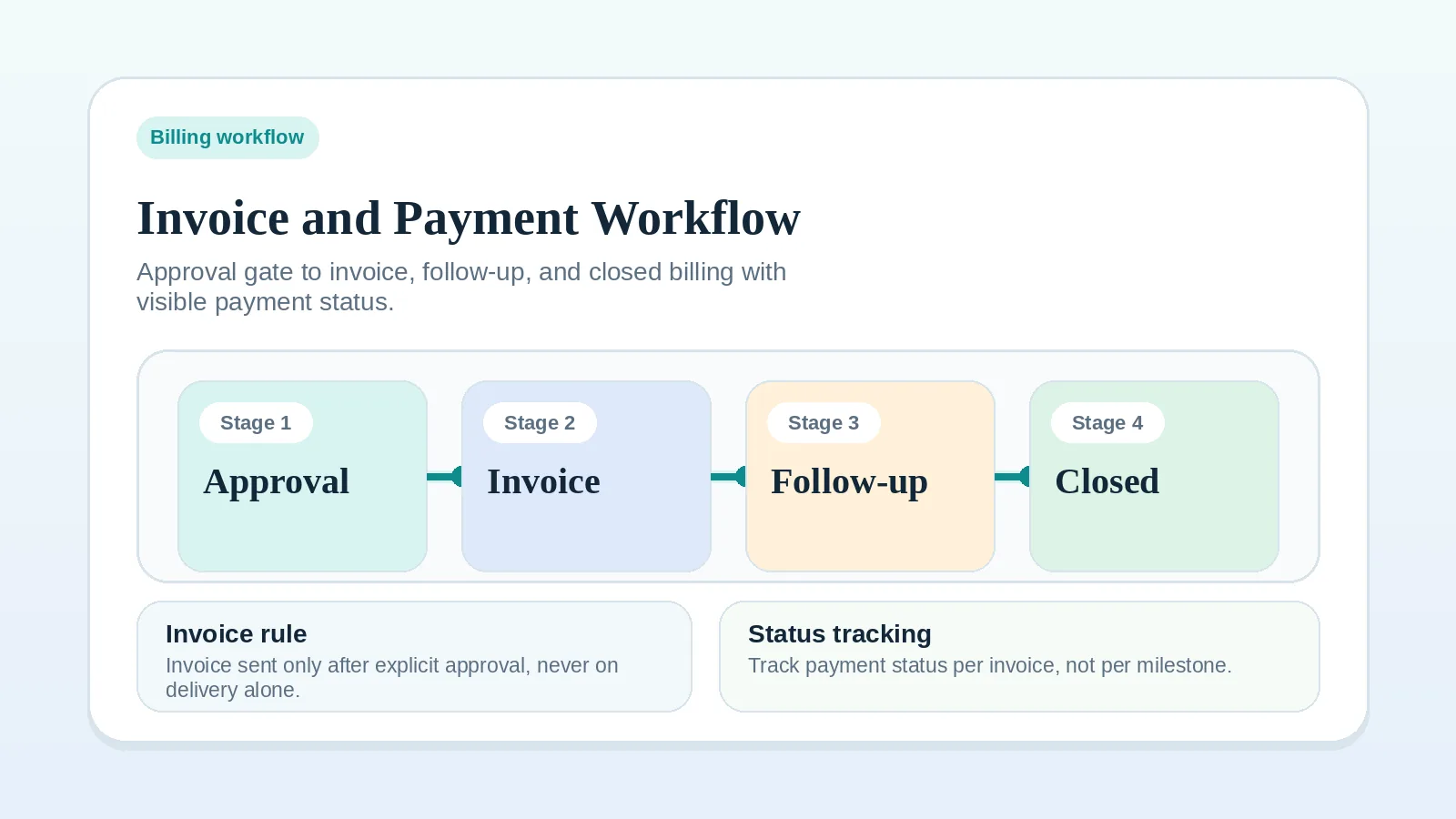
Billing must follow the trigger stated in the agreement and that trigger needs a visible record. See Milestone delivery workflow for solo service businesses and Invoice and payment workflow setup.
Invoice closure to offboarding
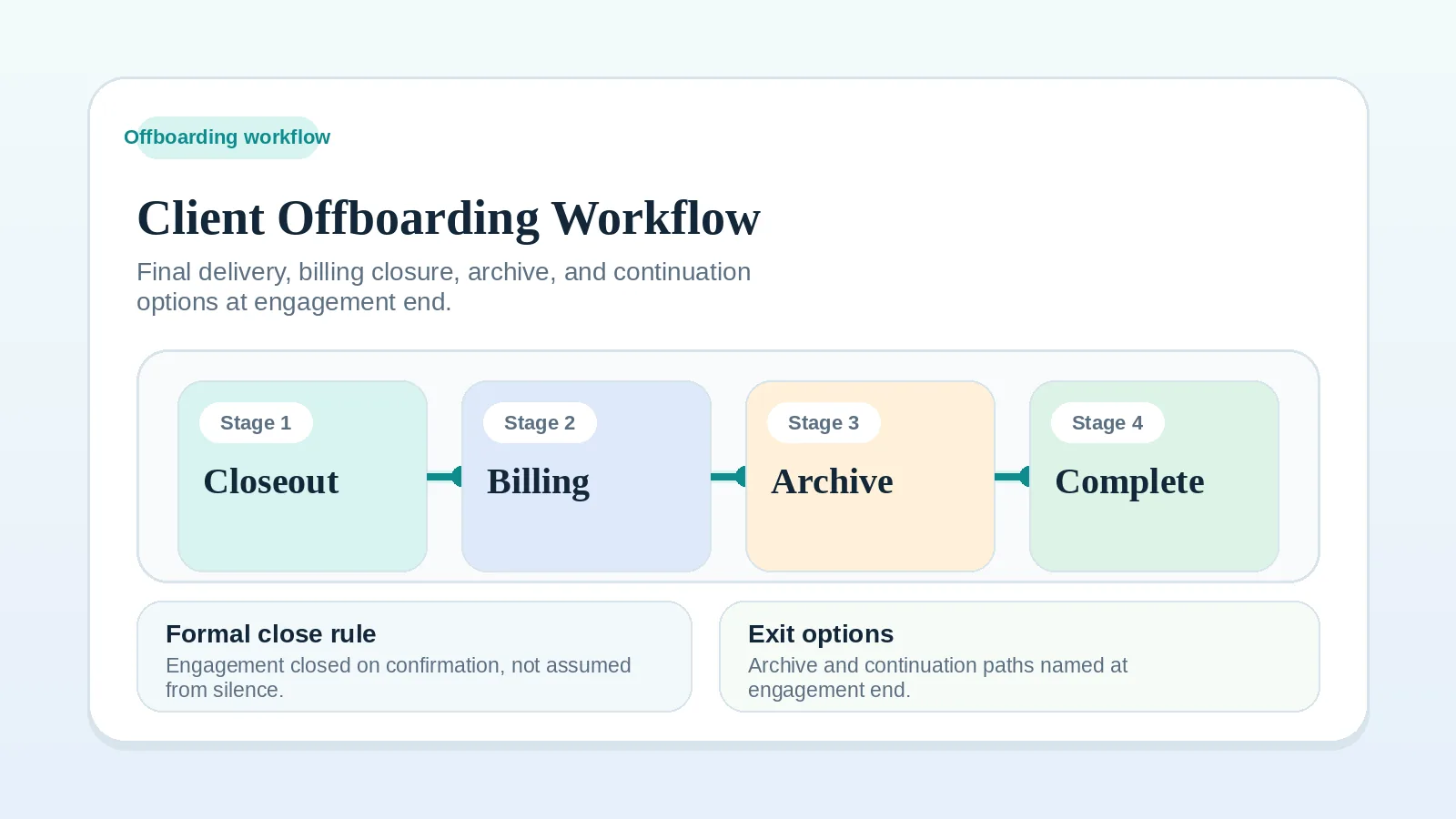
Closeout depends on a recorded billing state and final handoff conditions. See Invoice and payment workflow setup and Client offboarding workflow for freelancers and solo service businesses.
Signs the handoff rule is too weak
- the next stage is active before its inputs are fully visible,
- approval exists only as a vague feeling or chat impression,
- no one can name who owns the very next action,
- blocked states are hidden inside ordinary status updates,
- billing or closeout triggers happen because it feels “about time.”
Continue with the next stage
- If the boundary you documented is proposal review moving into kickoff, continue to Client onboarding workflow for freelancers and consultants.
- If the boundary is milestone completion moving into billing, continue to Invoice and payment workflow setup.
- If the boundary is payment closure moving into closeout, continue to Client offboarding workflow for freelancers and solo service businesses.
- If the stage design is still undefined, document that rule before adding more boundary detail.
Boundary record check
The record is ready when:
- one exact transition is named,
- readiness conditions are visible and testable,
- required approvals and evidence are explicit,
- the next action owner is clear,
- blocked conditions are strong enough to stop premature transition.