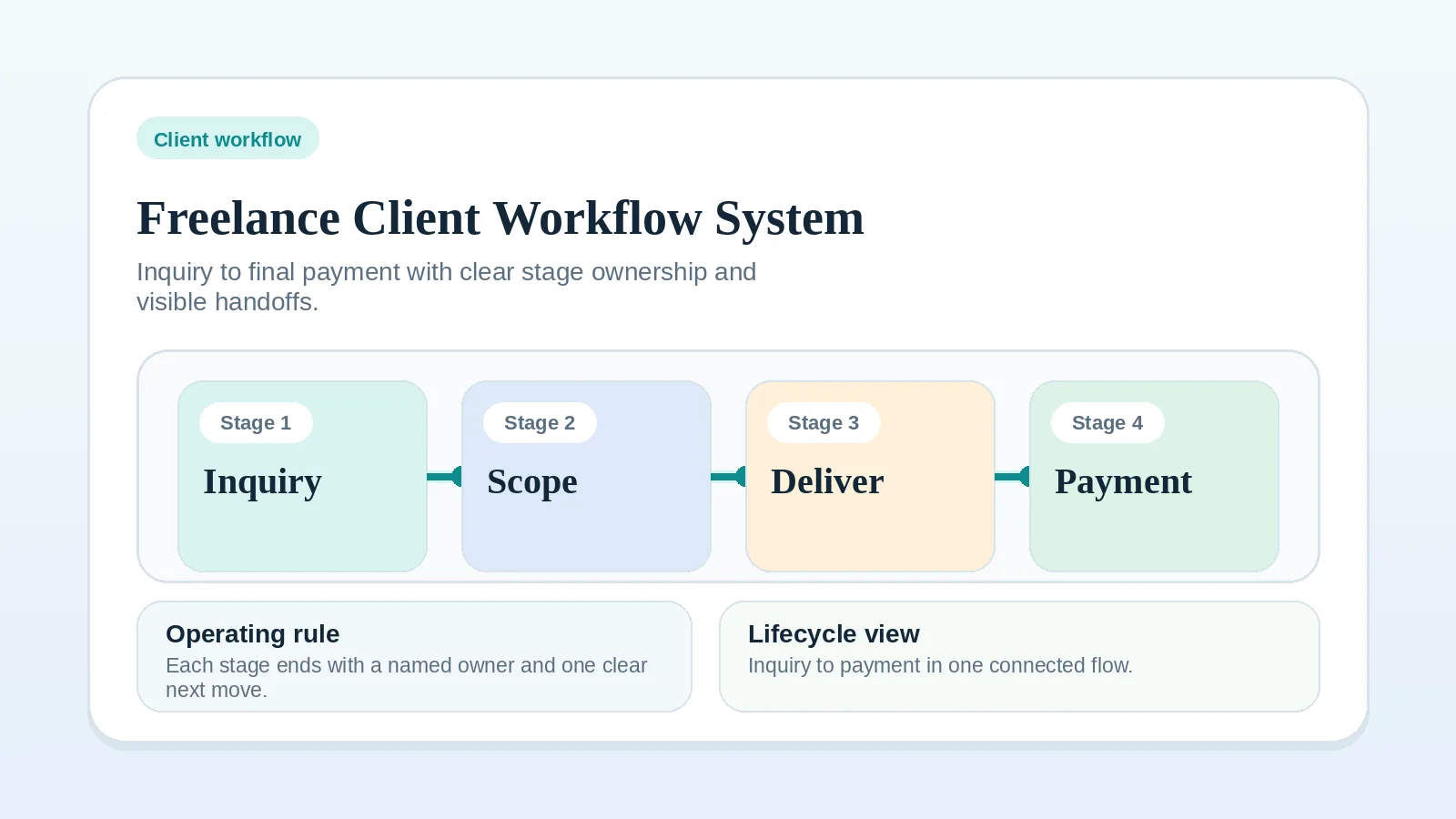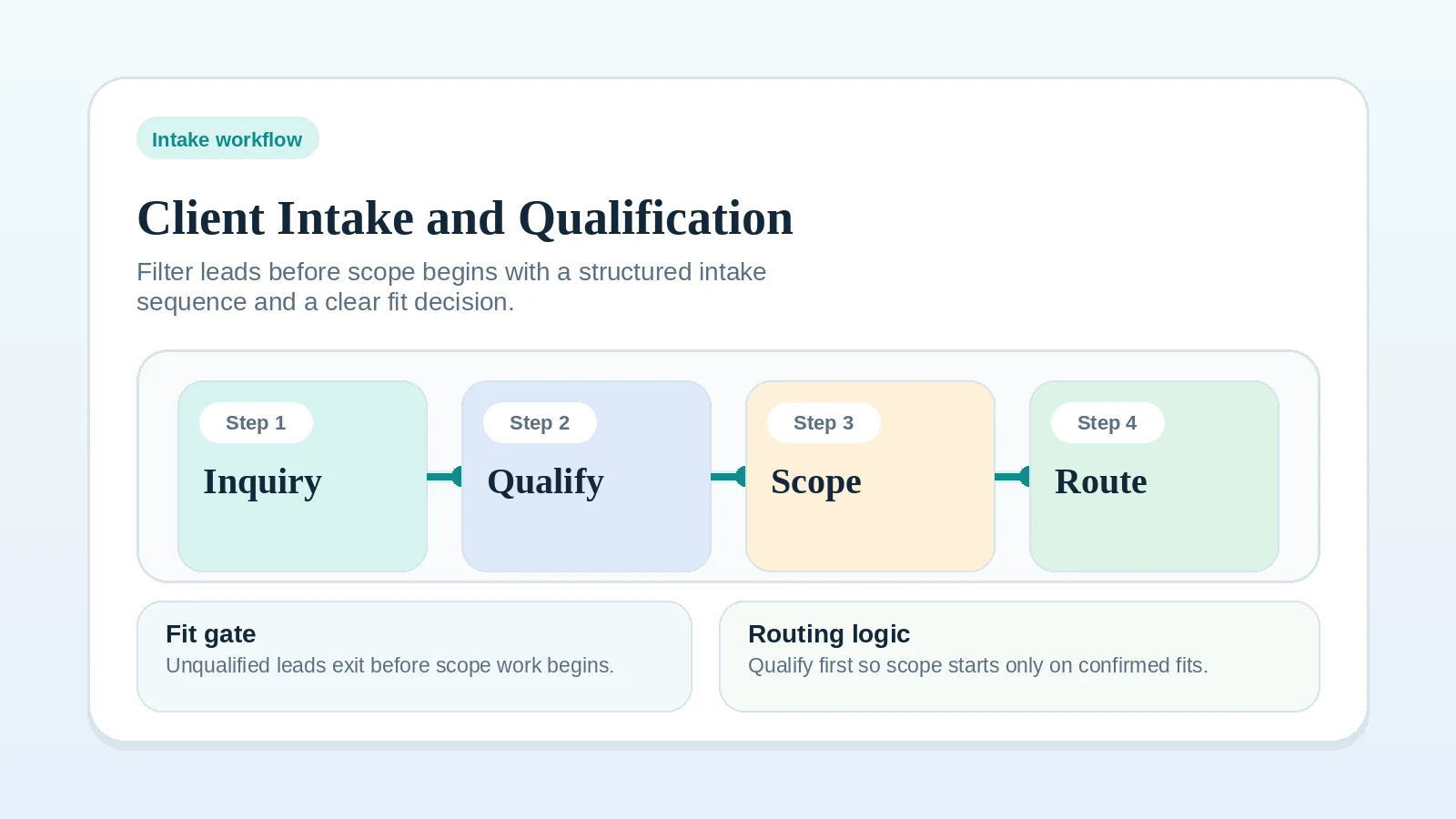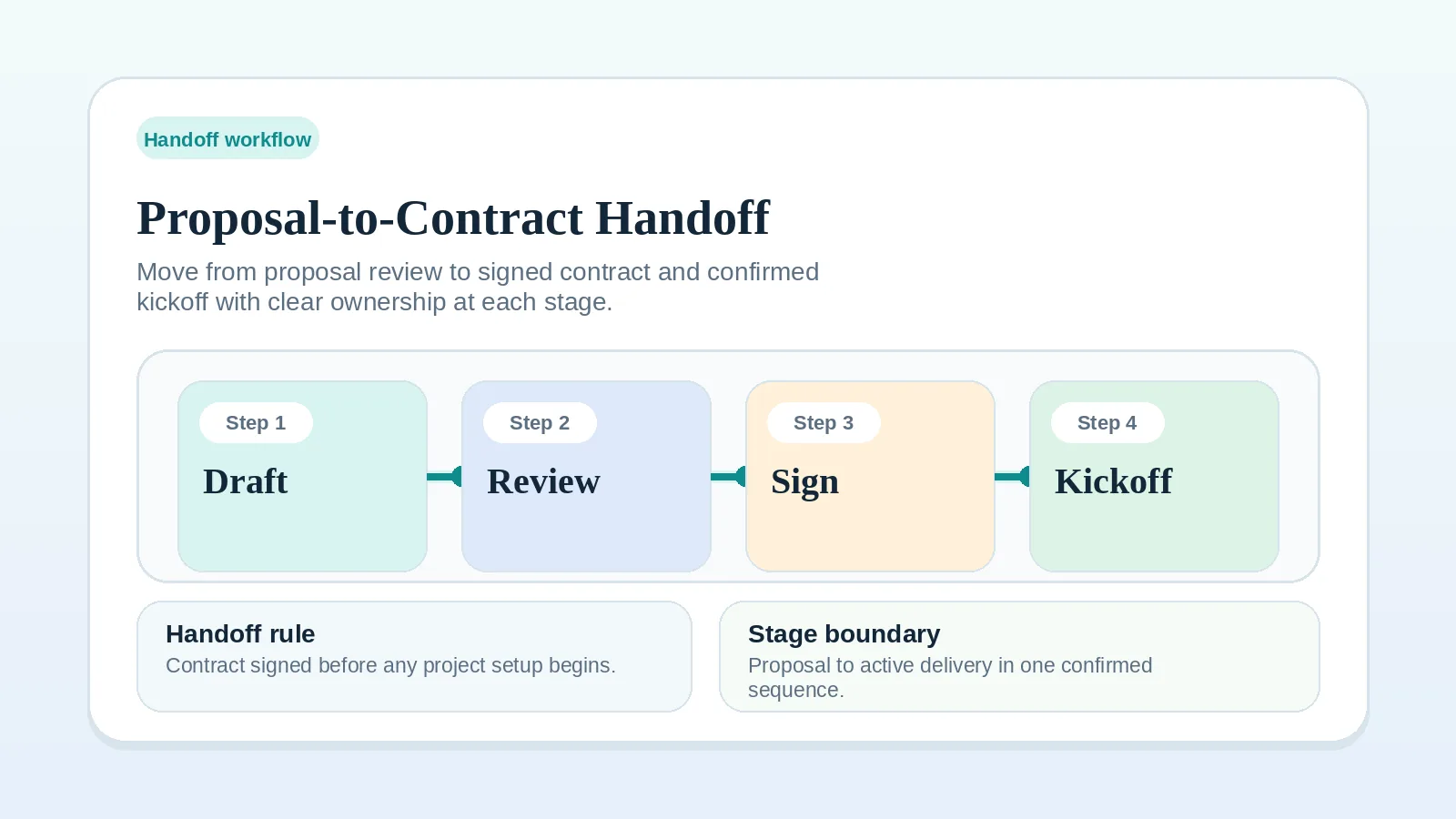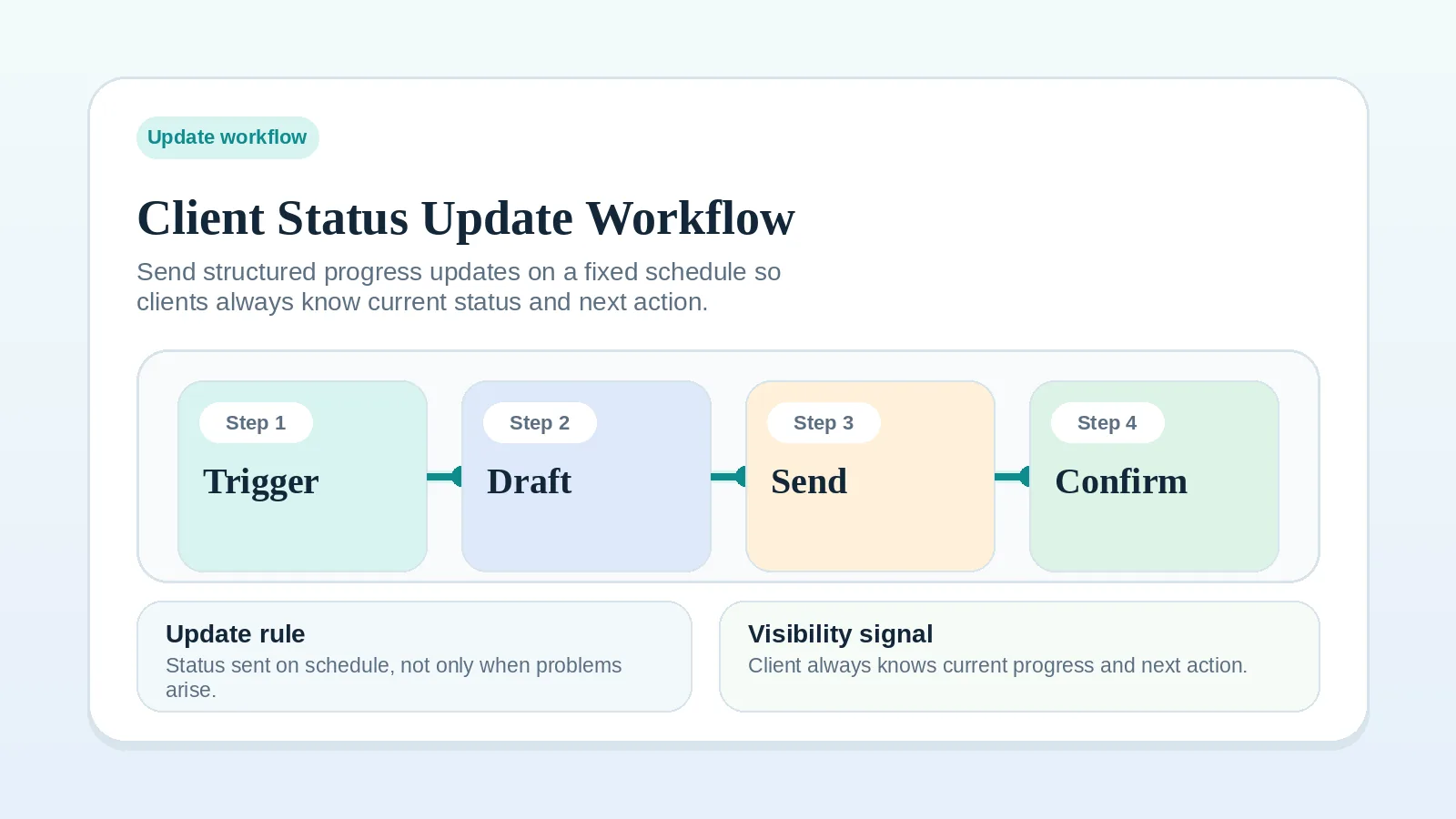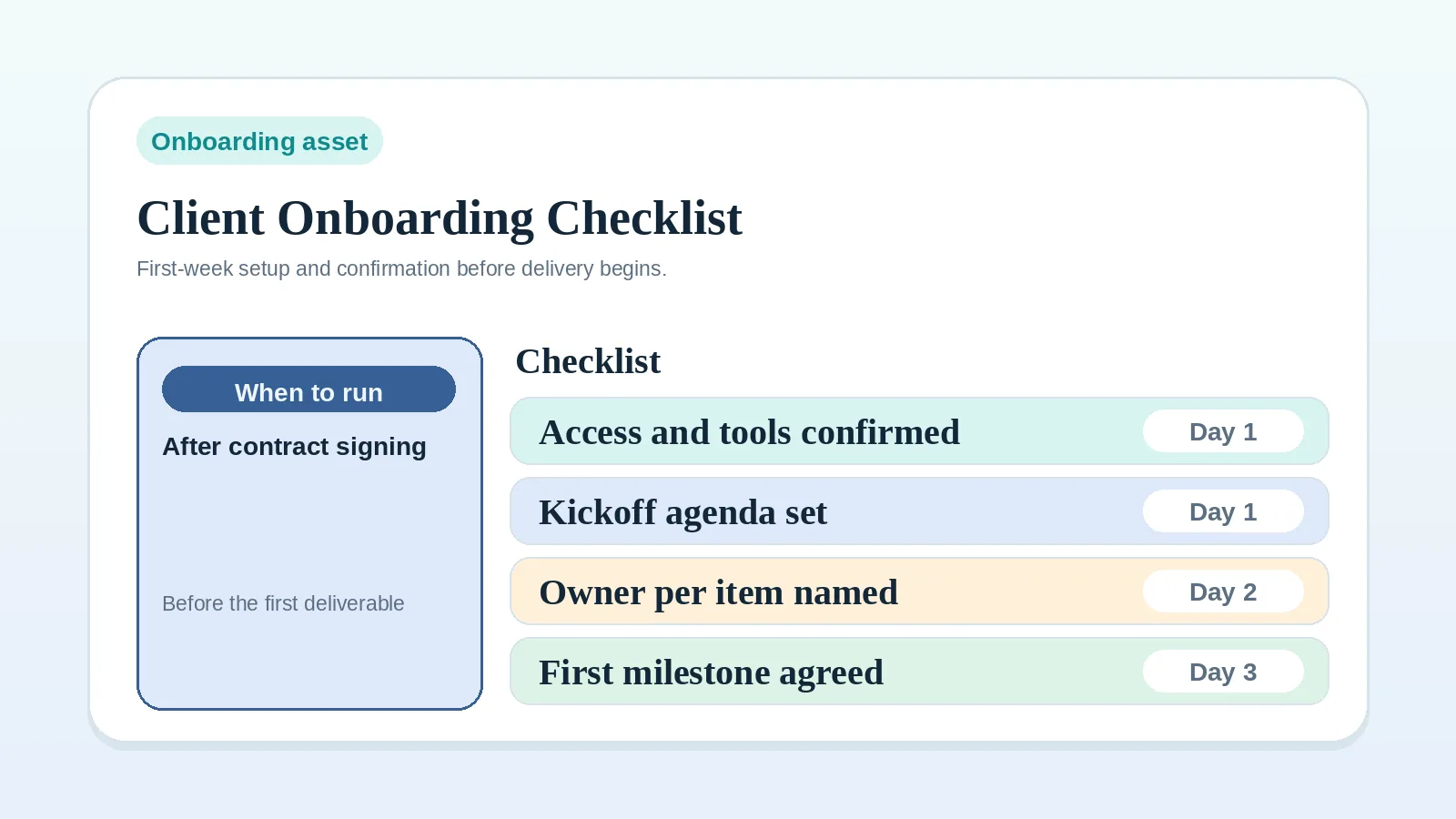
This checklist turns approved scope into a kickoff record with visible owners, dates, access requirements, and controls. Run it once the agreement permits onboarding and before delivery begins. Confirm any separate delivery start conditions, including a required deposit, before activating the first milestone.
Return to the workflow when
- proposal review is still open or approval is unconfirmed,
- the first milestone is not defined yet,
- approval ownership or communication rules still need to be chosen,
- you still need the broader sequence from handoff into kickoff.
In those cases, go back to Proposal revision and approval workflow, Proposal-to-contract handoff workflow setup, or Client onboarding workflow for freelancers and consultants before running this checklist.
Information to confirm first
- what was sold and what is excluded,
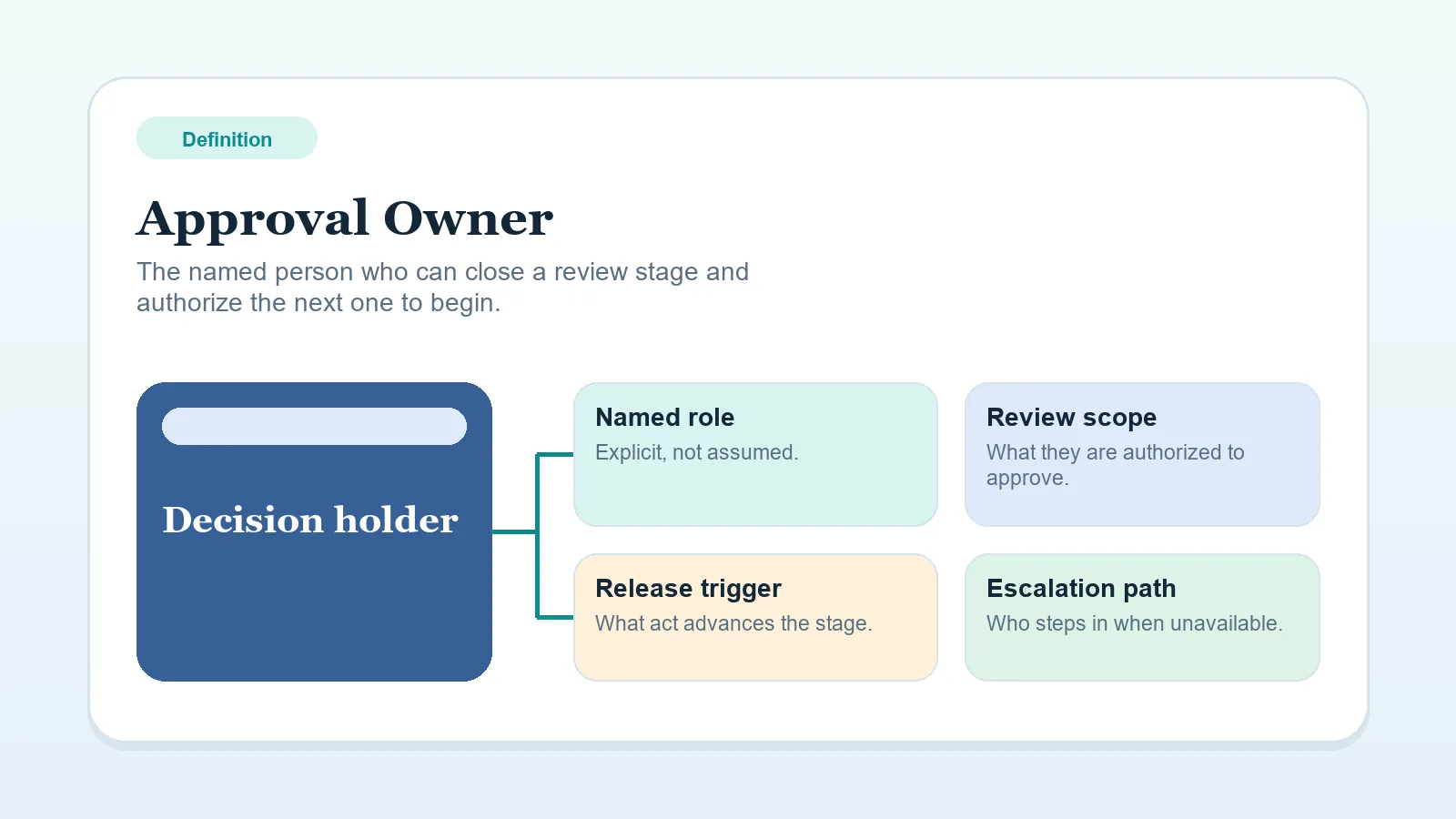
- who can approve work and answer project decisions,
- which communication channel and billing rule the project will use,
- what counts as kickoff-ready versus blocked.
If any of these is still undecided, settle it in the Client onboarding workflow first.
What the onboarding record should establish
The onboarding record makes the project operationally usable by:
- confirming what was sold,
- making ownership visible,
- collecting required access and assets,
- defining communication and approval rules,
- locking the first billing and delivery triggers.
Run the kickoff checks in order
Run the checklist in this order:
- confirm scope and approval ownership,
- collect access and assets,
- lock communication rules,
- set dates and milestone reminders,
- confirm invoice and change-control rules.
If a required item is incomplete, keep the work that depends on it blocked. Start an independent part only when its own conditions are met and the agreed plan permits that sequence.
Continue into delivery or communication
If kickoff is now clean and the first milestone is live, move next to Client status update workflow or Milestone delivery workflow for solo service businesses, depending on whether the next risk is communication rhythm or delivery execution.
Onboarding checklist
A) Scope and success alignment
- Confirm agreed deliverables and exclusions in writing.
- Confirm success criteria for the first milestone.
- Confirm owner for approvals and feedback.
B) Access and assets
- Request required access (accounts, files, brand resources).
- Confirm file naming and version workflow.
- Confirm where final deliverables will live.
C) Communication rhythm
- Confirm preferred channel for day-to-day updates.
- Set update cadence (for example: weekly status summary).
- Define response-time expectations and escalation path.
D) Timeline and milestone setup
- Confirm kickoff date and first milestone deadline.
- Confirm dependency risks (client-provided items).
- Add milestone reminders to your system of record.
E) Commercial and admin controls
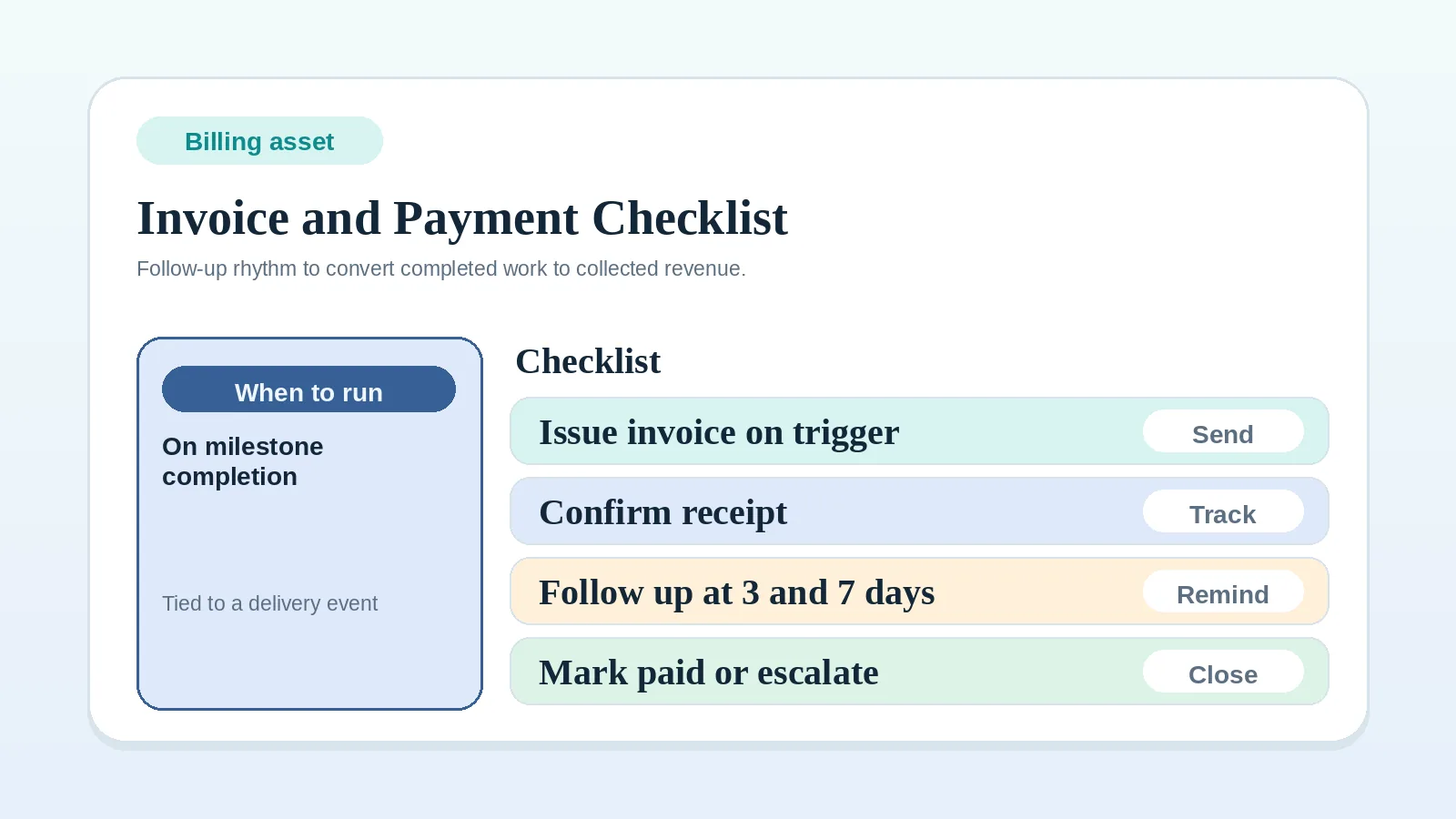
- Confirm invoice timing and payment terms.
- Confirm change request process.
- Confirm who approves scope changes.
Check readiness before kickoff
Before starting a milestone, confirm:
- Is scope written in one source of truth?
- Does each deliverable have an owner and due date?
- Does the client know where updates and files will appear?
- Are payment terms and milestone triggers clear?
- Have any payment conditions required for this milestone’s start been met?
- Are the access and assets needed for this milestone available and usable?
Common onboarding misses
- The contract is signed, but no one translated it into a working delivery plan.
- Access collection happens ad hoc after work is supposed to begin.
- Communication rules stay implicit until the first delay or missed approval.
- Billing terms exist in the contract but are absent from the live project record.
Edge cases to handle intentionally
- If the client has multiple approvers, name the final approver before kickoff rather than discovering it during delivery.
- If client assets will arrive in waves, define which missing items block work and which do not.
- If the project starts with a workshop or strategy call, decide whether that event itself counts as kickoff or only as pre-delivery alignment.
Create the first live records
- Create the first live milestone in your system of record.
- Send the kickoff summary with owners, dates, and update cadence.
- Issue a deposit or kickoff invoice when its agreed trigger occurs. If payment is required before delivery, confirm it before activating the milestone.
Onboarding record check
Treat onboarding as complete only when:
- scope and exclusions are visible in one place,
- first milestone and owner are active in the system,
- communication and approval rules are explicit,
- required access and assets for the work being started are available and usable; later dependencies have owners and due points,
- any work with an unmet start condition remains blocked, even if the missing item is recorded.
Guides that define the surrounding process
- Workflow context: Freelance client workflow system: inquiry to final payment
- Intake setup: How to build a client intake and qualification workflow
- Contract transition: Proposal-to-contract handoff workflow setup
- Full onboarding rule: Client onboarding workflow for freelancers and consultants
- Ongoing communication rhythm: Client status update workflow