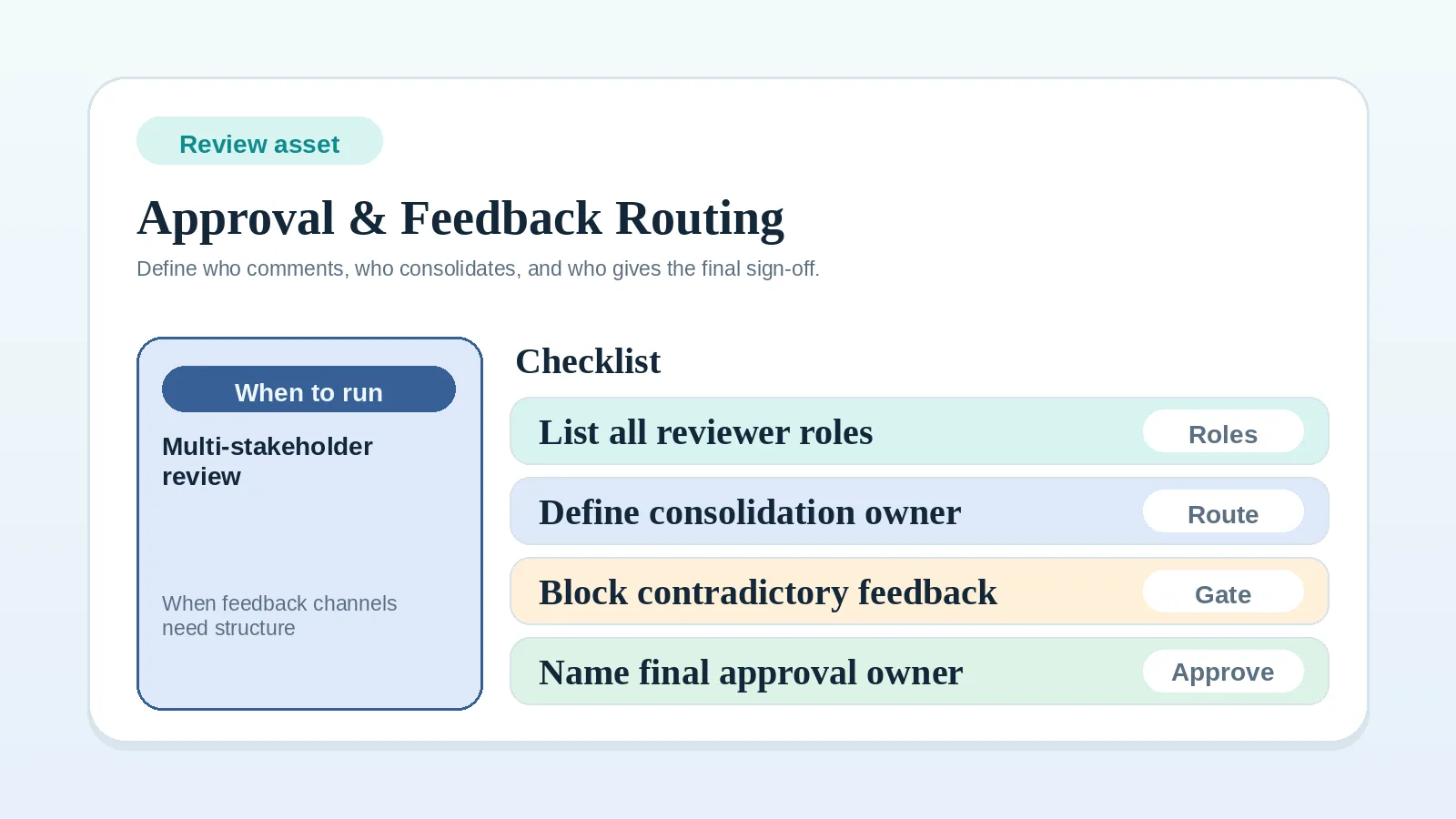
When several people can shape a review outcome, define one route for comments, one consolidation owner, one final approval path, and rules for conflicting or late feedback.
When feedback comes from several places
- several client stakeholders want to comment on the same proposal or deliverable,
- feedback arrives through email, chat, calls, and side messages at the same time,
- contradictory comments are causing rework,
- one final approval is needed before billing, handoff, or the next revision round.
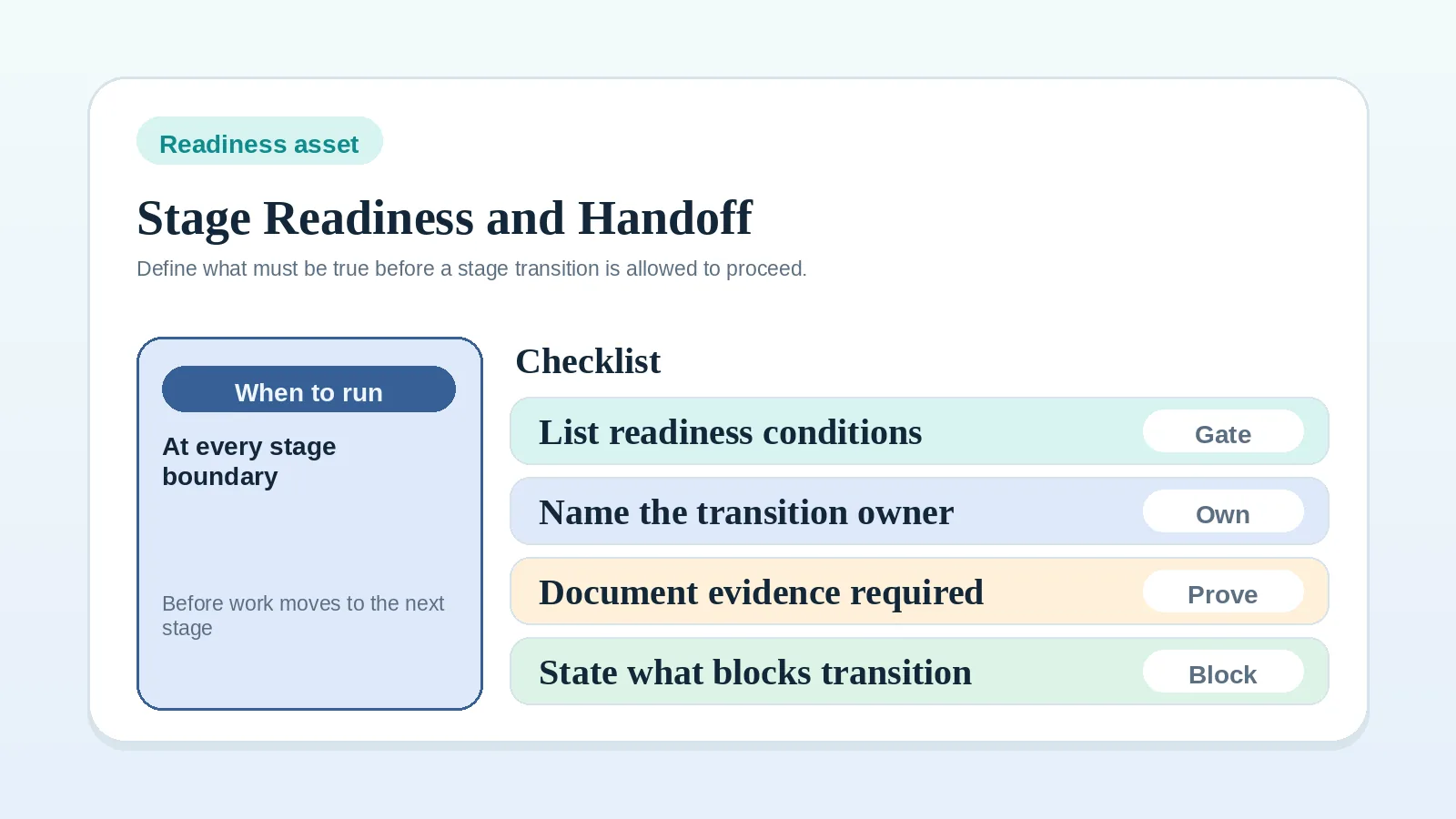
If the bigger problem is still stage readiness rather than review routing, use Project start handoff readiness worksheet first.
If the main problem is that a specific client-side answer, file, or approval item is missing, use Client input dependency worksheet for solo operators instead.
What the worksheet leaves to other records
This worksheet does not settle:
- the entire proposal workflow,
- the full delivery workflow,
- whether someone has legal or commercial authority to approve in the first place,
- whether the underlying scope is correct.
Set legal or commercial authority in the agreement and define the underlying scope before using this worksheet. This worksheet covers how input moves once a review stage is active.
Map one review stage
- Document one review stage at a time.
- Name one consolidation path instead of letting comments stay scattered.
- Name one final approval path even if many people can comment.
- Decide in advance what happens to comments that arrive after approval.
When reviewers use several channels, designate one person and record to consolidate the result before revision begins.
Approval and feedback routing worksheet
| Review stage | Who can comment | Who consolidates feedback | Who gives final approval | Allowed review channels | Conflict rule | Late-comment rule |
|---|---|---|---|---|---|---|
| Proposal review | named stakeholders only | operator or client lead | approval owner | one doc or one email thread | conflicting comments pause revision until one decision is returned | comments after approval become a new revision request only if the stage is reopened |
| Deliverable review | client reviewers + internal approver | designated client lead or operator | approval owner | review doc, portal, or one thread only | unresolved conflict blocks milestone close | late comments after acceptance become revision or change request input |
| Final closeout review | primary client contact only | operator | signoff owner | one closeout reply path | unresolved issue blocks closeout state | late comments become post-closeout follow-up, not hidden reopen |
Review stage being documented
Define:
- what review moment this is,
- what decision the review should produce,
- what the output should be once review closes.
Examples:
- proposal review before signature,
- milestone review before billing,
- final closeout review before archive or testimonial ask.
Match the routing rule to the review stage because proposal comments, milestone comments, and closeout comments lead to different decisions.
Who can comment
List:
- named roles or people who can submit review input,
- whether they are advisory or decision-making,
- whether all comments must come through one client-side lead.
When everyone can comment directly without a routing rule, the operator has to reconcile conflicting input before revision work can proceed.
Who consolidates feedback
Document:
- who gathers comments into one usable set,
- where the consolidated feedback lives,
- when scattered comments must be merged before any revision work starts.
Assign one person to consolidate comments, whether that is the client lead, the operator, or another named reviewer.
Who gives final approval
Write:
- the final approval owner,
- what they are allowed to approve,
- what message or state counts as approval,
- what does not count.
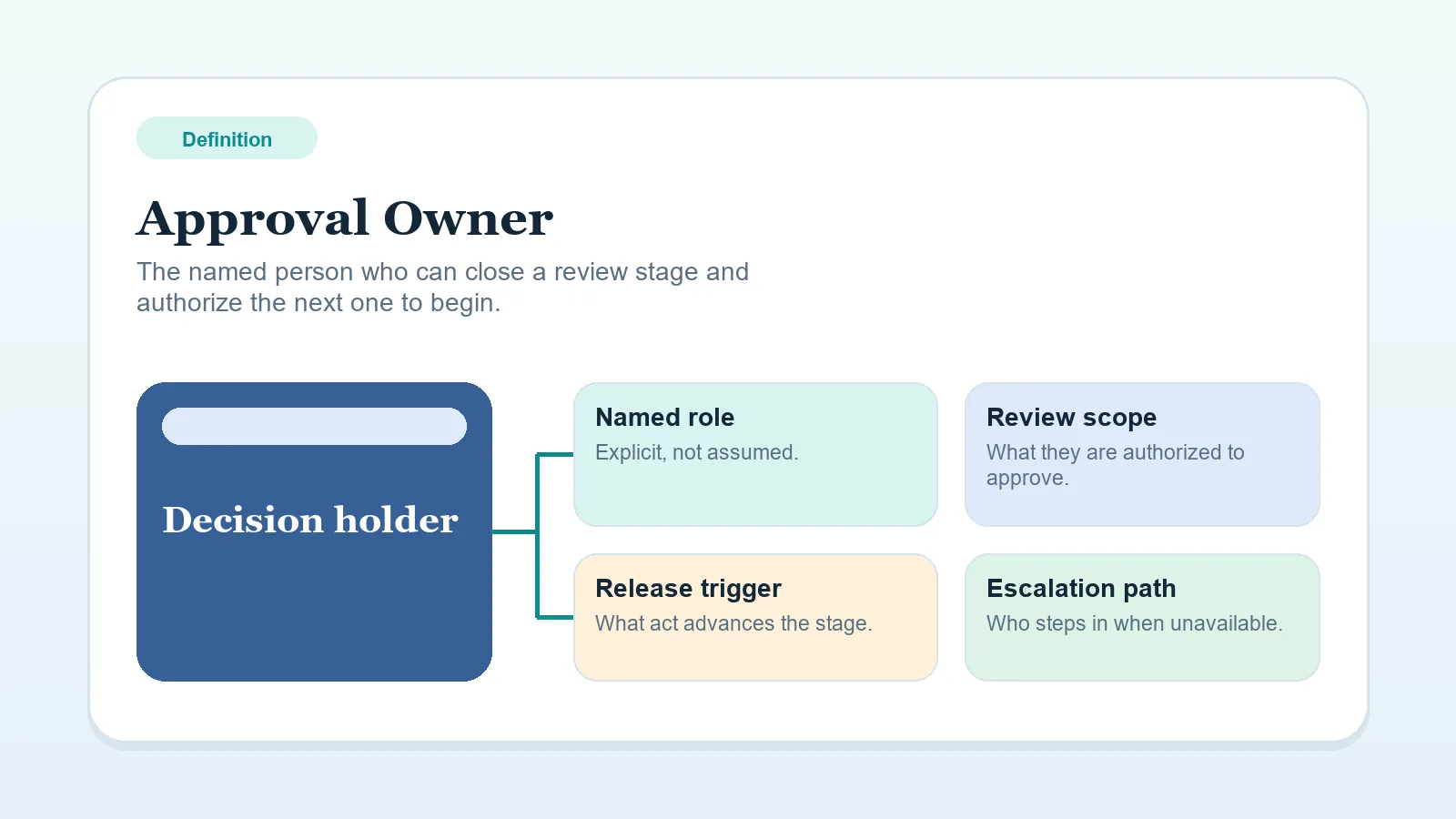
Use the Approval owner definition for final authority, then document how comments reach that owner before the decision.
What channels are allowed for review input
Define the allowed channels explicitly.
Examples:
- one shared review doc,
- one portal review thread,
- one named email thread,
- one operator-managed comment form.
Also define what is not allowed:
- comments scattered across several chats,
- verbal comments with no written confirmation,
- side-channel stakeholder messages that bypass the agreed review path.
What happens when feedback conflicts
Write the rule for:
- contradictory reviewer comments,
- scope-changing comments mixed into ordinary review,
- comments from people who are not the final approver,
- comments that arrive without context.
Useful default rule:
- pause revision,
- return one consolidated conflict list,
- ask the client-side lead or approval owner for one resolving answer,
- do not implement conflicting feedback in parallel.
How to handle late comments after approval
Define:
- whether approval closes the review stage fully,
- what qualifies as a late comment,
- whether a late comment becomes a new revision request, a change request, or a new phase input.
This rule prevents a late comment from silently reopening a stage that the recorded approval already closed.
Review situations
Proposal review with multiple stakeholders
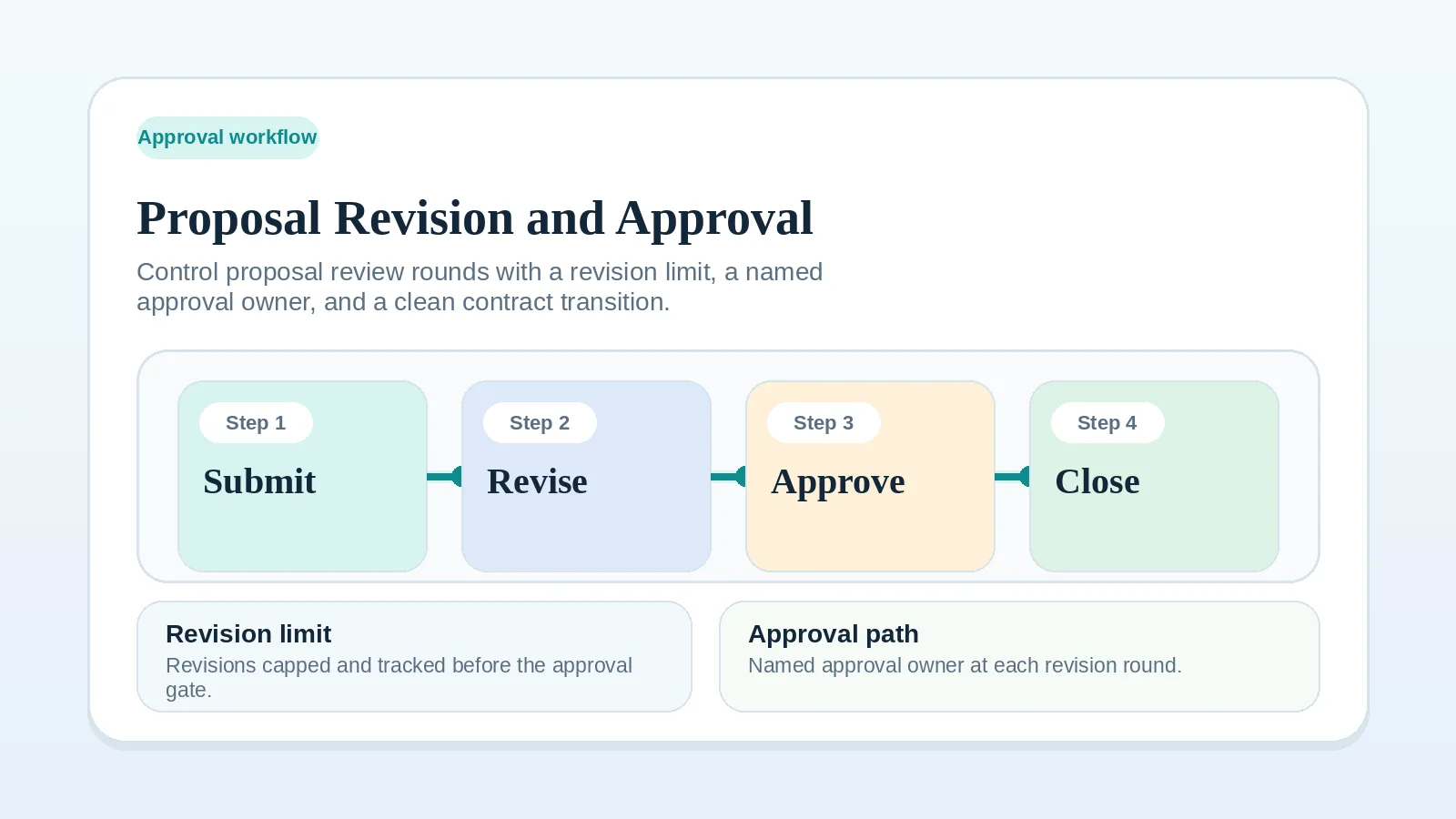
Commercial, legal, and delivery reviewers all comment before signature. See Proposal revision and approval workflow and Approval owner.
Deliverable review with client + internal approver
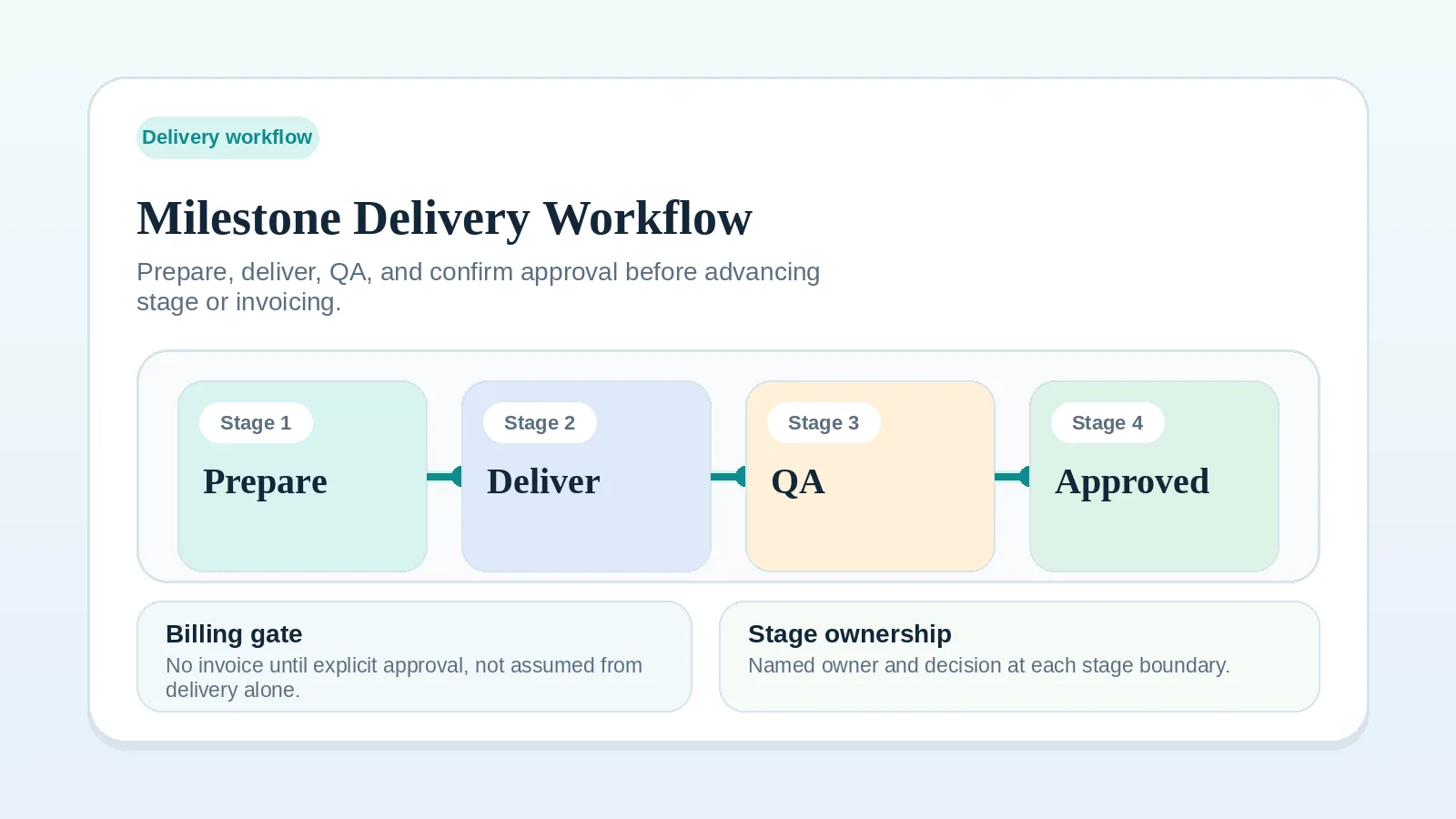
One person reviews the work closely but another person must accept it formally. See Milestone delivery workflow for solo service businesses and Project start handoff readiness worksheet.
Revision loops with scattered comments
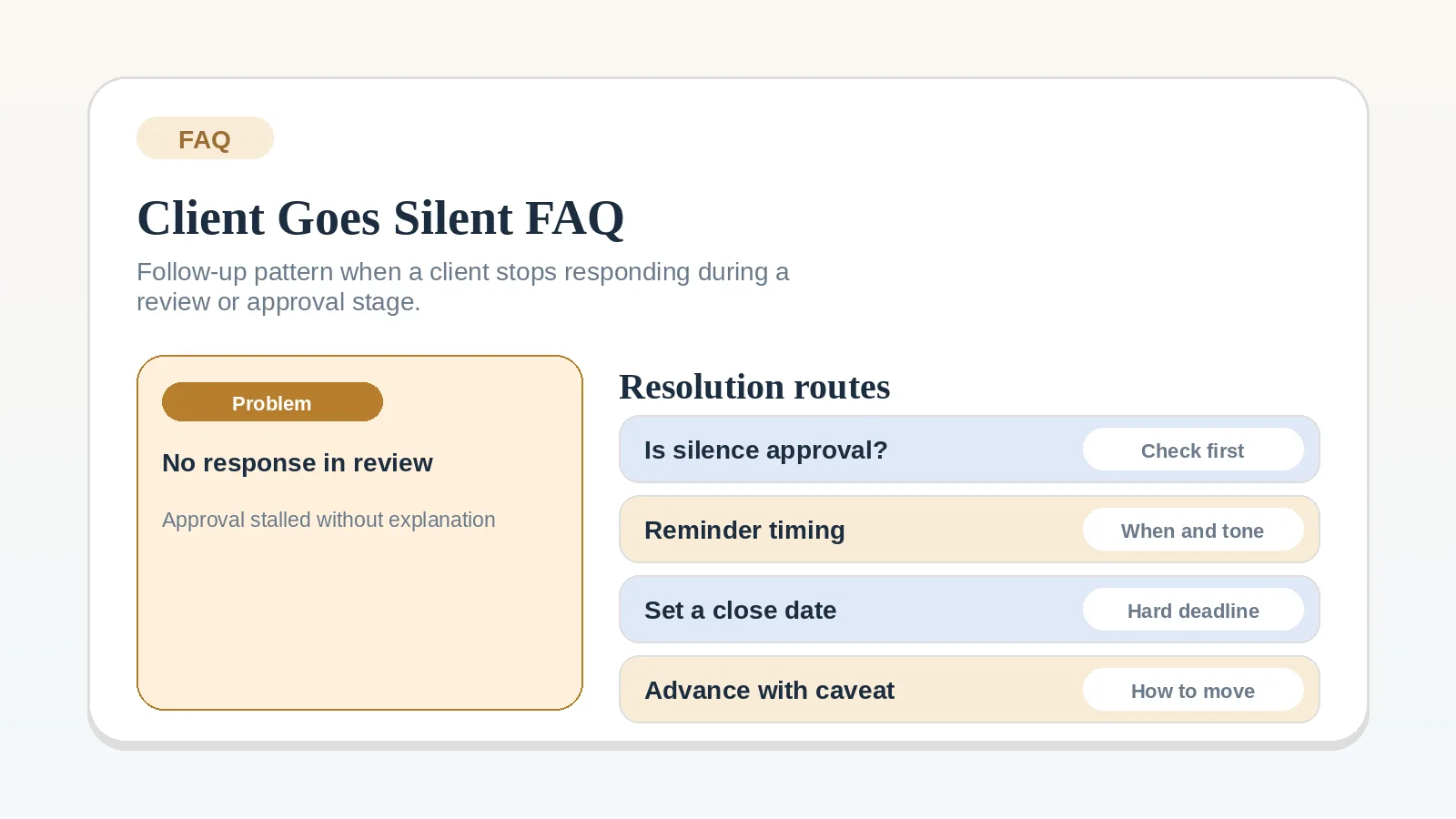
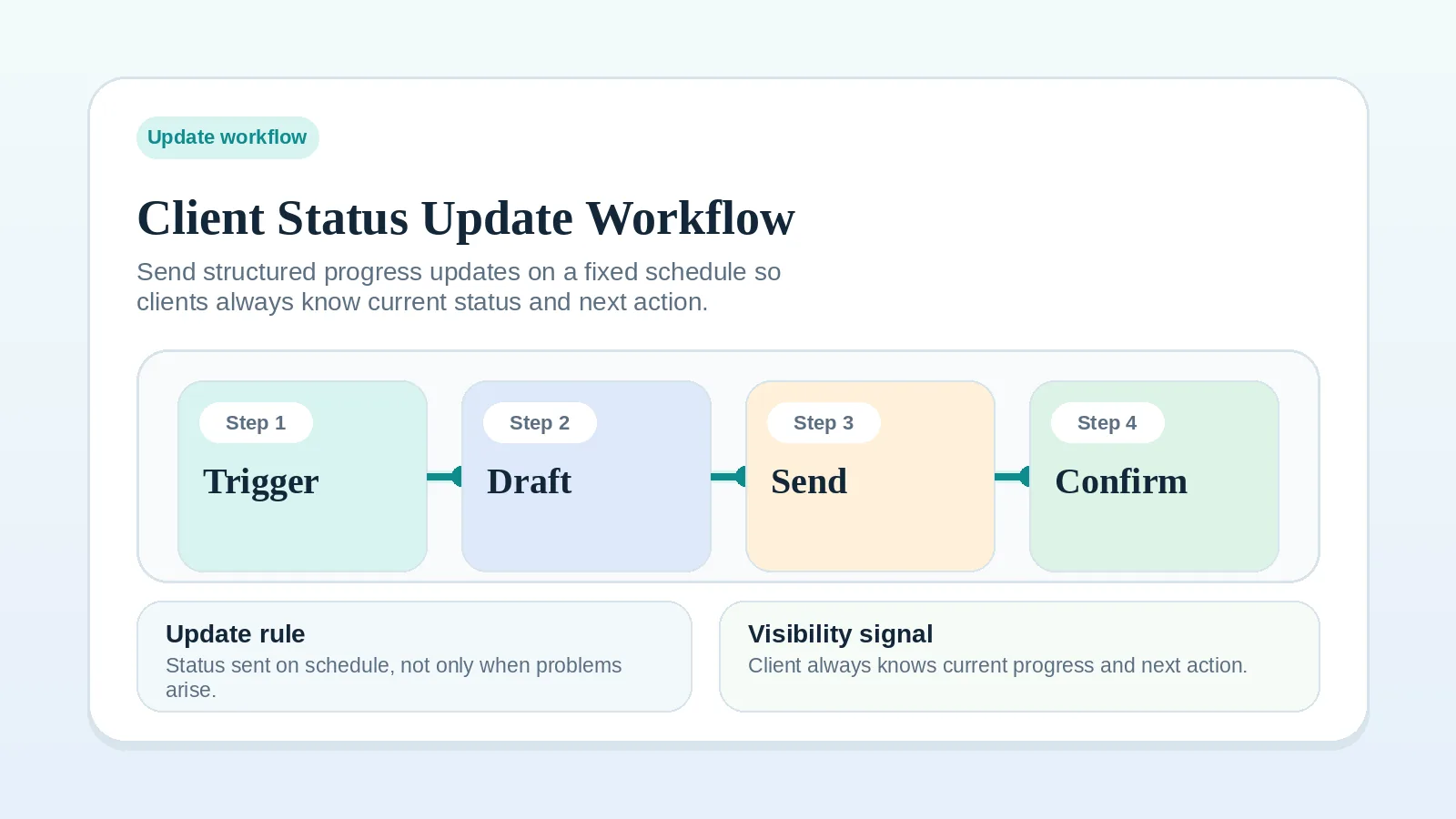
Comments arrive from several threads and no single revision set exists. See FAQ: what should I do when a client goes silent during review? and Client status update workflow.
Warning signs of broken approval routing
- several people comment, but no one returns one consolidated answer,
- final approval is still unclear after comments are already being applied,
- reviewers use side channels because the main review path was never enforced,
- contradictory feedback creates hidden rework,
- approval happens informally and then new comments keep reopening the work.
Route the result into the active workflow
- If the review stage is proposal review before signature, continue to Proposal revision and approval workflow.
- If the review stage is milestone or deliverable review, continue to Milestone delivery workflow for solo service businesses.
- If approval authority is unclear, define the approval owner before applying the routing rule.
- If silence is the main issue after routing is defined, continue to FAQ: what should I do when a client goes silent during review?
Routing rule check
The rule is ready when:
- one review stage is documented clearly,
- who can comment is narrower than “everyone involved”,
- one consolidation path is explicit,
- one final approval path is explicit,
- late comments and conflicting comments have a defined handling rule.