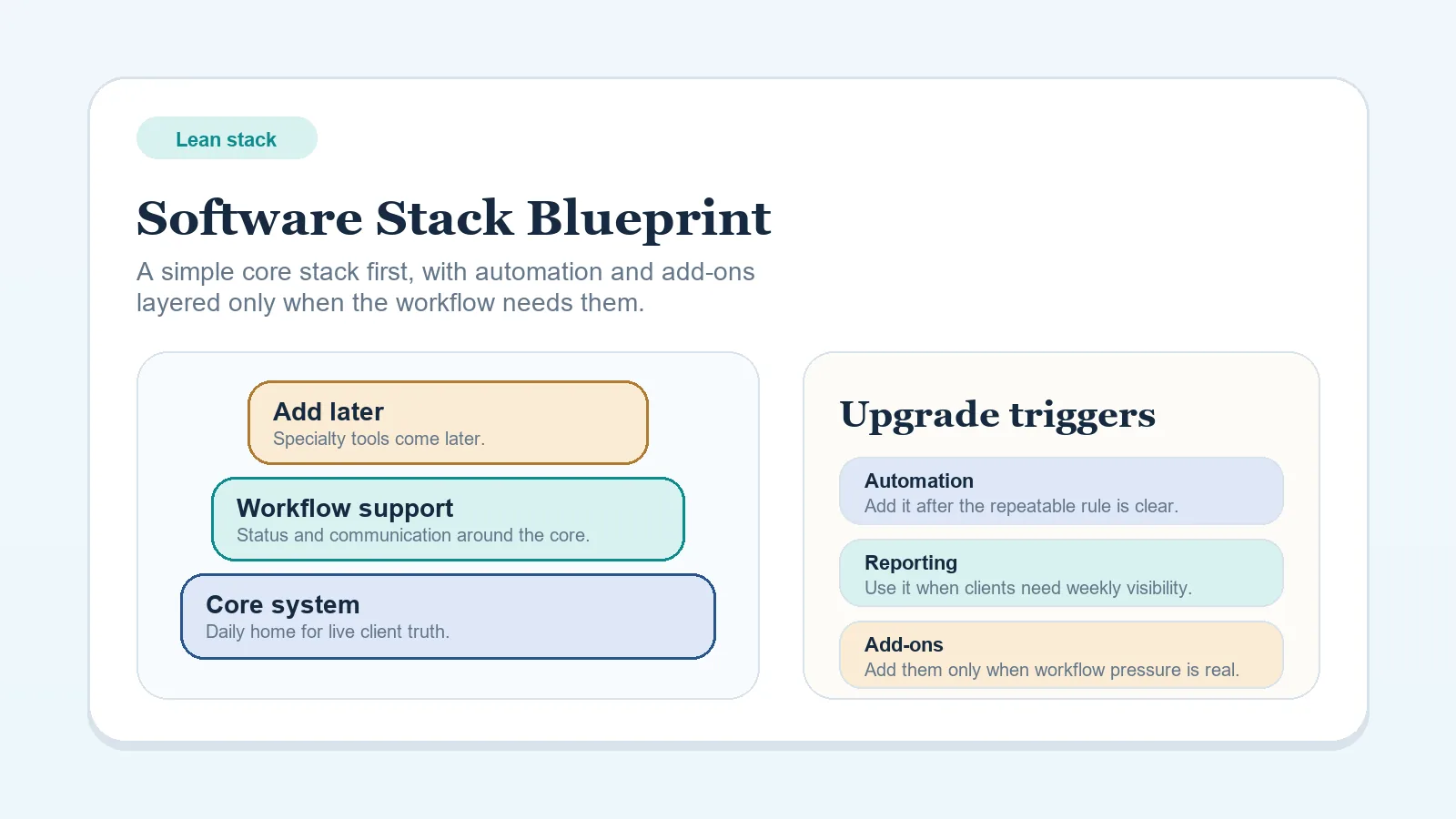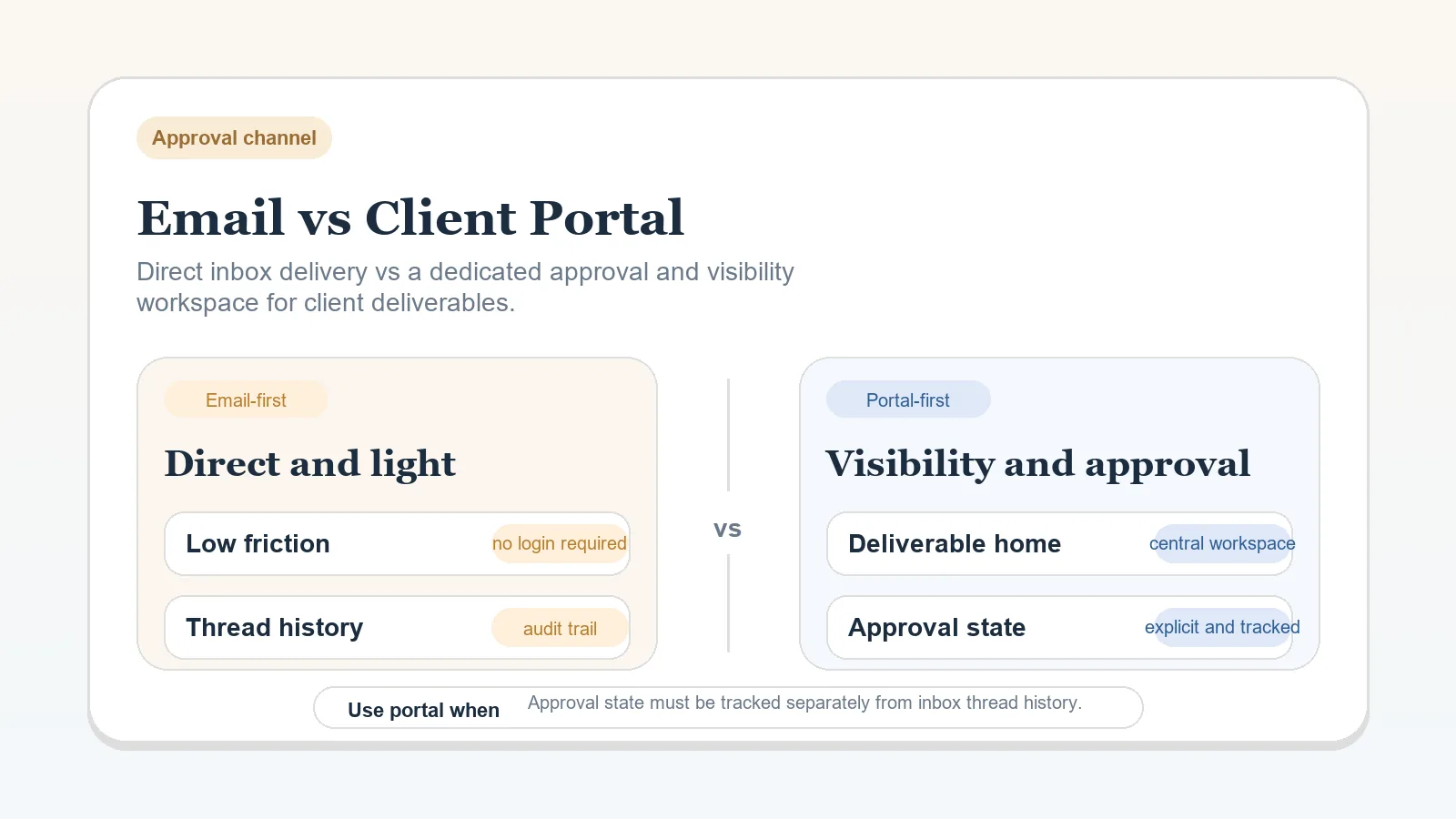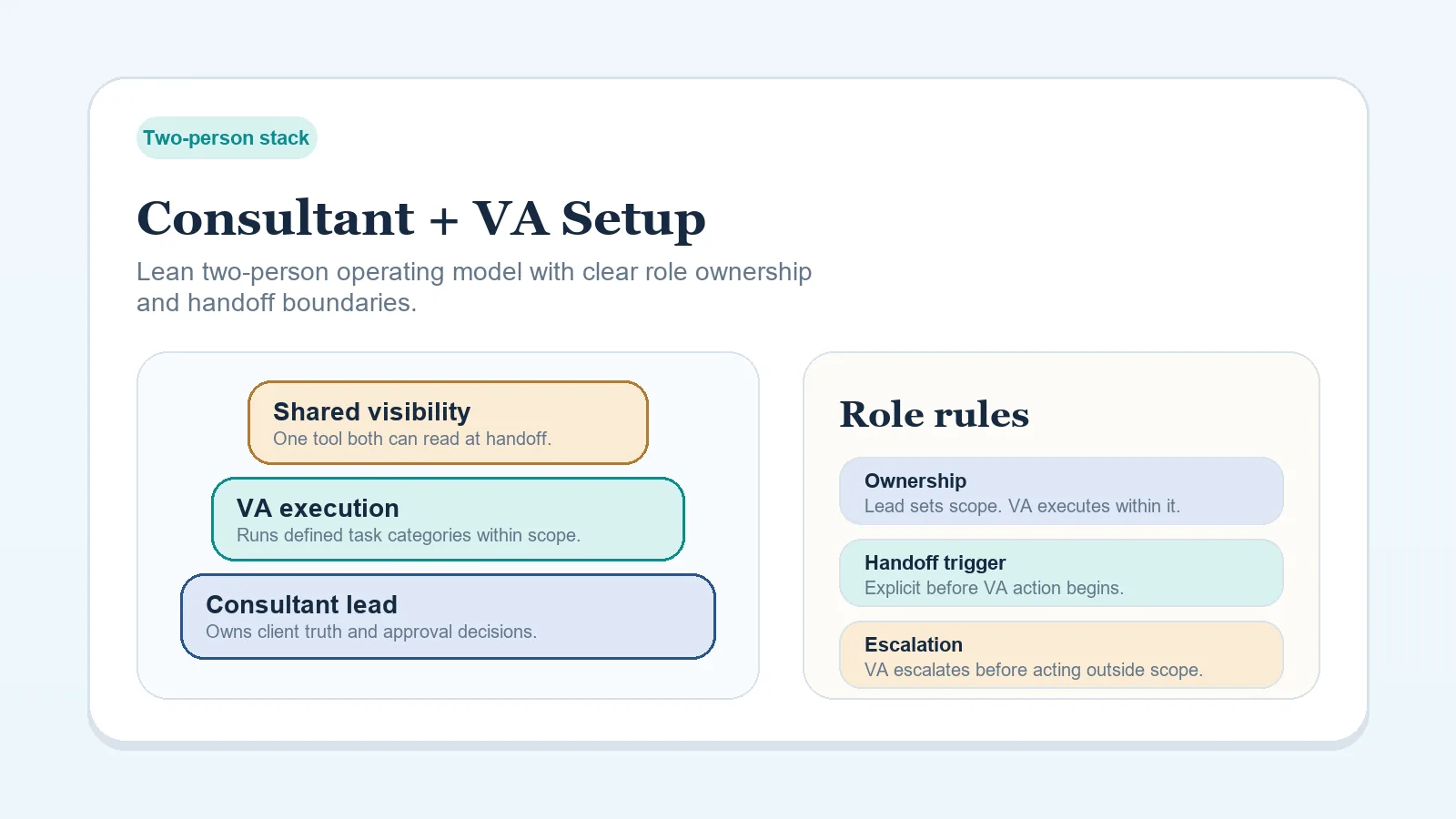
Adding a VA collaborator creates an internal handoff. The stack must show which decisions remain with the consultant, which repeatable actions the VA can complete, and where both people see current client status.
Use this model when the consultant still owns scope, professional judgment, and client commitments while the VA handles defined administrative work. If both roles make delivery or commercial decisions, document that broader operating model before using this division.
Define decision rights first
Agree on four categories:
- actions the VA may complete without review;
- actions the VA may prepare but the consultant must approve;
- actions reserved for the consultant;
- exceptions that pause the workflow and require a decision.
Record the boundary beside the workflow step. A job title alone does not tell either person what authority applies.
Assign records and actions
The table below is an example division, not a universal staffing rule. Adapt it to the service, contract, access policy, and actual competence of each person.
| Workflow area | Consultant responsibility | VA responsibility |
|---|---|---|
| Qualification | Decide fit and approve exceptions | Collect required intake data and route complete records |
| Proposal and contract | Decide scope, price, terms, and approval | Prepare approved material and track the next action |
| Onboarding | Lead commitments and client decisions | Run the checklist and follow up for named inputs |
| Delivery | Decide milestones, changes, and escalations | Maintain status and surface blockers |
| Billing | Authorize the invoice trigger and exceptions | Prepare or send according to the written rule |
| Closeout | Approve final handoff and relationship decisions | Complete records, access checks, and routine follow-up |
Do not delegate legal, financial, privacy, or contractual authority through this table. Use the actual agreement and qualified advice where needed.
Give each record one home
Both people need the same answer to these questions:
- What stage is the client in?
- What happens next?
- Who owns that action?
- What input or approval is missing?
- Does billing state affect the next move?
The VA does not need access to every system. Grant the least access required for assigned work, and review permissions when responsibilities change.
Use the system-of-record rules worksheet if two tools contain overlapping client facts.
Design the handoff
For each delegated action, record:
- the trigger;
- the required input;
- the permitted action;
- the expected output;
- the review requirement;
- the exception route.
A handoff is ready when the VA can identify success and know when to stop without guessing at the consultant’s judgment.
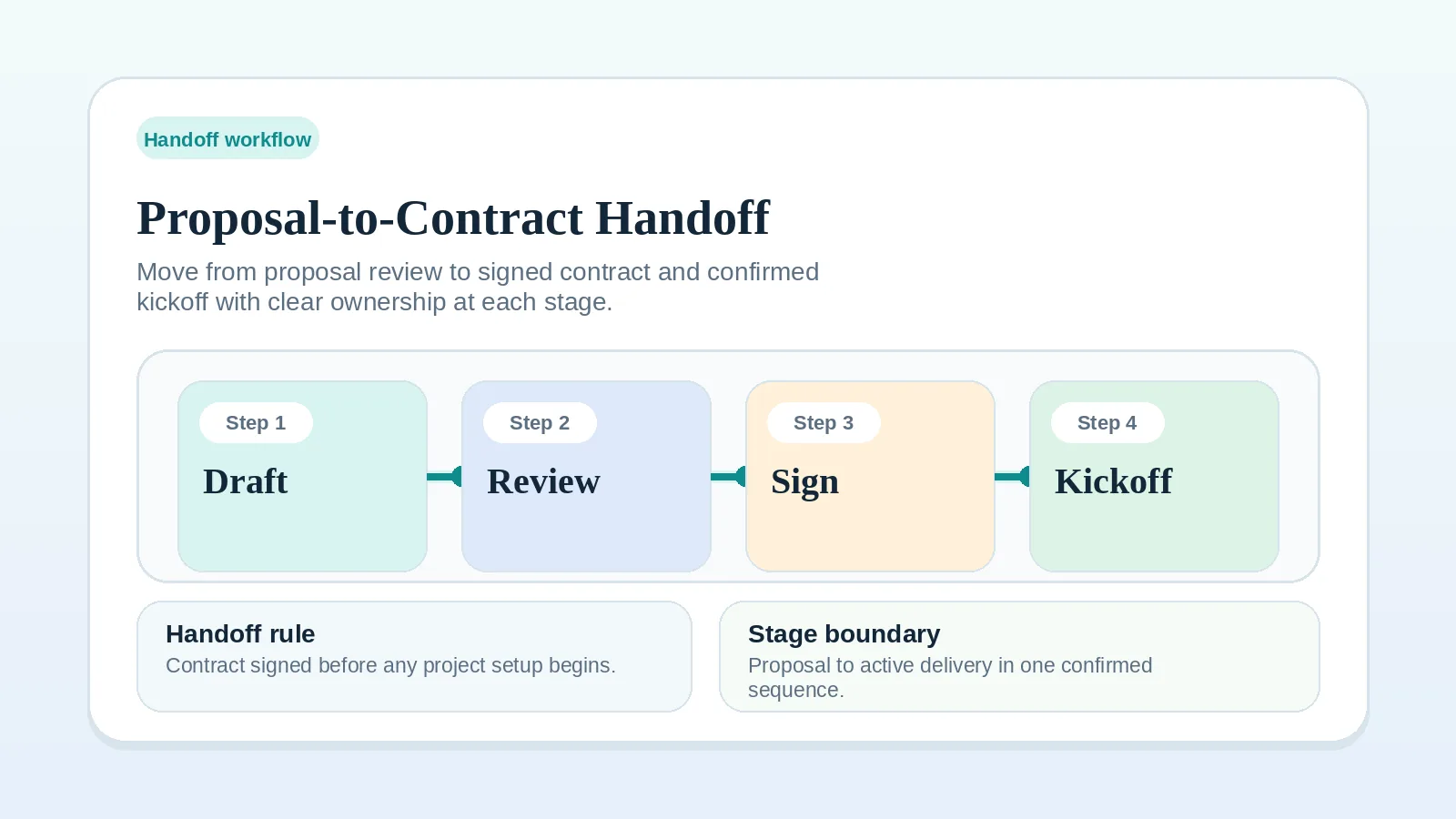
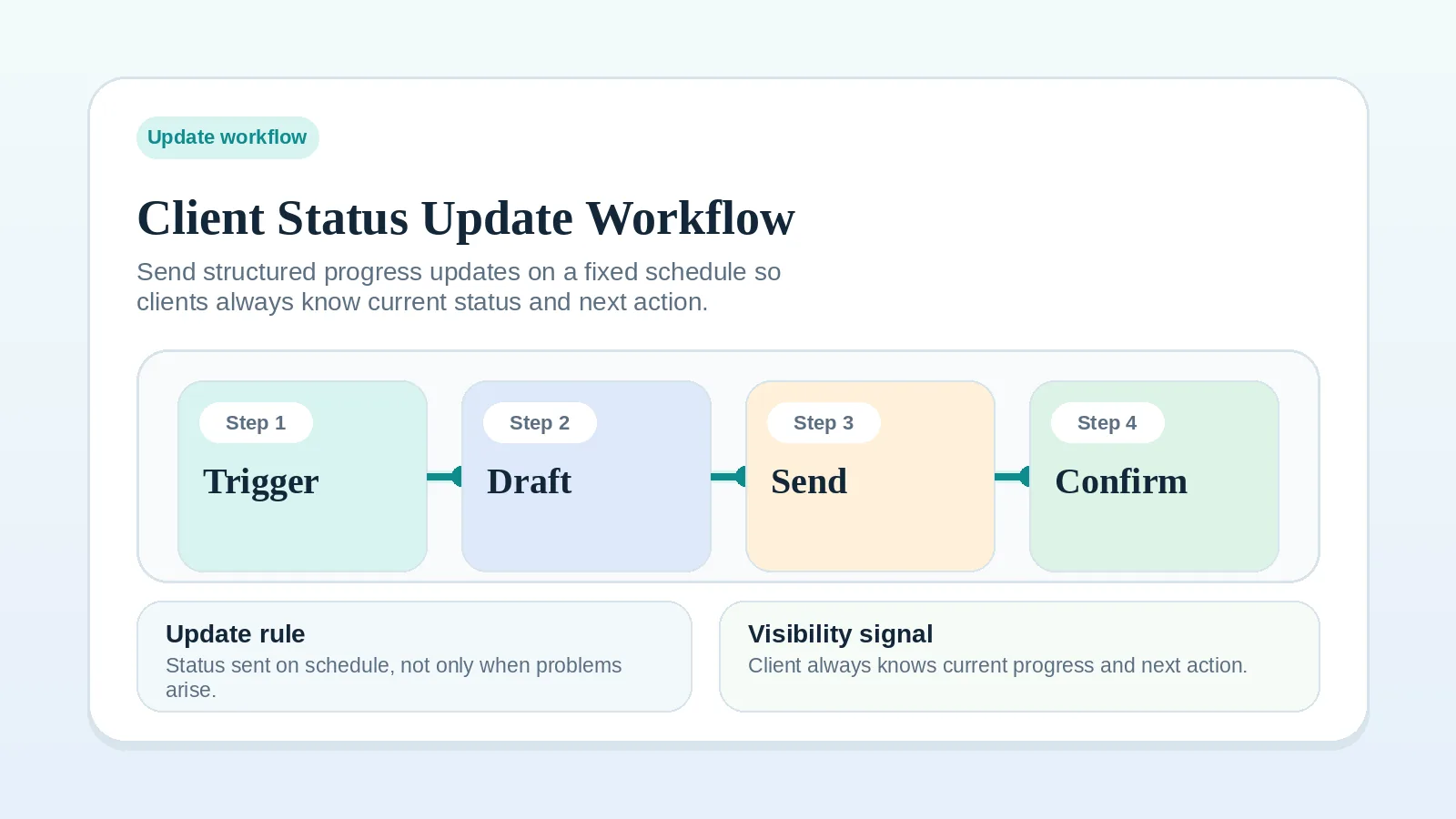
The proposal handoff workflow and client status update workflow provide two places to apply this structure.
Choose a review cadence from the risk
Review work often enough to catch a decision before delay changes a client commitment.
A review should cover:
- current stage and next action;
- blocked inputs and aging approvals;
- work prepared for consultant approval;
- upcoming delivery and billing triggers;
- access or data issues;
- exceptions to the written process.
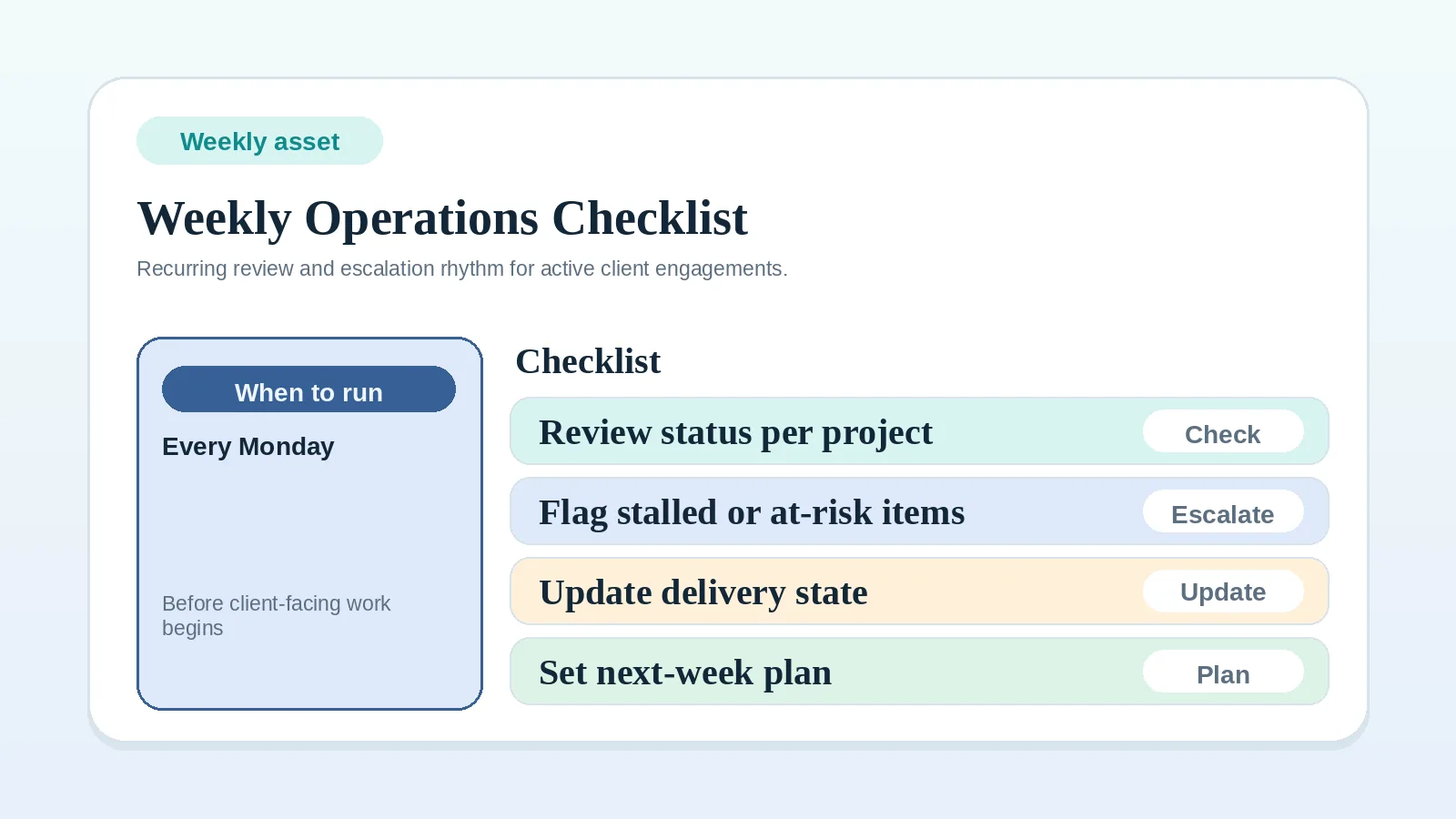
Use the weekly client operations checklist as a starting structure, then adjust the cadence to the work.
Add stack depth only when the role requires it
More tooling is justified when the current setup cannot support a required permission, handoff, record, or review condition. Examples include:
- the VA cannot see assigned work without seeing restricted information;
- prepared work cannot be separated from approved work;
- exceptions disappear inside general messages;
- both people must copy the same status between systems;
- the current record cannot show who changed a decision.
Add the narrowest capability that resolves the condition. Do not add a second system of record to solve a permissions problem in the first.
Check the two-person model
The setup is ready when:
- each delegated action has a trigger and authority boundary;
- active client status has one authoritative home;
- permissions match assigned responsibilities;
- approval and exception paths are visible;
- both people can run the review without reconstructing context from private messages.
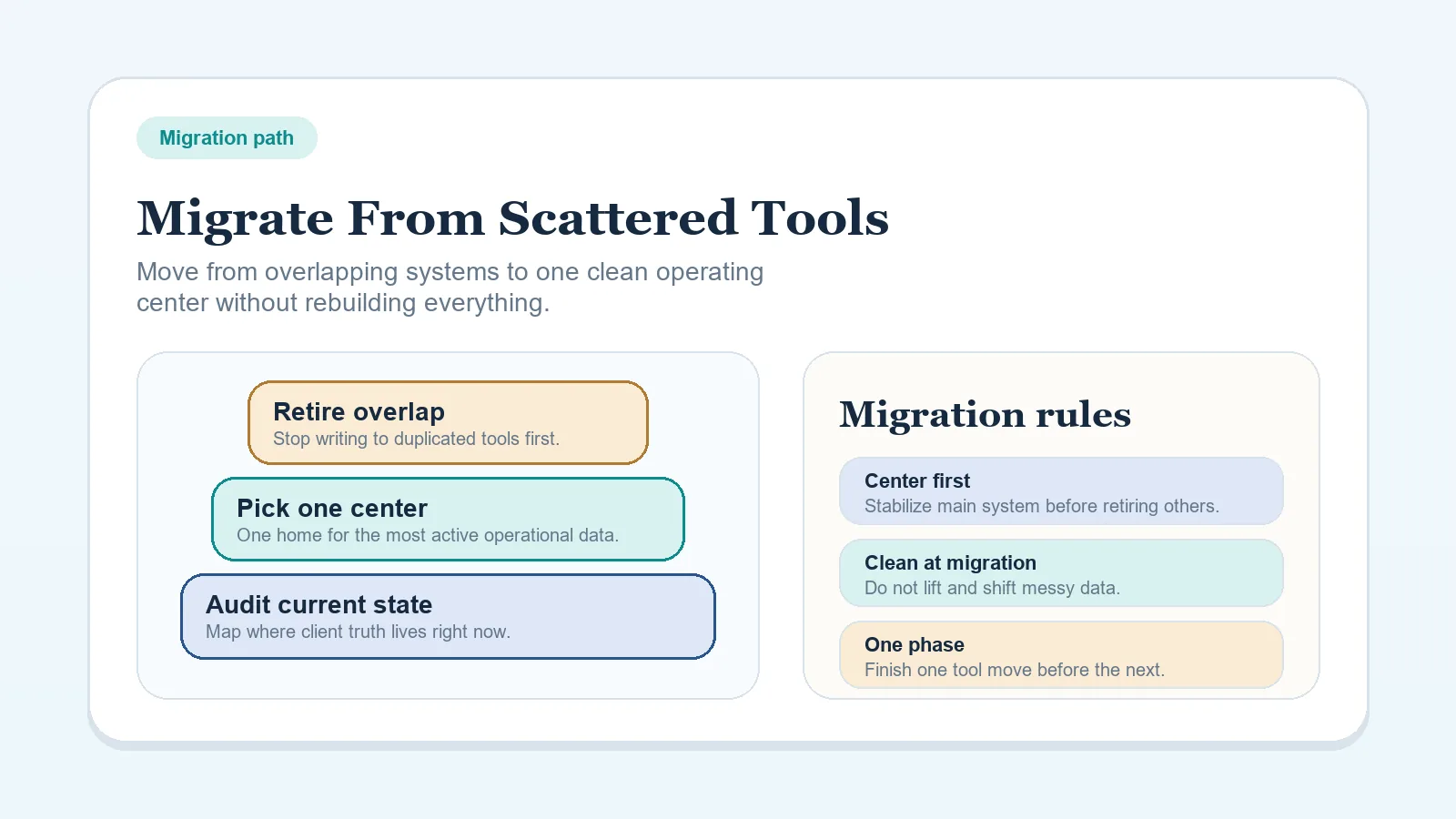
If the current tools already contain duplicate records, complete the migration guide before adding another collaboration layer.