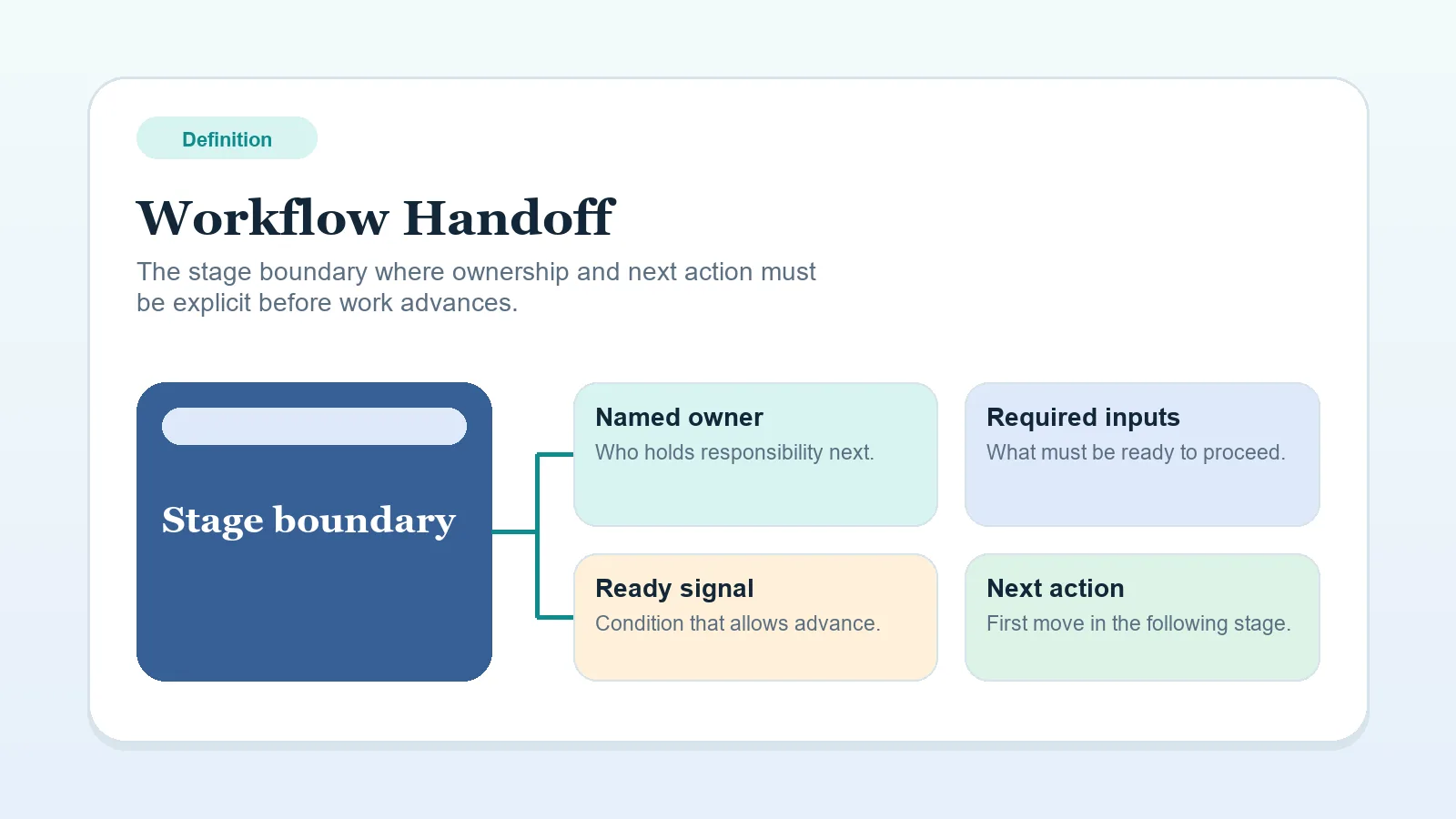
A workflow handoff is the point where one stage of client operations ends and the next begins.
For this guide, a useful handoff transfers three things together:
- required context,
- required assets or data,
- clear next owner.
If any of these are missing, the next owner has to reconstruct context before the stage can move.
Handoffs inside a one-person business
Even a solo business has handoffs, such as discovery notes moving into a proposal or an approved milestone moving into invoicing. When one person owns both stages, the record still needs to carry the decision, inputs, and next action forward.
A weak transfer can create extra clarification, missing files, delayed approvals, or work that advances before the prior stage is complete.
What a complete handoff should include
A useful handoff records:
- the decision or stage outcome that was reached,
- the inputs the next stage needs,
- the asset links or files required to continue,
- the named owner for the next action,
- the event that marks the next stage as complete.
If the next stage cannot start without a back-and-forth cleanup conversation, the handoff was incomplete.
Signs of an incomplete handoff
Check the boundary when:
- the next stage starts with clarifying questions that should already be answered,
- files or approvals are requested after the work is supposed to begin,
- billing or follow-up depends on memory rather than a defined trigger,
- the same client context gets rewritten in multiple places.
Common handoffs in a solo service business
Intake to proposal
This handoff should pass forward fit, goals, constraints, stakeholders, and timing. Without those details, the proposal can omit constraints or rely on assumptions.
Proposal to onboarding
This boundary should transfer final scope, exclusions, milestone timing, approval ownership, and billing triggers. Without that record, kickoff begins with unresolved delivery conditions.
Delivery to invoicing
Treat this handoff as a control point. A completed milestone should connect to the invoice action defined in the agreement and project record.
Delivery to offboarding
A clean closeout needs more than sending final files. The record should show which deliverables were completed, what remains open, and whether testimonial or referral follow-up is appropriate.
Edge cases and failure modes
- If the same person owns both stages, the handoff still exists and still needs a record.
- If the client must provide an approval or asset before the next stage can continue, that dependency is part of the handoff.
- If a handoff relies on memory or chat history instead of a named record, the next owner may miss context under deadline pressure.
Apply the definition to a stage
- Intake to scoping: How to build a client intake and qualification workflow
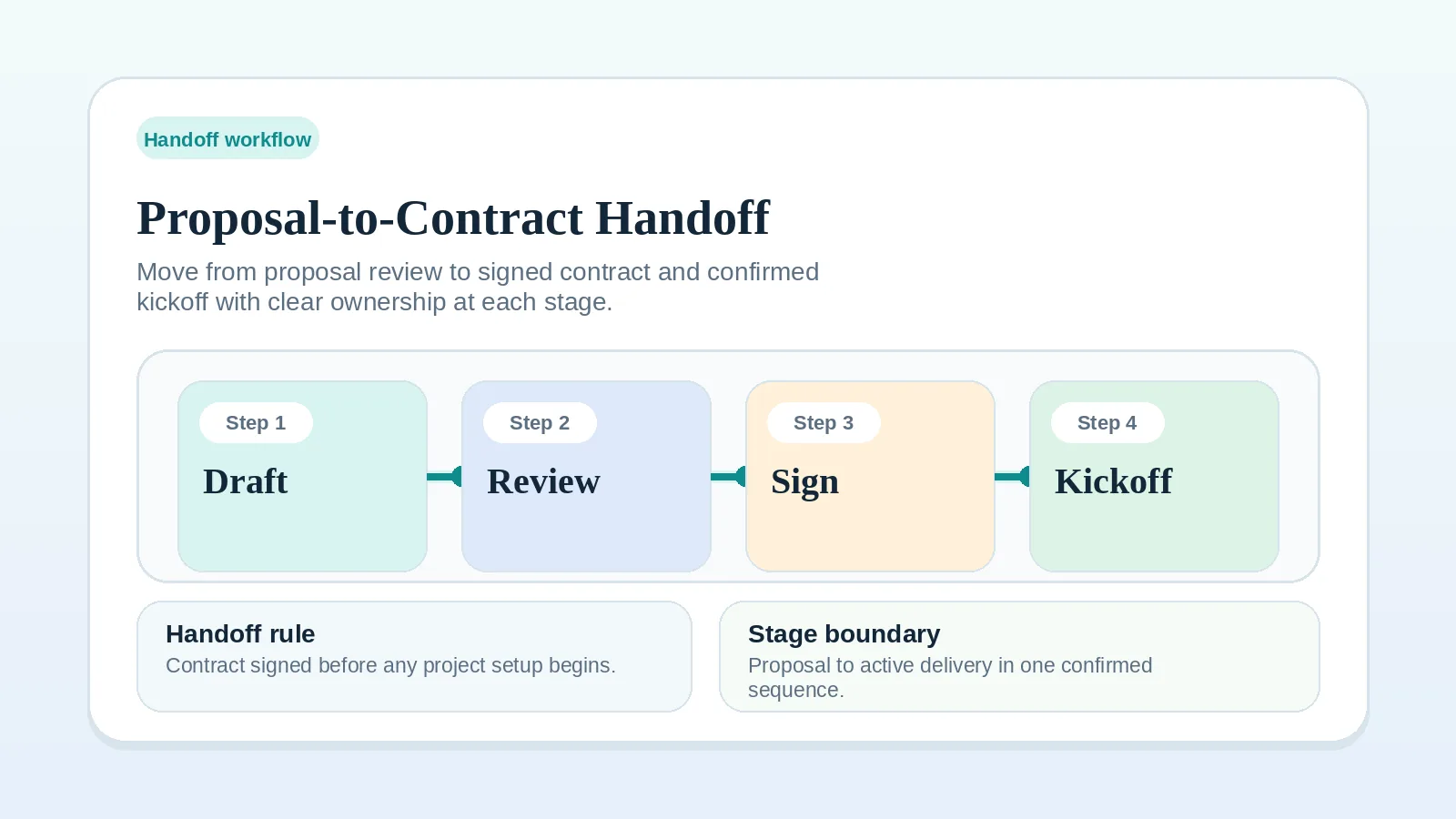
- Proposal to onboarding: Proposal-to-contract handoff workflow setup
- Start-readiness boundary: Project start handoff readiness worksheet
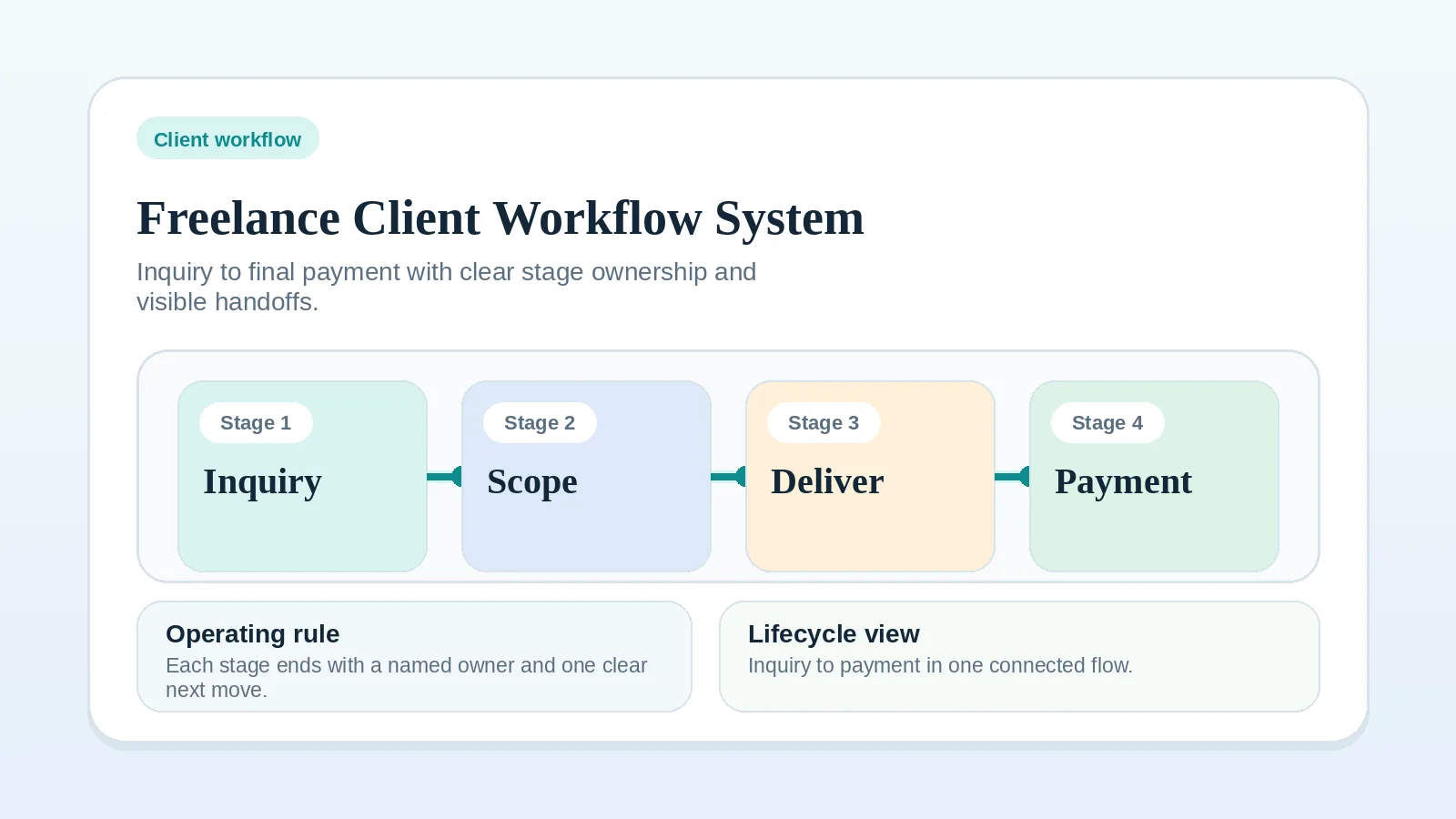
- Full lifecycle context: Freelance client workflow system: inquiry to final payment
Repair a recurring handoff problem
If weak handoffs recur, tighten the stage boundary:
- Start with Freelance client workflow system: inquiry to final payment for the full sequence.
- Use Proposal-to-contract handoff workflow setup for the proposal-to-onboarding transition.
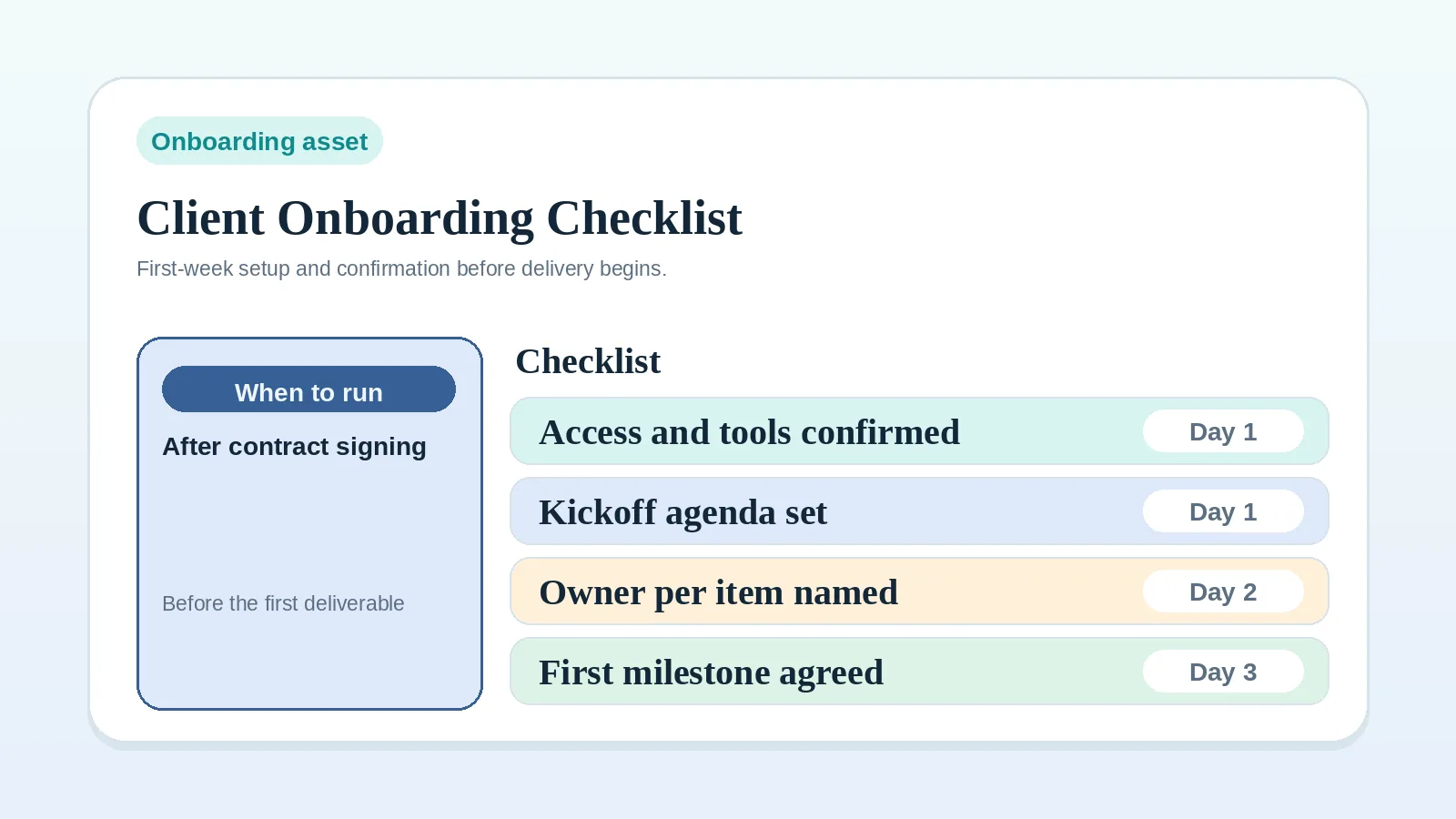
- Use Client onboarding checklist for freelancers and consultants after the handoff rule is clear and you need an execution check.