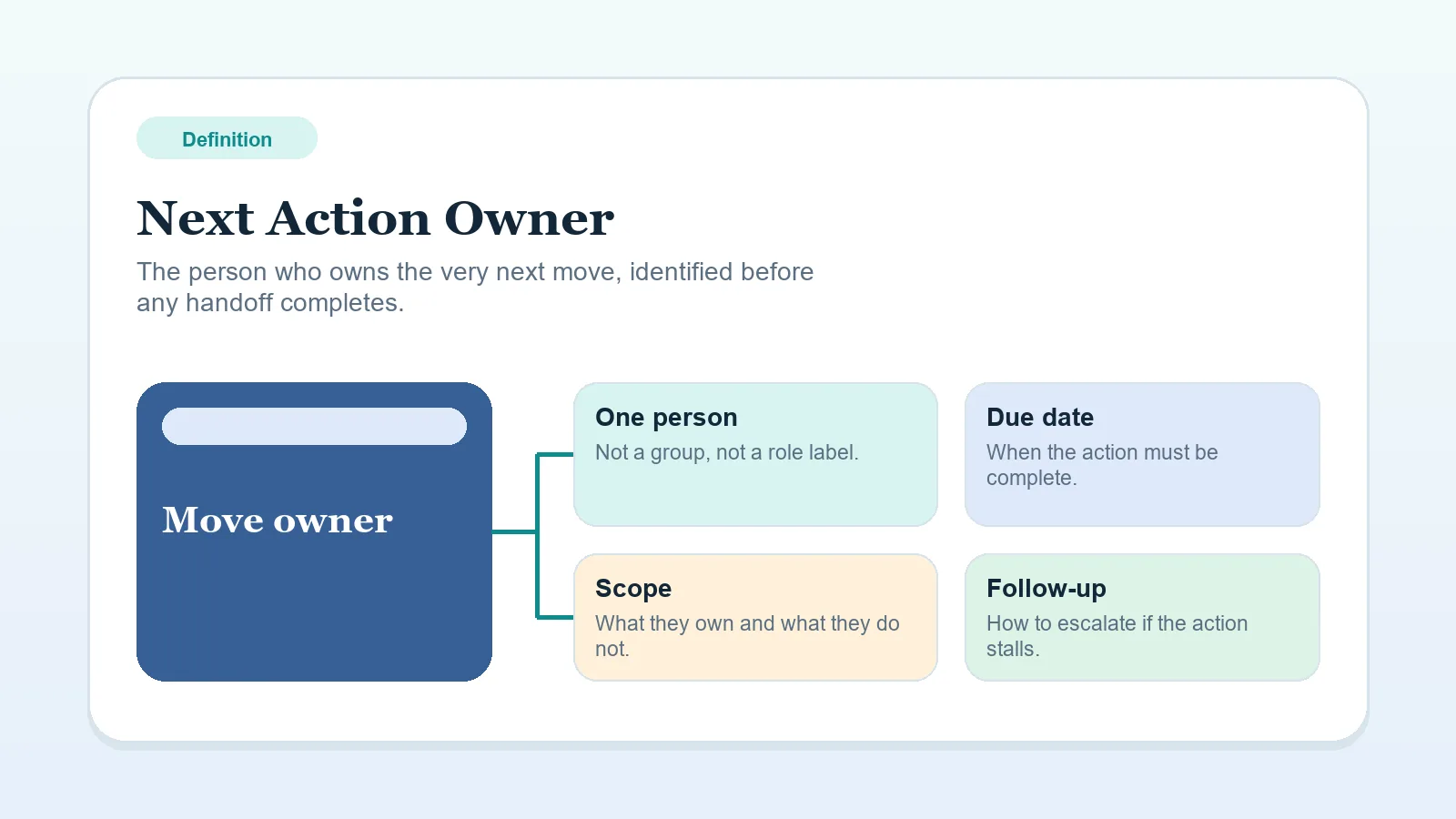
A next action owner is the person responsible for the immediate step that must happen next in a workflow.
A stage label such as “in review” does not say who must act. Naming the next action owner makes the immediate responsibility visible.
What goes wrong without one
When the next action owner is vague:
- follow-up depends on memory,
- blocked work sits without escalation,
- approvals drift because no one is chasing the answer,
- the system says a stage is active but nobody knows who should move it.
This role can change as the stage moves. It answers one operational question: who is responsible for the next move right now?
Test the next-action assignment
A useful assignment answers:
- what the next step is,
- who owns it,
- where that ownership is visible,
- what date or trigger should cause follow-up if it does not happen.
If the answer is “the team,” “the client,” or “we’re waiting” without more detail, the owner is still missing.
Next-action examples by stage
- In onboarding, the next action owner may be the client contact who must provide access.
- In delivery, it may be the operator who must send the review package.
- In a change request, it may be the client approver who must accept, defer, or reject the revised scope.
- In offboarding, it may be the client signer who must confirm closeout or the operator who must issue the final invoice.
Next action owner versus approval owner
The approver and next action owner can be the same person, but the roles are different.
Example:
- the approval owner decides whether the revision is accepted,
- the next action owner sends the revised file and requests that decision.
Signs that the role is missing
- status updates say “waiting on client” with no named contact,
- the same reminder gets rewritten instead of following one responsibility path,
- a stage looks active with no one advancing it,
- closeout stalls because everyone assumes someone else sent the final request.
Apply the role to the affected stage
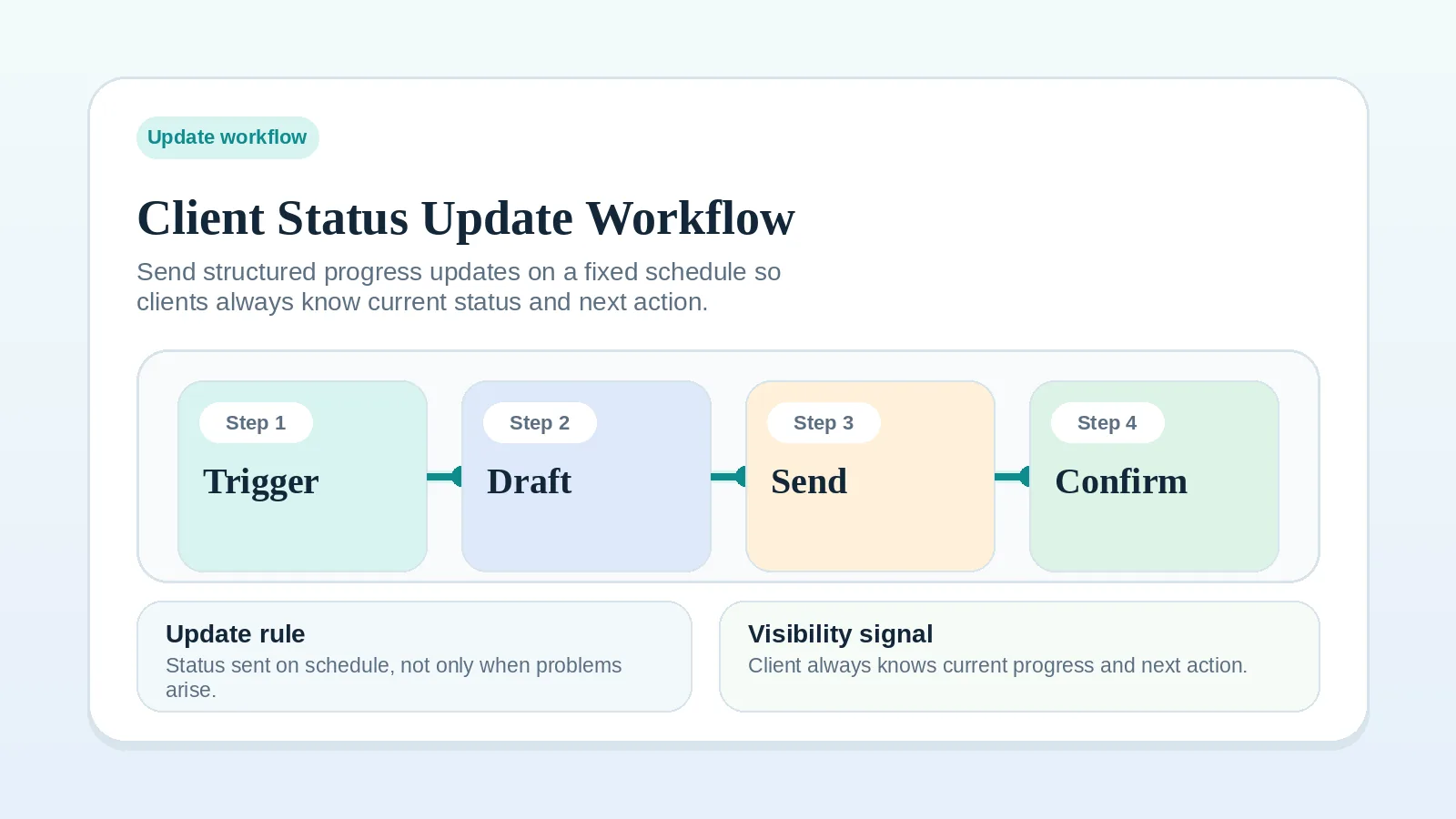
- For unclear ownership in client communication, use Client status update workflow.
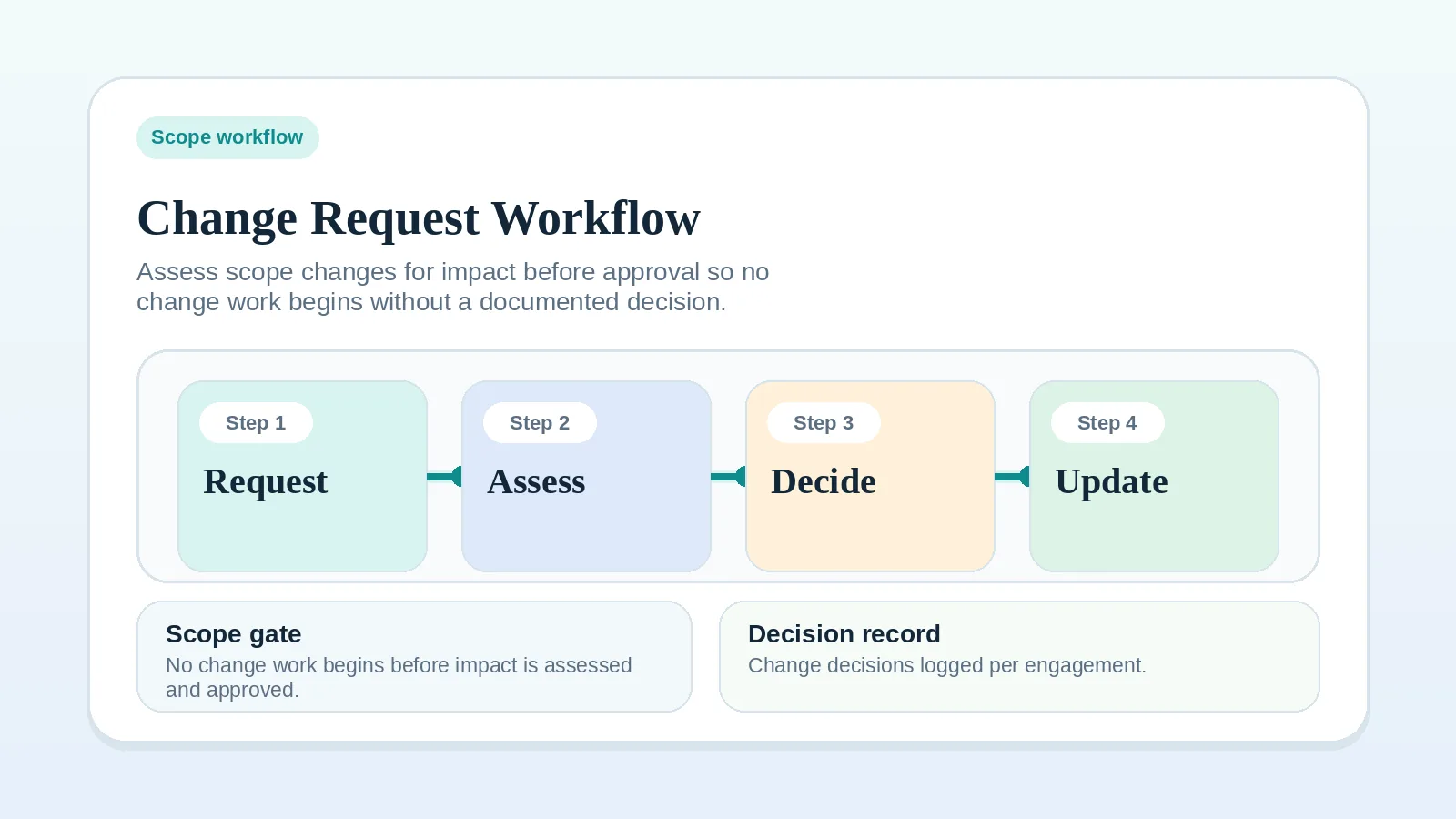
- For a stalled scope decision, use Change request workflow for freelancers and consultants.
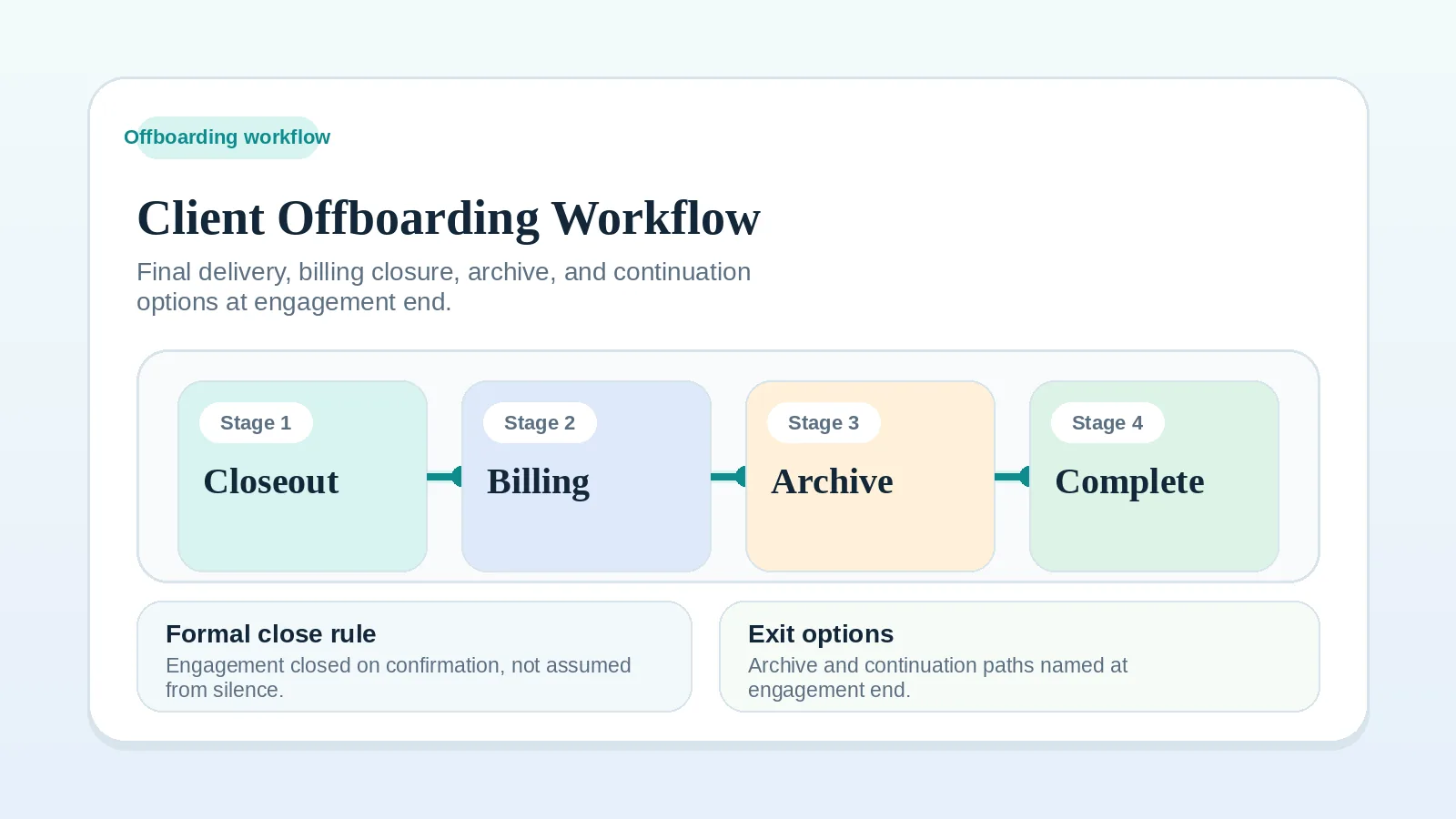
- For final signoff, billing, or closeout ownership, use Client offboarding workflow for freelancers and solo service businesses.
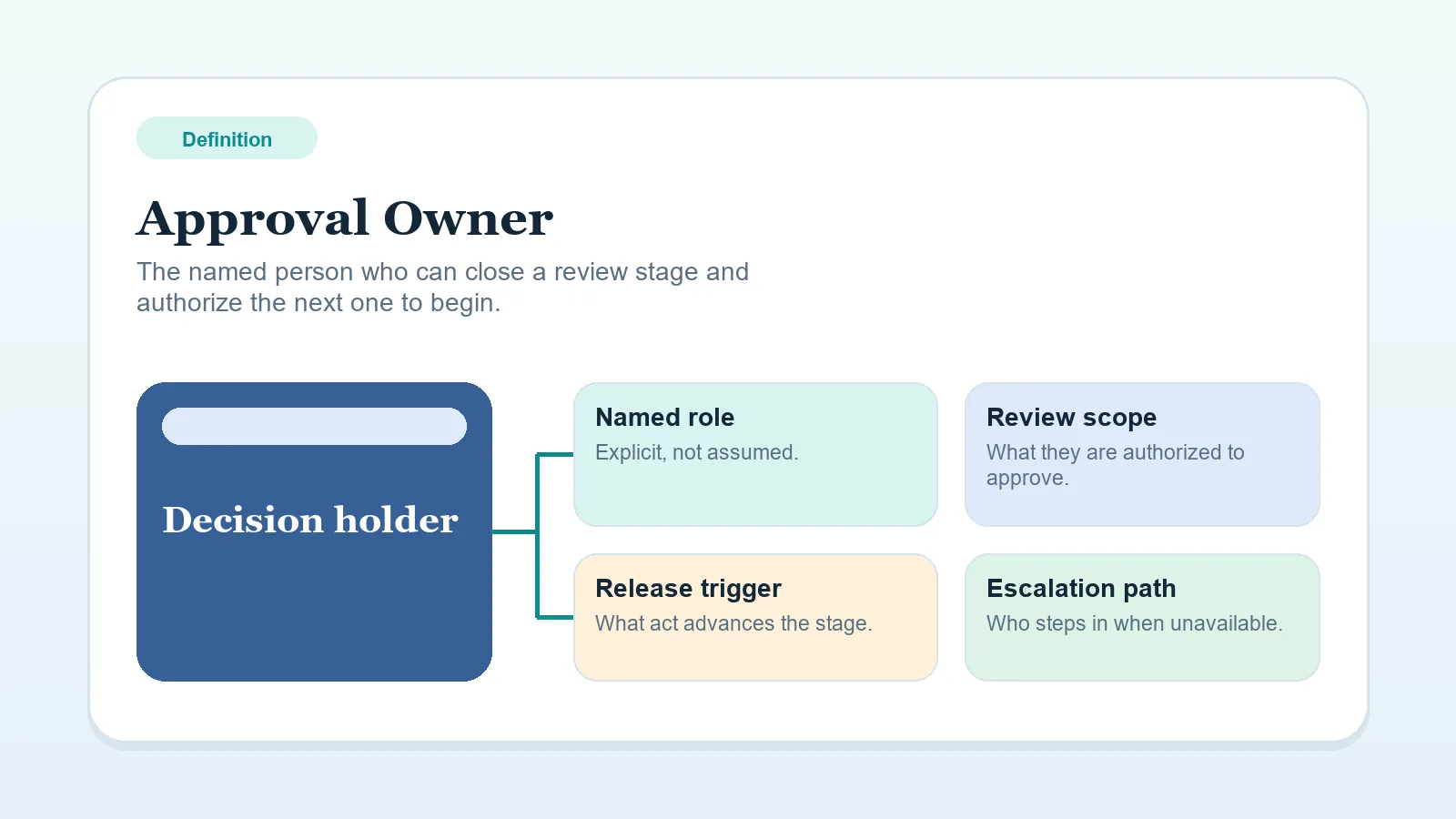
- When the missing role is the final decider rather than the immediate doer, define the Approval owner.
- When several stakeholders need one feedback route, use the Approval and feedback routing worksheet for multi-stakeholder review.
- When the whole stage sequence is unclear, use Freelance client workflow system: inquiry to final payment.