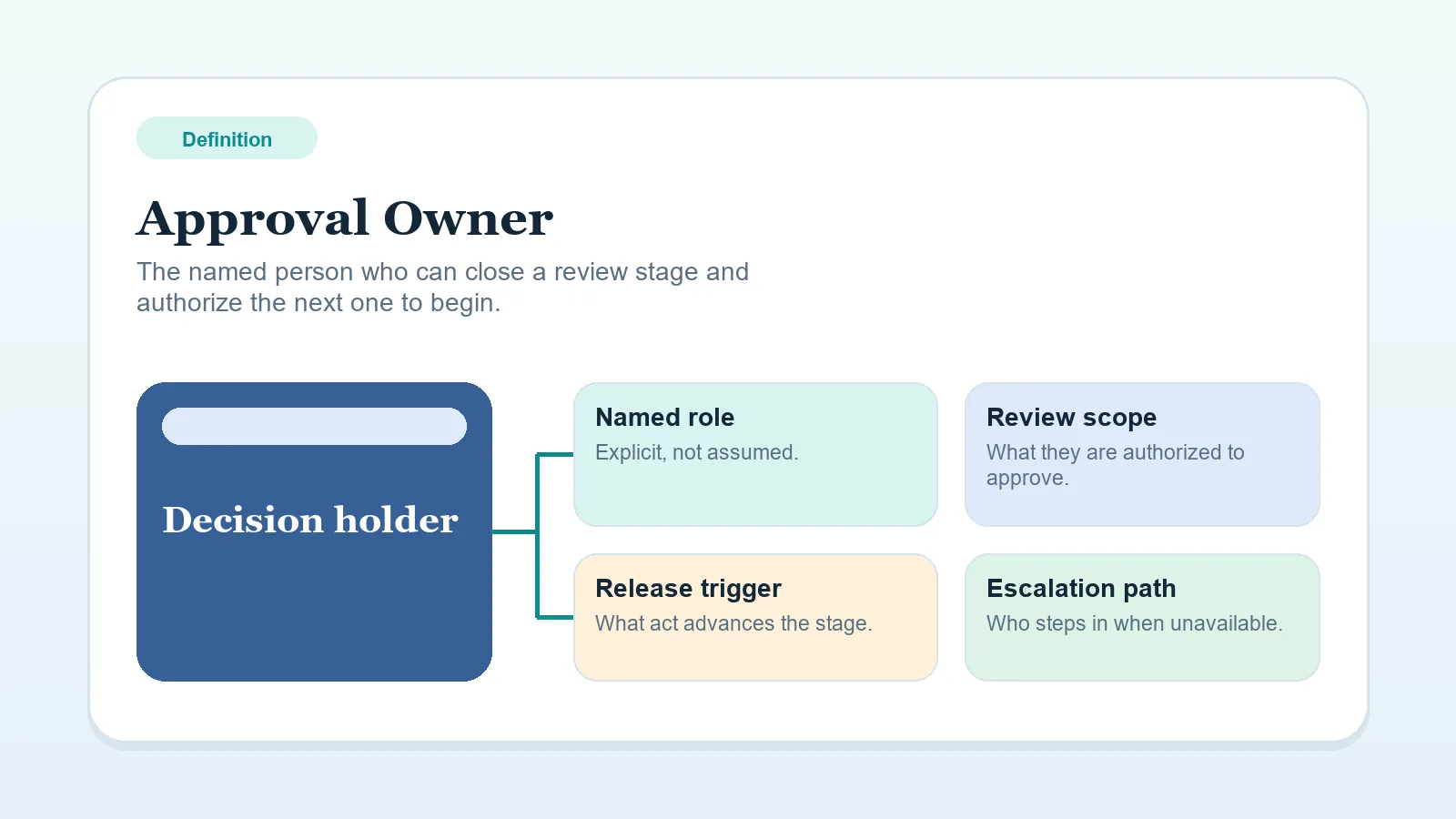
An approval owner is the person with final authority to accept, reject, or request changes to a deliverable, decision, or workflow step.
“The client will review it” does not identify who can close the decision. Naming the approval owner separates input from authority.
Approval owner versus contributor
A contributor can review, suggest, or raise a concern. The approval owner gives the decision that moves the workflow forward under the agreed review rules.
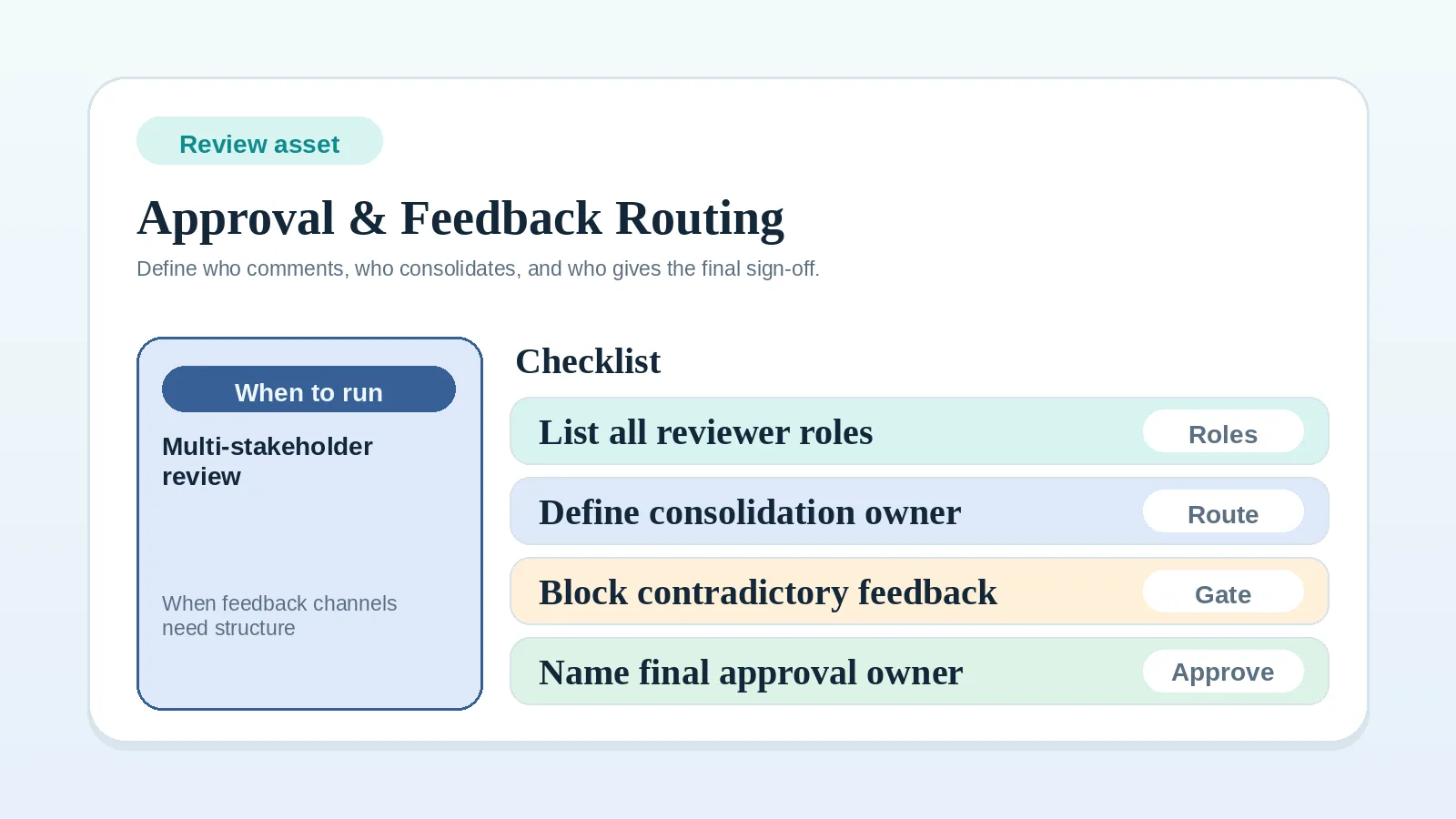
One approval owner does not prevent other stakeholders from commenting. It gives their comments a defined route to one accountable decision-maker. Use the Approval and feedback routing worksheet for multi-stakeholder review when that route is missing.
Record the authority
For each stage that needs approval, record:
- the person’s name or role,
- what they are authorized to approve,
- where the decision should be given,
- the response or escalation terms already agreed for that stage.
A full RACI chart is optional. The record only needs to make the authority and decision path unambiguous.
If the approval path is clear but the project now needs a revised baseline, use the Scope reset and recovery worksheet for solo operators.
Test whether the role is clear
Answer these questions:
- Who can give the final yes, no, or revise decision?
- At which stage do they hold that authority?
- Where is that responsibility documented?
An unclear answer identifies an ownership gap that should be fixed before the next review request.
Approval examples by stage
- During proposal review, the approval owner may accept the reviewed proposal or request another revision under the agreed process.
- During onboarding, the approval owner may confirm kickoff scope and communication rules.
- During delivery, the approval owner may accept a milestone or request revisions.
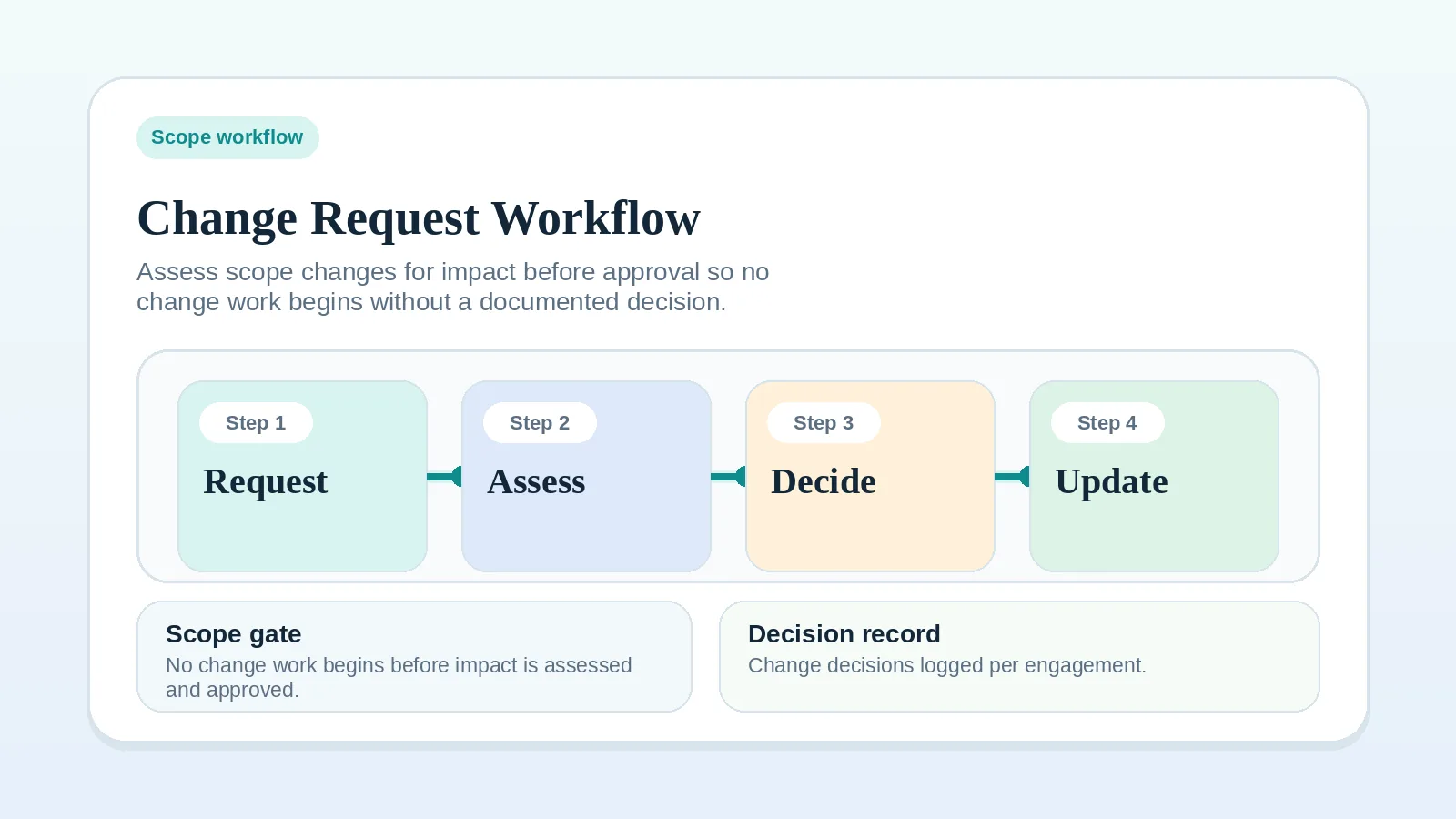
- During a scope change, the approval owner may accept, defer, or reject the proposed change.
If the role changes by stage, document each assignment instead of carrying one assumption through the whole project.
Signs the decision path is unclear
- Feedback arrives from several people but no one closes the decision.
- A positive message appears in chat, but the agreed approval record is still empty.
- Billing or the next milestone is waiting because no final answer exists.
- Revision requests come from people who were not named as decision-makers.
Fix the affected stage
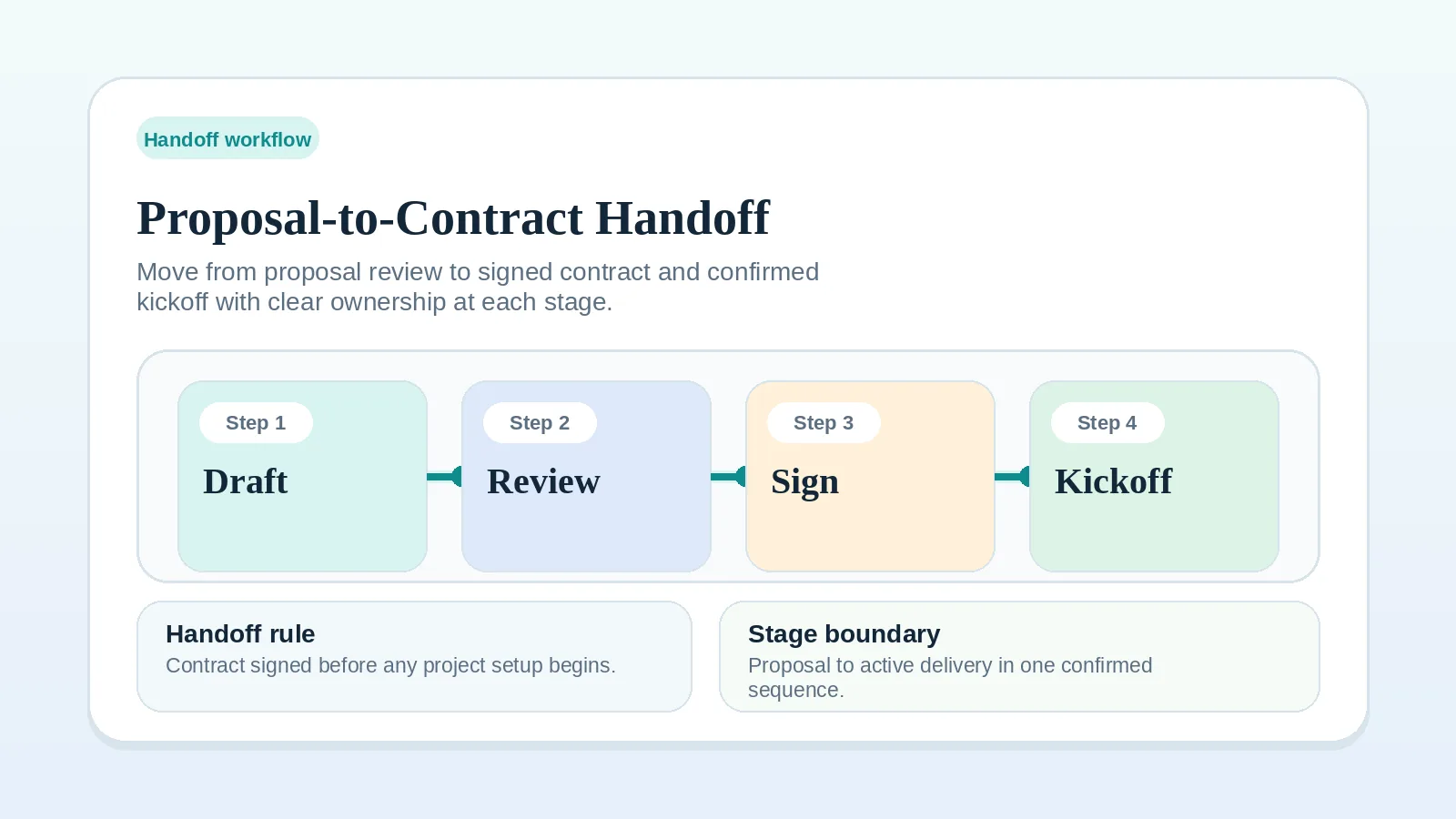
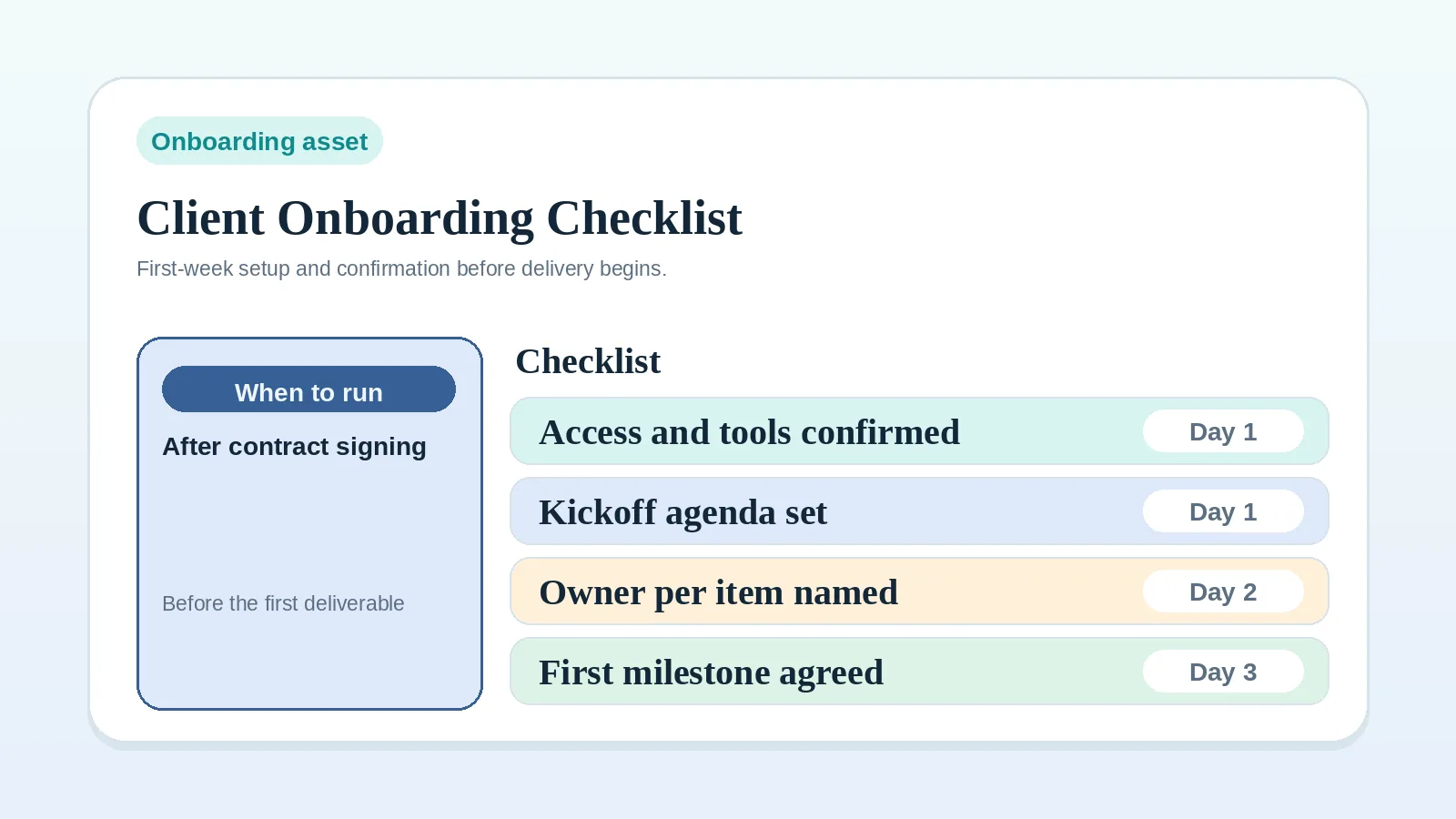
- Before kickoff, use Proposal-to-contract handoff workflow setup and the Client onboarding checklist for freelancers and consultants.
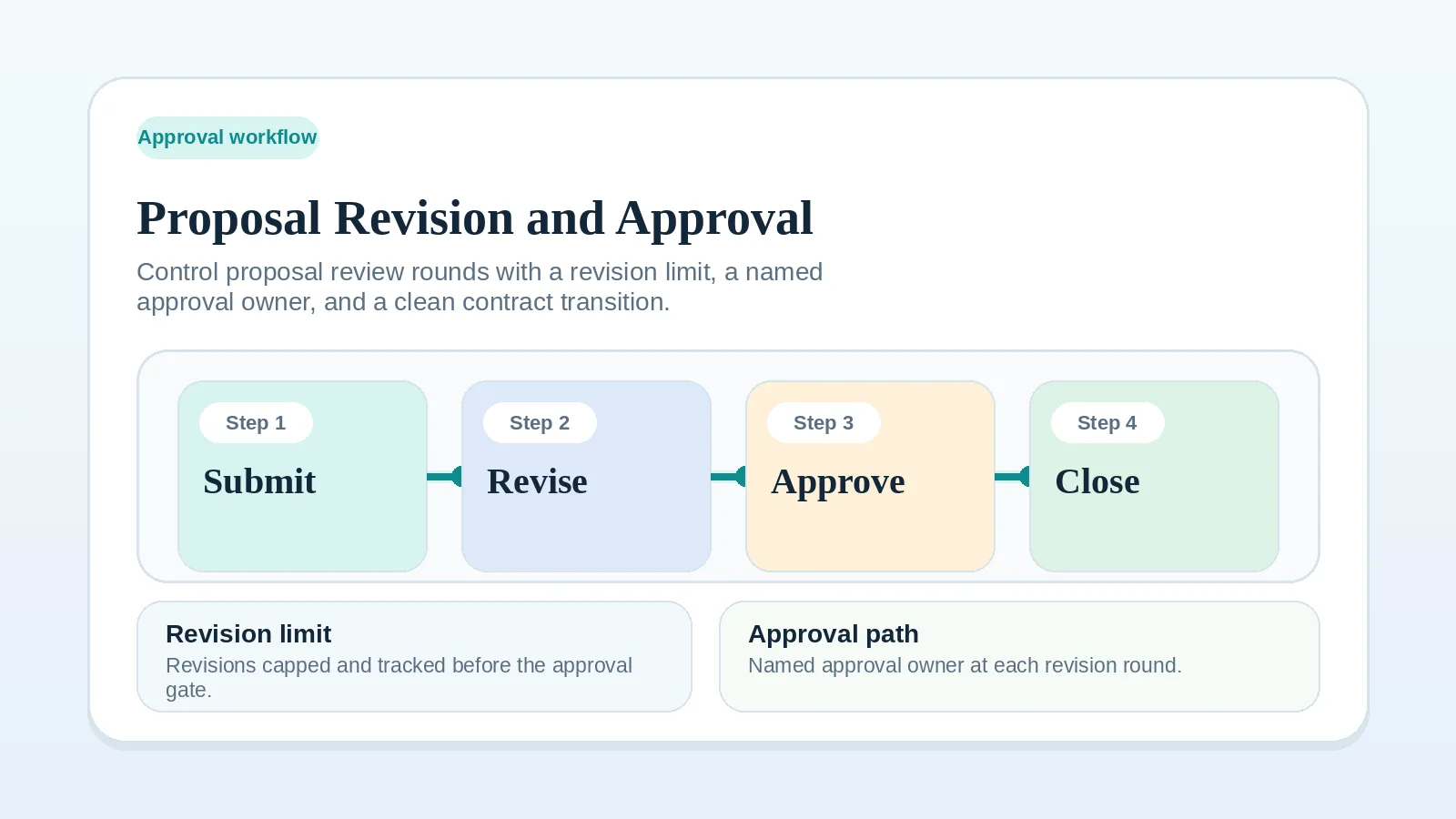
- During proposal review, use Proposal revision and approval workflow.
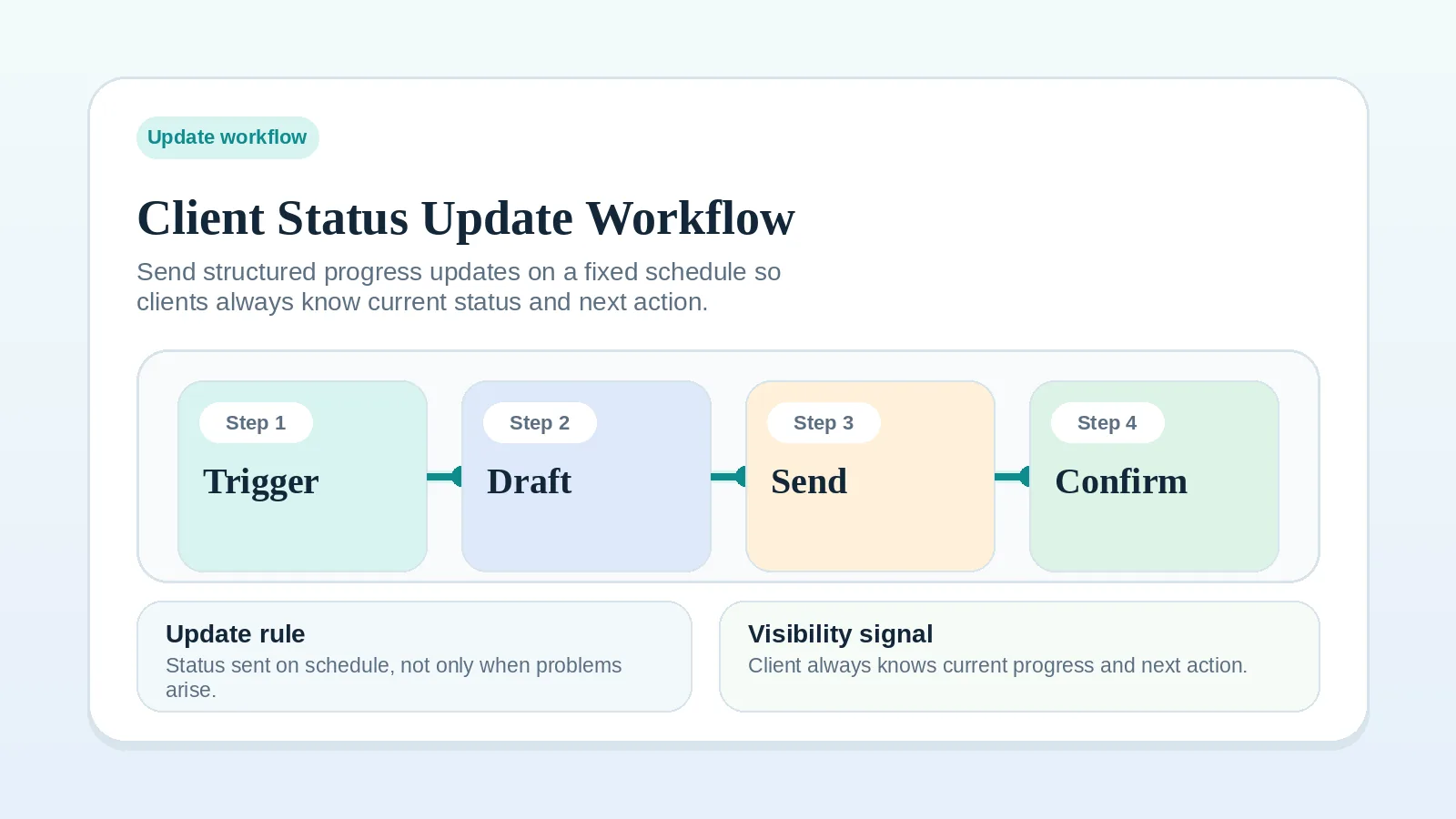
- During recurring client communication, use Client status update workflow.
- During scope changes, use Change request workflow for freelancers and consultants.
- At milestone review, use Milestone delivery workflow for solo service businesses.