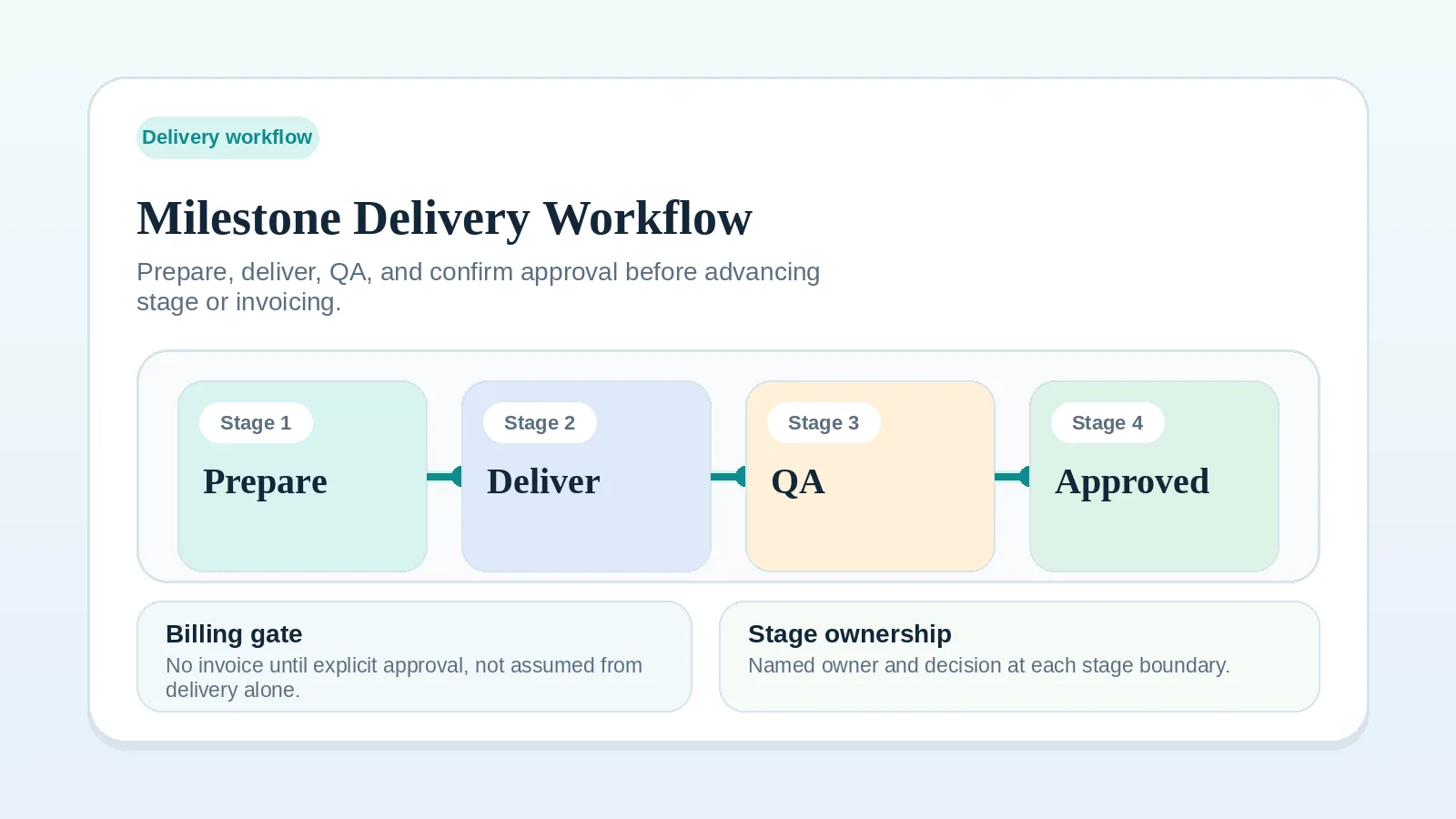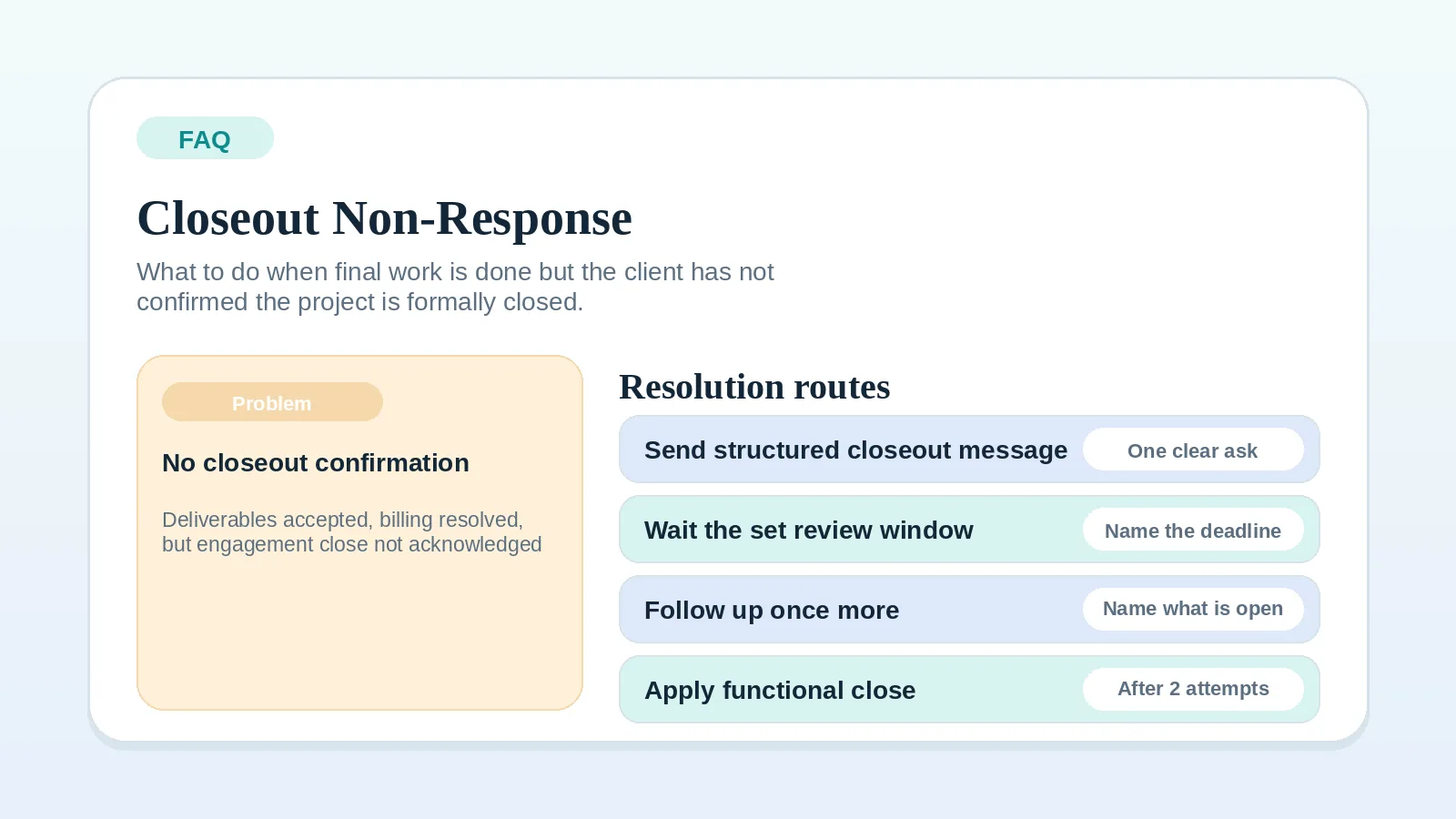
Delivery acceptance and engagement closure can be separate events when the agreement or project plan defines them that way.
Use this answer when final work has been delivered, the last milestone was approved, billing has been handled under the agreed terms, and a closeout request has received no response.
The existing agreement, review rules, and closeout plan control what happens next. A follow-up can document the status, but silence does not create a new closure rule or permission.
Use the review guidance instead when
Do not use this FAQ to handle silence during mid-project milestone review, define what counts as approval at a delivery stage, or manage an ongoing project with multiple open stages.
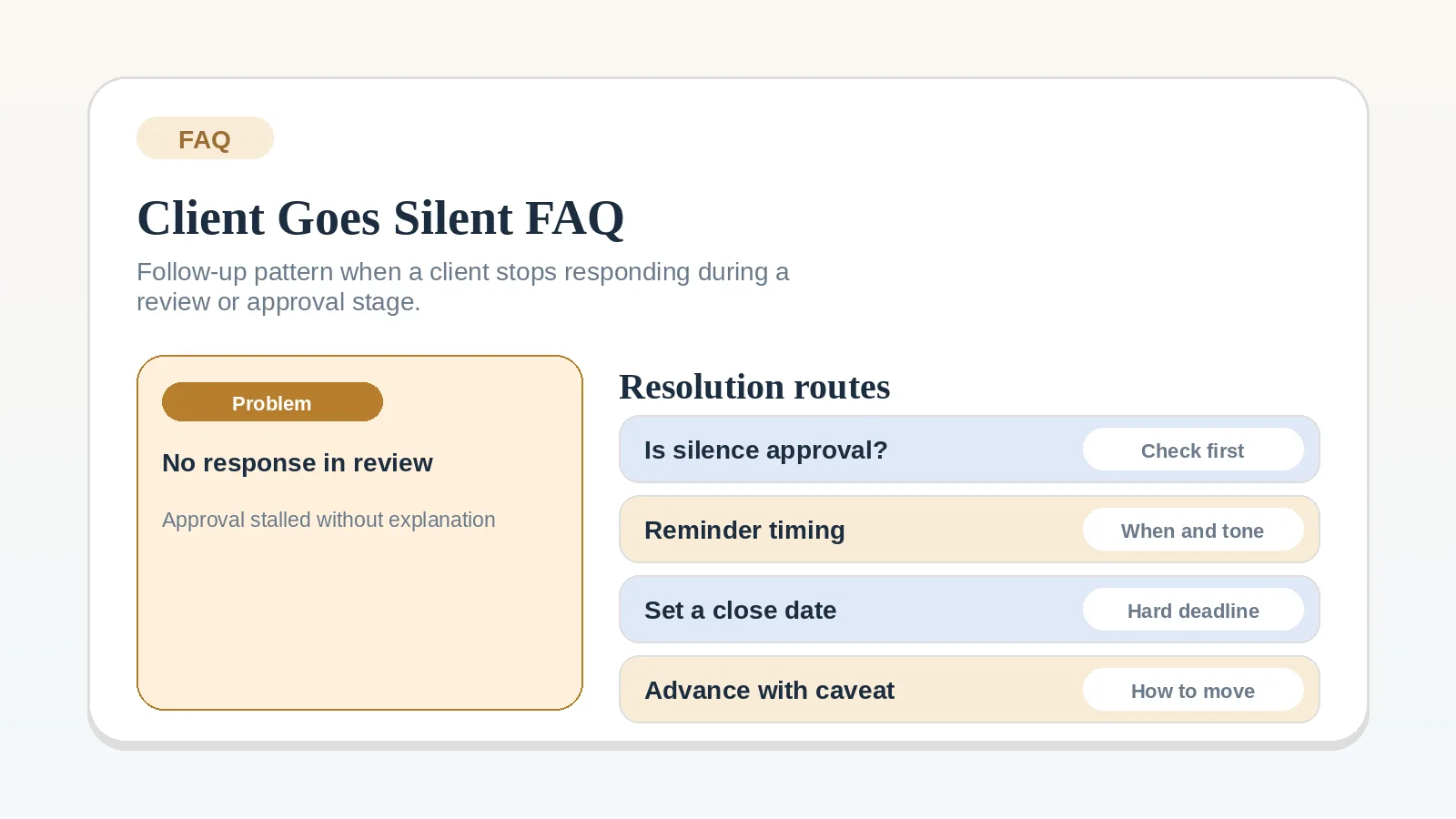
- If the client has gone quiet during a mid-project milestone review before final delivery, use FAQ: what should I do when a client goes silent during review?
- If you are unsure whether a client response counted as approval, use FAQ: what counts as client approval before billing or the next stage starts?
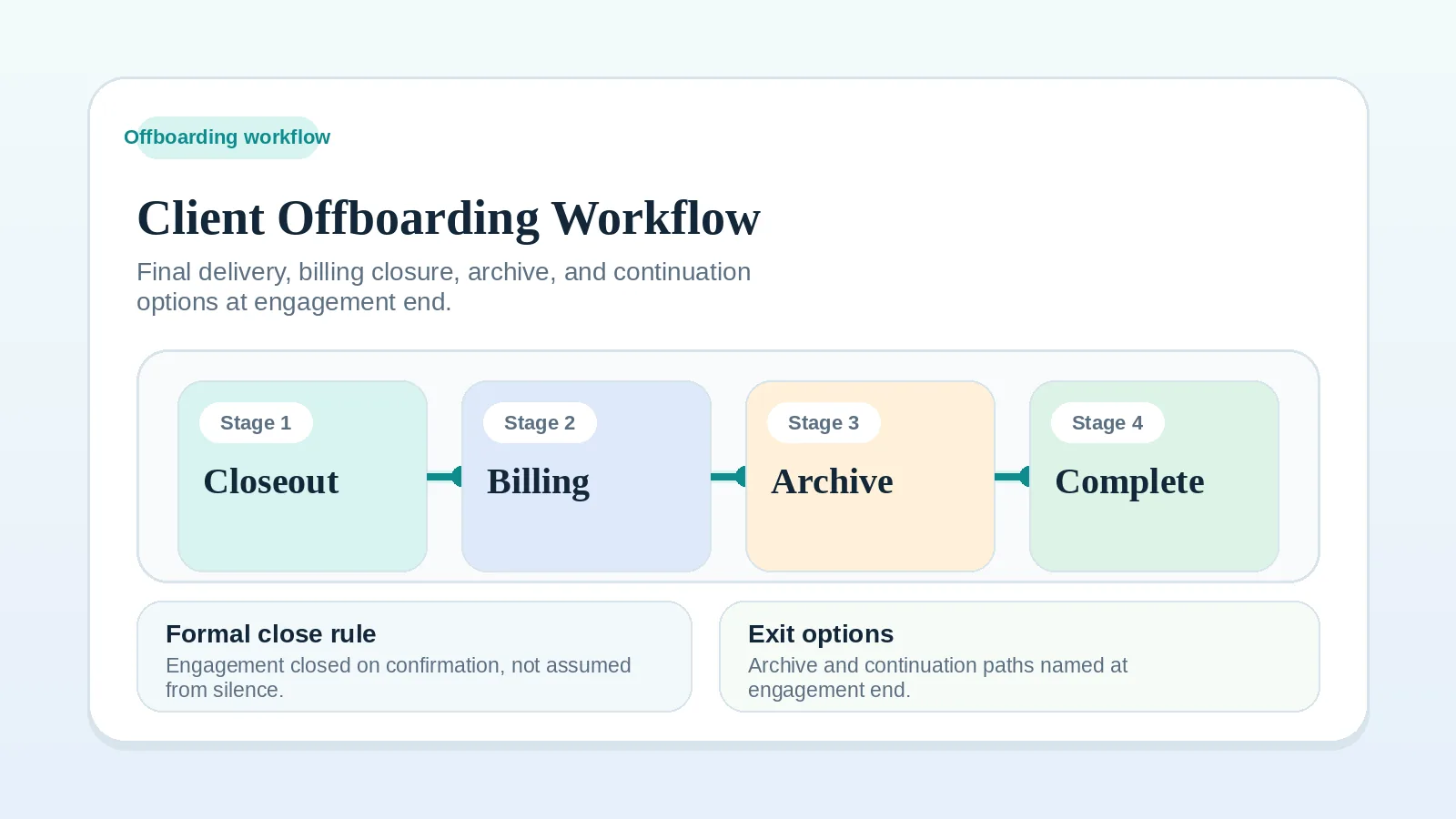
- If final approval or a billing obligation remains open, use the offboarding workflow to identify the unresolved stage first.
What does “project closeout” mean operationally?
For this guide, project closeout is the documented transition from active work to the post-project state defined in the agreement or project plan. The closeout record may include:
- confirming all deliverables were received and accepted,
- confirming no open revision requests or outstanding dependencies remain,
- recording how final billing was handled,
- giving both sides a clear point at which the active project relationship ends.
Record any unresolved item separately. Do not describe the engagement as closed if doing so would conflict with the agreed terms or hide an open obligation.
When should you send the closeout message?
Send a structured closeout message once:
- the final deliverable has been received and the milestone approval is confirmed,
- final billing has been handled according to the agreement,
- there are no open revision requests or outstanding client inputs.
Do not describe unresolved billing, revisions, or final review as complete. If the agreement permits operational closeout while a balance remains due, send a message that distinguishes completed delivery from open financial follow-up, with an owner and next action for the balance.
What should the closeout message say?
Keep it short and operational. The message should:
- confirm what was delivered and that the work is complete,
- confirm that all agreed milestones are closed,
- note that no open revision requests remain,
- request one explicit acknowledgment that the project is complete from their side,
- include the agreed next administrative step, if one exists.
Example structure:
“All agreed deliverables are complete, and I have recorded the billing status under our project terms. From my side, no revision requests remain open. Could you confirm the closeout status on your end, or tell me which agreed item is still unresolved?”
Adjust the message to match the actual deliverables, billing status, and closeout terms. Do not state that an item is settled unless the project record supports it.
Use the agreed response and escalation terms
Use the response window and escalation path in the agreement, onboarding record, or closeout plan. If none exists, send a follow-up that proposes a response date based on the remaining administrative need. Make clear that the proposed date is a request, not an automatic acceptance or waiver.
Keep the project record open or closed according to the existing terms while you wait.
Write a follow-up that names the open item
When a follow-up is appropriate under the agreed communication path, it should:
- briefly restate that you sent a closeout confirmation and are waiting on their acknowledgment,
- name what remains open in the project record,
- offer a reply path that matches the agreed closeout conditions.
Ask for confirmation of the specific open item. Give the client room to identify a remaining obligation rather than asking only for a yes.
Record closure only when the terms support it
Do not create a functional-closure rule based on a fixed number of unanswered messages. Record the engagement as closed without acknowledgment only when the agreement or documented closeout rule permits that state and the factual conditions are met.
Before recording closure, verify:
- all deliverables were accepted at the milestone stage,
- no open revision requests were outstanding when you sent the closeout,
- you have documented the closeout request and any follow-up required by the agreed process.
If the agreement does not define the outcome of silence and an unresolved right or obligation matters, do not infer the result from this guide. Review the agreement and obtain appropriate professional advice for the specific situation.
Do not infer permission from silence
Do not:
- treat an unreturned closeout message as automatic acceptance of testimonial use or public case study reference,
- archive unresolved billing or revision commitments out of the active follow-up record,
- reopen project communications on an unrelated topic while the closeout is still pending,
- assume the client has no further requests simply because no response has arrived.
Closing the project record does not grant unrelated permissions that require explicit consent.
Continue from the unresolved closeout
- If you have not completed the final milestone and billing process, go to Client offboarding workflow for freelancers and solo service businesses.
- If the client is not responding throughout the final review stage, go to FAQ: what should I do when a client goes silent during review?
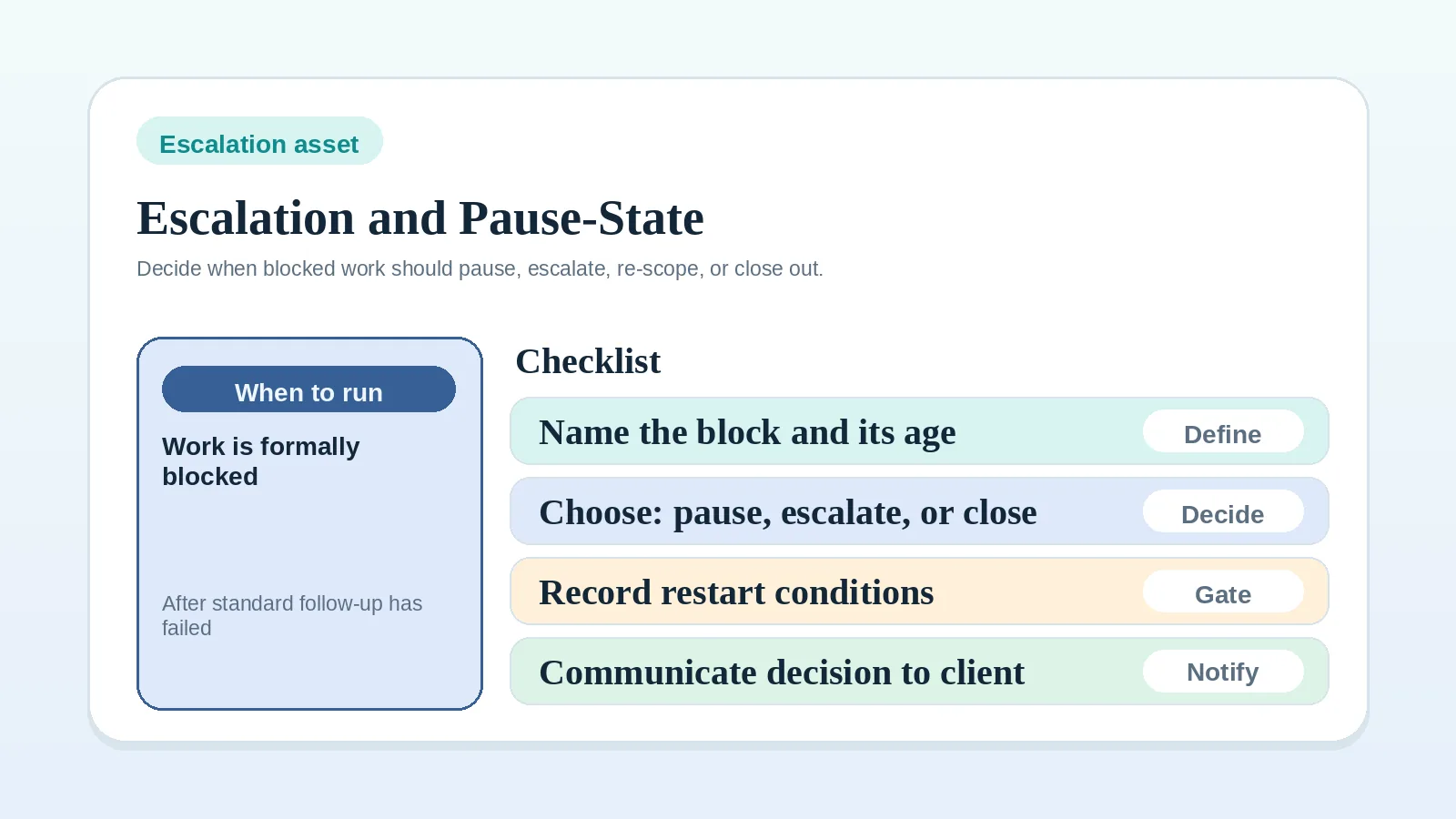
- If closeout needs a documented pause or escalation decision, use Escalation and pause-state worksheet for solo operators.
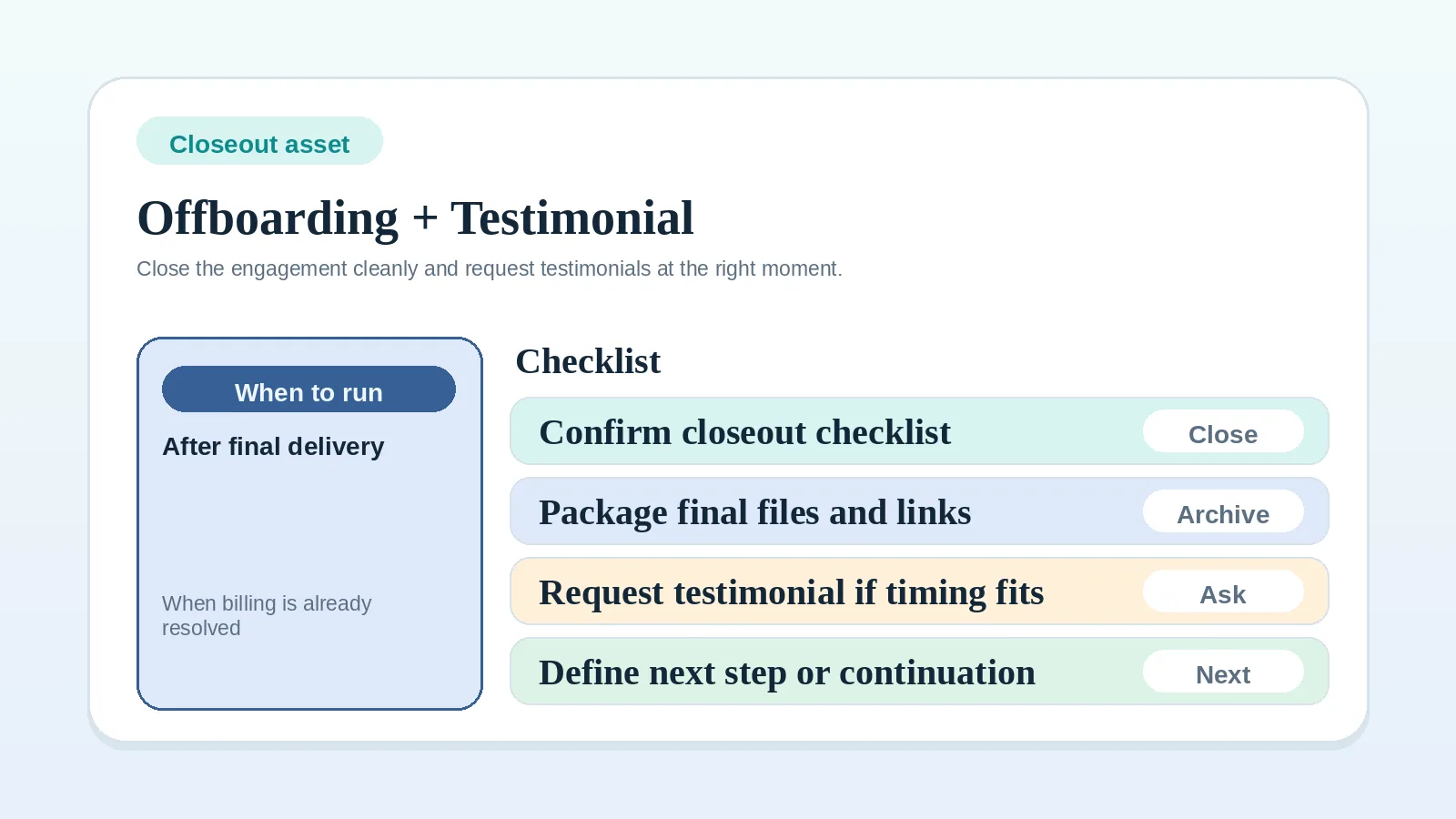
- If the project is closed and a testimonial request fits the agreed relationship, use Client offboarding and testimonial request template.