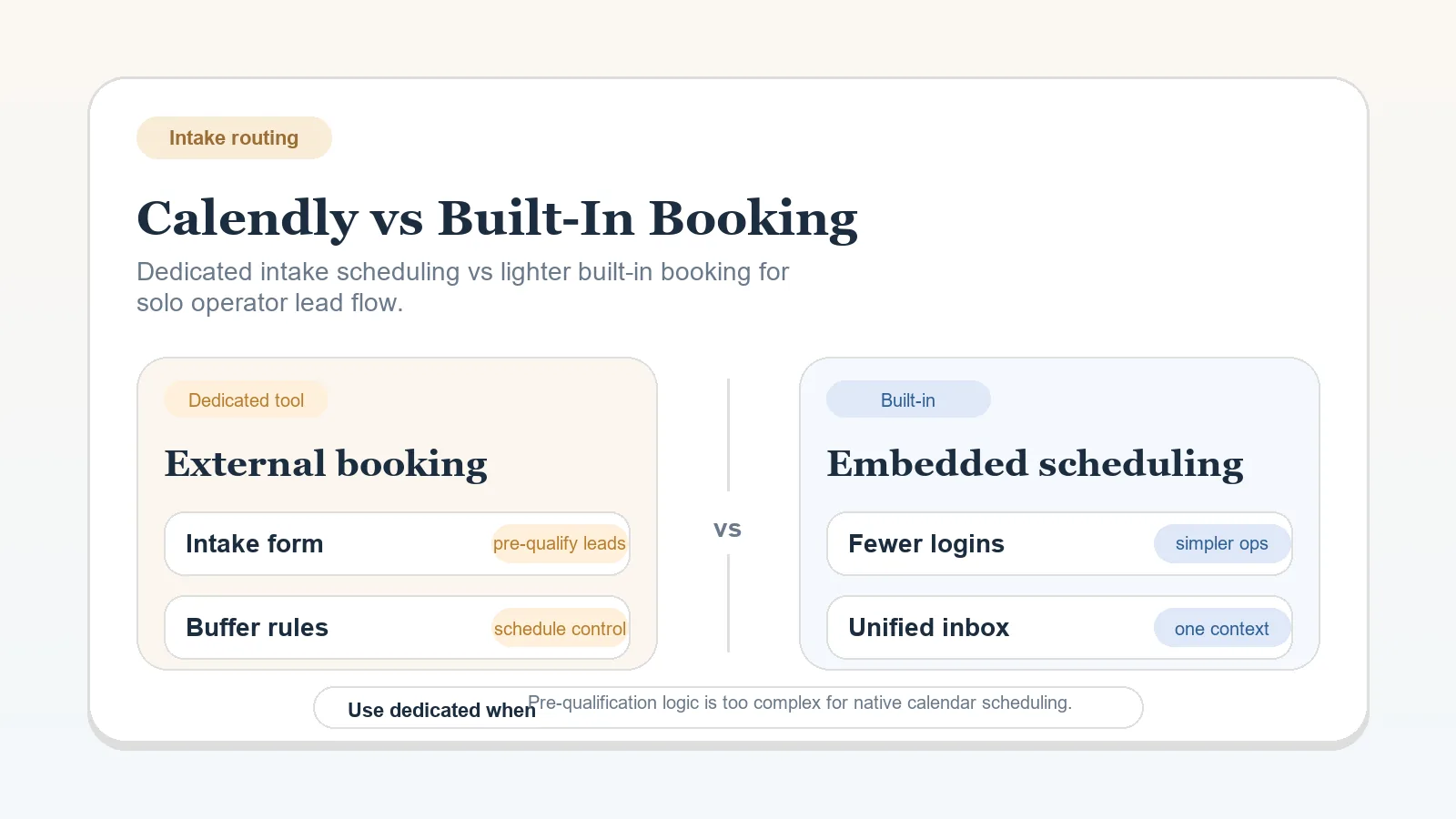
This is not a feature-counting comparison. It is a workflow decision about how much scheduling structure your intake process actually needs.

For many solo operators, built-in booking is enough. The mistake is paying for dedicated scheduling software before the intake workflow is clear enough to benefit from the extra rules. This page is about booking complexity, not about choosing the whole stack.

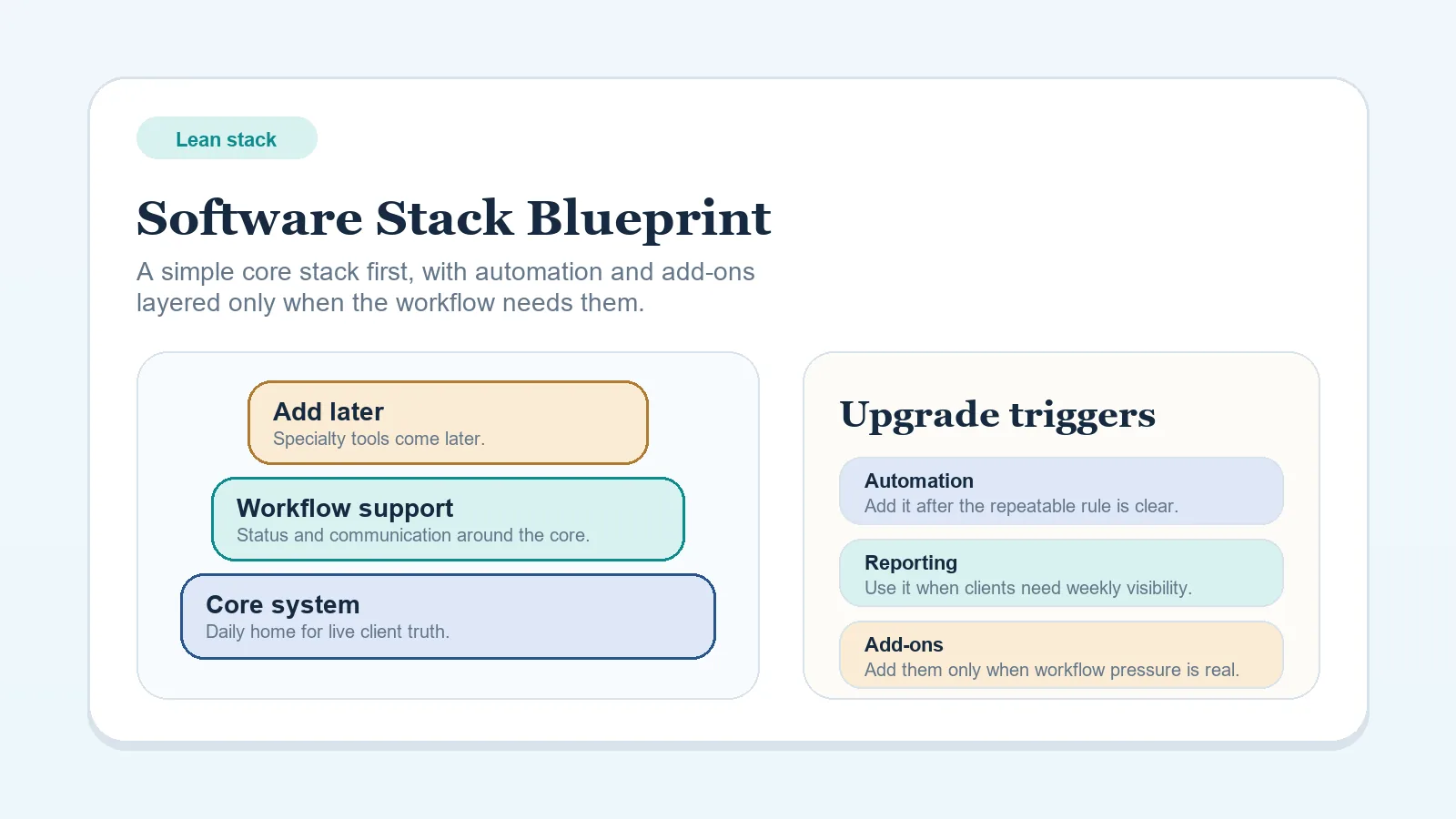
It is also a deliberately narrow decision. If your real issue is scattered client truth or stack sprawl, this page is downstream from those broader choices.

Who this page is really for

Use this page when:

  • intake is already the right stage to tighten,
  • the open question is whether scheduling needs its own tool,
  • you are trying to avoid buying ahead of operational need.

Do not use this page when qualification rules are still weak or when the larger system-of-record decision is still unresolved.

Quick verdict

Start with built-in booking if you have one main call type, modest inquiry volume, and a lean stack goal.

Move to a Calendly-style tool when the scheduling layer itself is creating repeat admin, missed routing, or calendar protection problems often enough to justify its own maintenance.

What this page should settle

By the time you leave this page, you should be able to answer:

  • whether scheduling is a real operational bottleneck or just a visible annoyance,
  • whether lighter built-in booking is still enough for current intake complexity,
  • what extra maintenance a dedicated scheduling layer would add,
  • which intake, stack, or buying-boundary page should come next.

What you are actually deciding

You are deciding whether scheduling should be:

  • a lightweight extension of your current stack, or
  • a dedicated intake control point with its own routing, reminders, and booking rules.

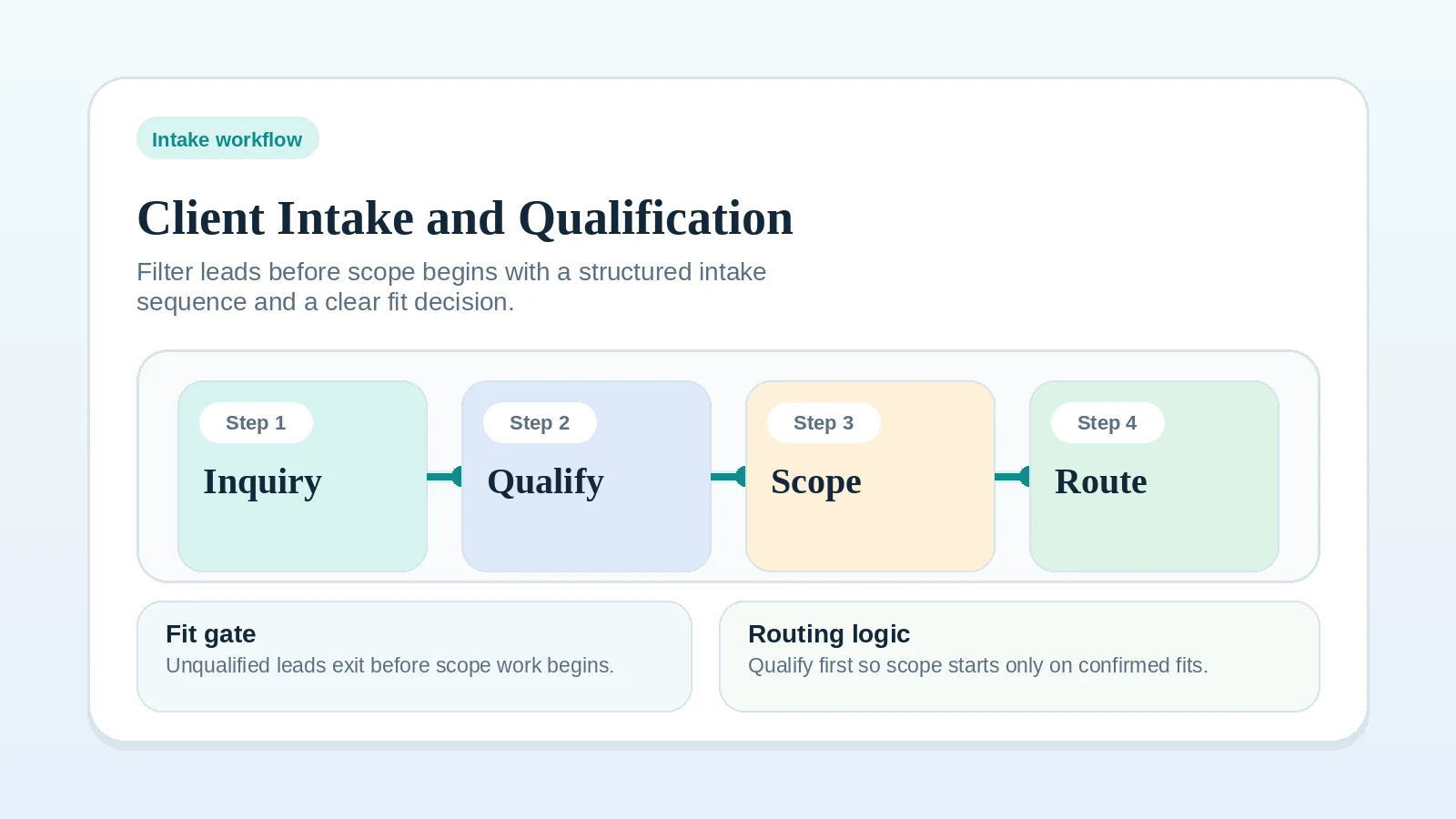
If you still have not defined qualification criteria or call boundaries, start with How to Build a Client Intake and Qualification Workflow first.

Option 1: dedicated booking tool such as Calendly

Best for:

  • higher call volume,
  • stricter availability rules,
  • multiple booking types,
  • repeated back-and-forth around scheduling.

Strengths:

  • clearer routing and availability control,
  • lower admin burden when volume rises,
  • stronger reminder and confirmation flows.

Tradeoffs:

  • another tool to maintain,
  • more configuration than many solo operators actually need,
  • easy to overbuild if intake itself is still weak.

Best fit when the booking layer is becoming a real operational control point rather than a simple convenience.

Option 2: built-in booking tools

Best for:

  • lower lead volume,
  • simpler scheduling needs,
  • operators who mainly need one clean booking path.

Strengths:

  • lower overhead,
  • often cheaper or already included,
  • easier to keep the stack lean.

Tradeoffs:

  • less routing flexibility,
  • weaker controls for multiple intake paths,
  • more likely to feel limiting once call volume or complexity grows.

Best fit when you mainly need a clean, low-overhead way to let qualified leads book one or two call types.

Criteria that matter more than product polish

Lead volume

If booking requests are infrequent and manageable, built-in scheduling usually wins by staying simple.

If booking requests are frequent enough that calendar protection matters every week, a dedicated tool may be worth it.

Intake complexity

If every call is basically the same, built-in booking can be enough.

If different call types need different durations, prep steps, or qualification paths, dedicated tooling gets more valuable.

Operational overhead tolerance

Dedicated booking helps when it removes enough manual scheduling or calendar cleanup to justify its own maintenance.

If it adds another settings-heavy tool without removing a real bottleneck, it is premature.

Qualification design

If the real problem is weak qualification before the calendar step, neither option fixes it. The scheduling tool can support the intake workflow, but it cannot define the qualification rule for you.

Routing complexity

If the business now needs multiple call types, different durations, or separate booking paths for qualified versus exploratory leads, dedicated booking becomes easier to justify. If every inquiry still funnels into one standard call, lighter tooling usually remains enough.

Decision table

ConditionBetter default
Low inquiry volume, one main call typeBuilt-in booking
Several call types or stricter routing rulesCalendly-style tool
Early-stage operator still refining intakeBuilt-in booking
Call volume high enough to create admin dragCalendly-style tool

What each option changes in the wider stack

Choose built-in booking when you want:

  • fewer tools to maintain,
  • a simpler intake path,
  • lower risk of buying ahead of need.

Choose a dedicated booking tool when you need:

  • several booking paths with clear boundaries,
  • stronger reminders and routing,
  • tighter calendar protection as part of the intake workflow.

Practical scenarios

Solo consultant with a few qualified calls per month

Built-in booking is often enough. The bigger gains usually come from better intake qualification, not from advanced scheduling logic.

Freelancer with several offer types and recurring discovery calls

A dedicated booking tool becomes more useful because the intake path needs stronger controls and clearer rules.

Operator already juggling too many tools

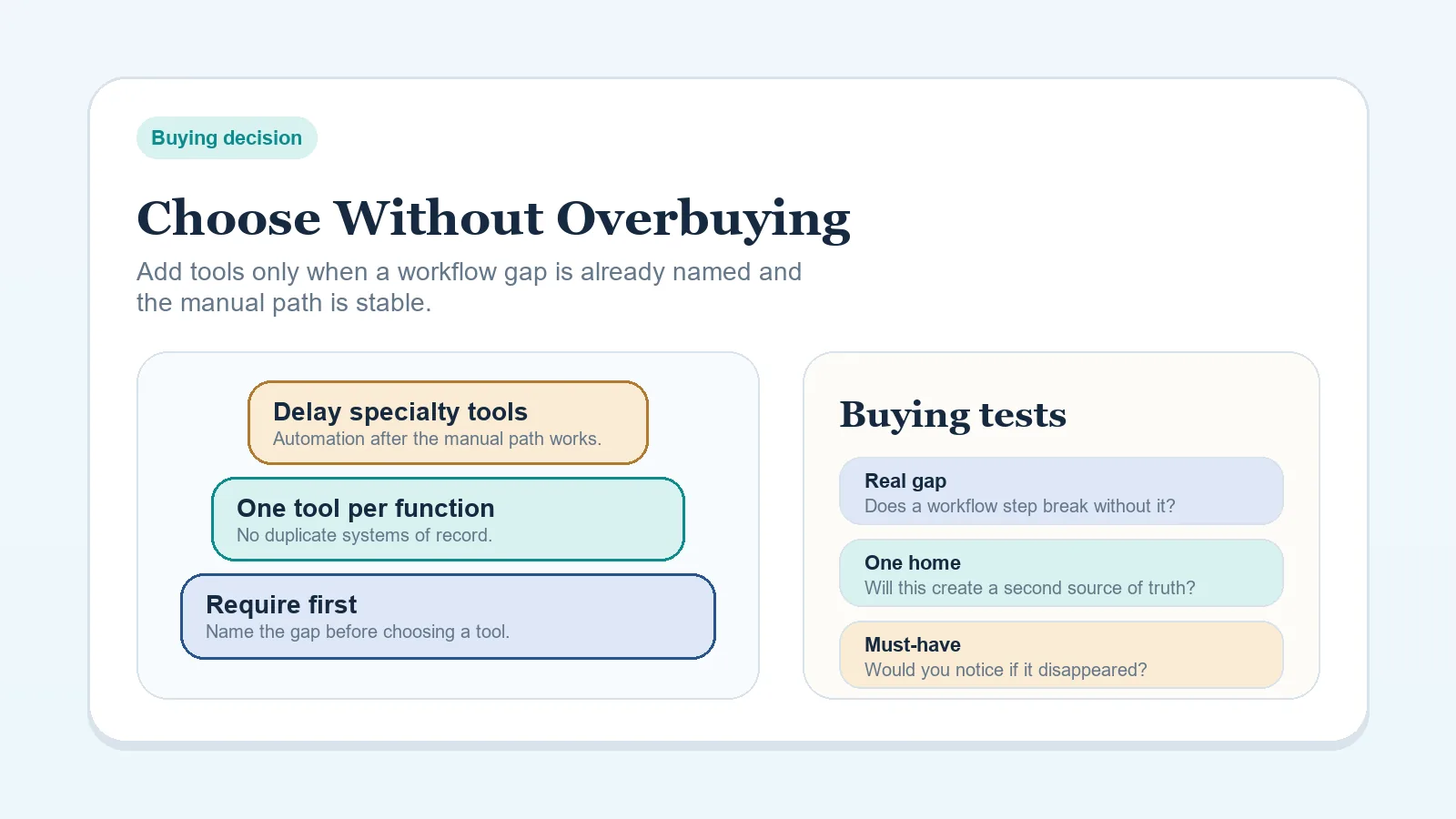
Avoid adding a dedicated booking tool until you can prove scheduling is a repeated bottleneck. If stack sprawl is already the issue, read How to Choose a Software Stack Without Overbuying Tools first.

Recommendation boundaries

Choose built-in booking if:

  • volume is low,
  • one main call type covers most inquiries,
  • the main problem is still qualification or offer clarity,
  • the stack is already close to the complexity limit you want.

Choose a Calendly-style tool if:

  • several booking paths have different rules,
  • repeated calendar admin is stealing real time,
  • reminder and routing logic need to be more structured,
  • the booking layer has become part of intake quality control.

Quick failure check

Your choice is probably off if:

  • the booking tool has more routing logic than the intake process itself,
  • calendar friction is low but qualification is still weak,
  • missed bookings are really caused by unclear offer boundaries rather than scheduling software,
  • the new tool adds another place to maintain client context without improving intake quality.

What to do after deciding

What this page should not decide

This comparison should not decide:

  • whether the lead is qualified,
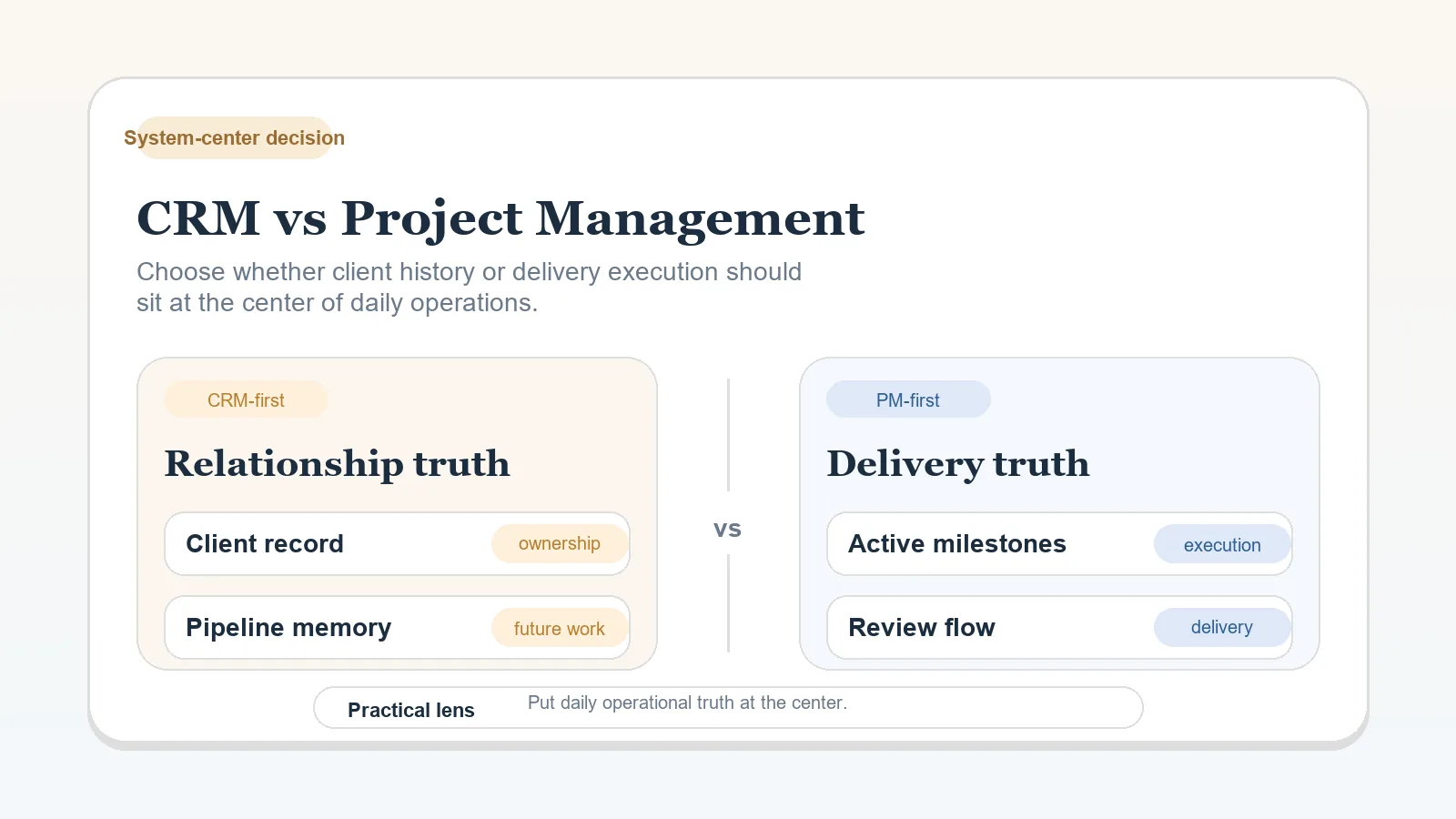
  • whether CRM or PM should anchor client truth,
  • whether the rest of the stack needs more software.

Its job is narrower: decide how much booking structure the intake layer needs.

Completion standard

This comparison is working when you can explain:

  • whether scheduling complexity is real or premature,
  • whether the stack needs another tool at all,
  • what the next intake or stack page should be after the choice.