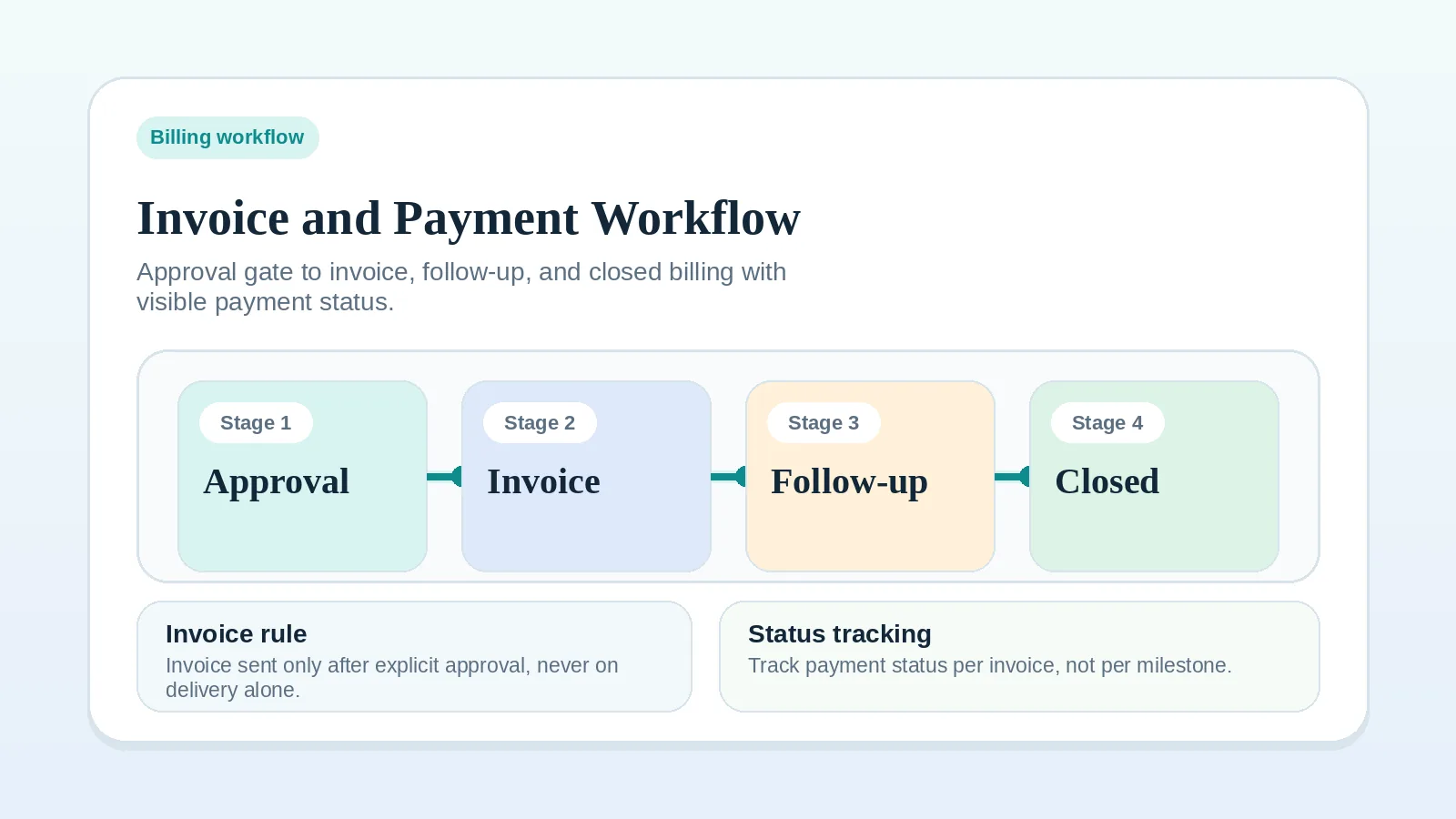
This is not an accounting-software roundup. It is a workflow decision about where billing status should stay visible once invoices are already being issued.
Many solo operators technically send invoices on time but still lose operational control because payment state disappears into a separate finance tool that they do not check during live client work. The question is not where the invoice gets generated. The question is where current billing truth needs to stay visible.
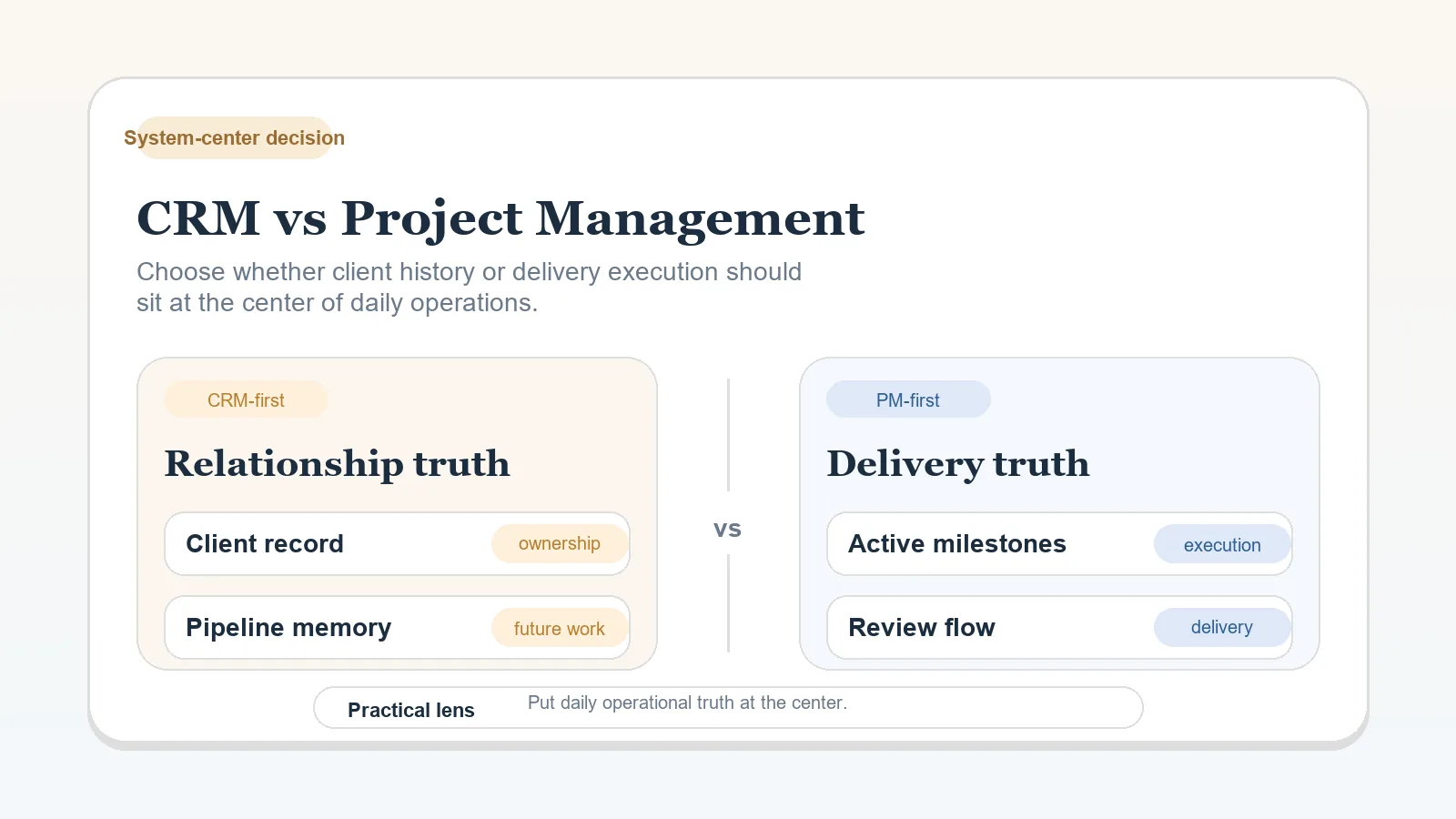
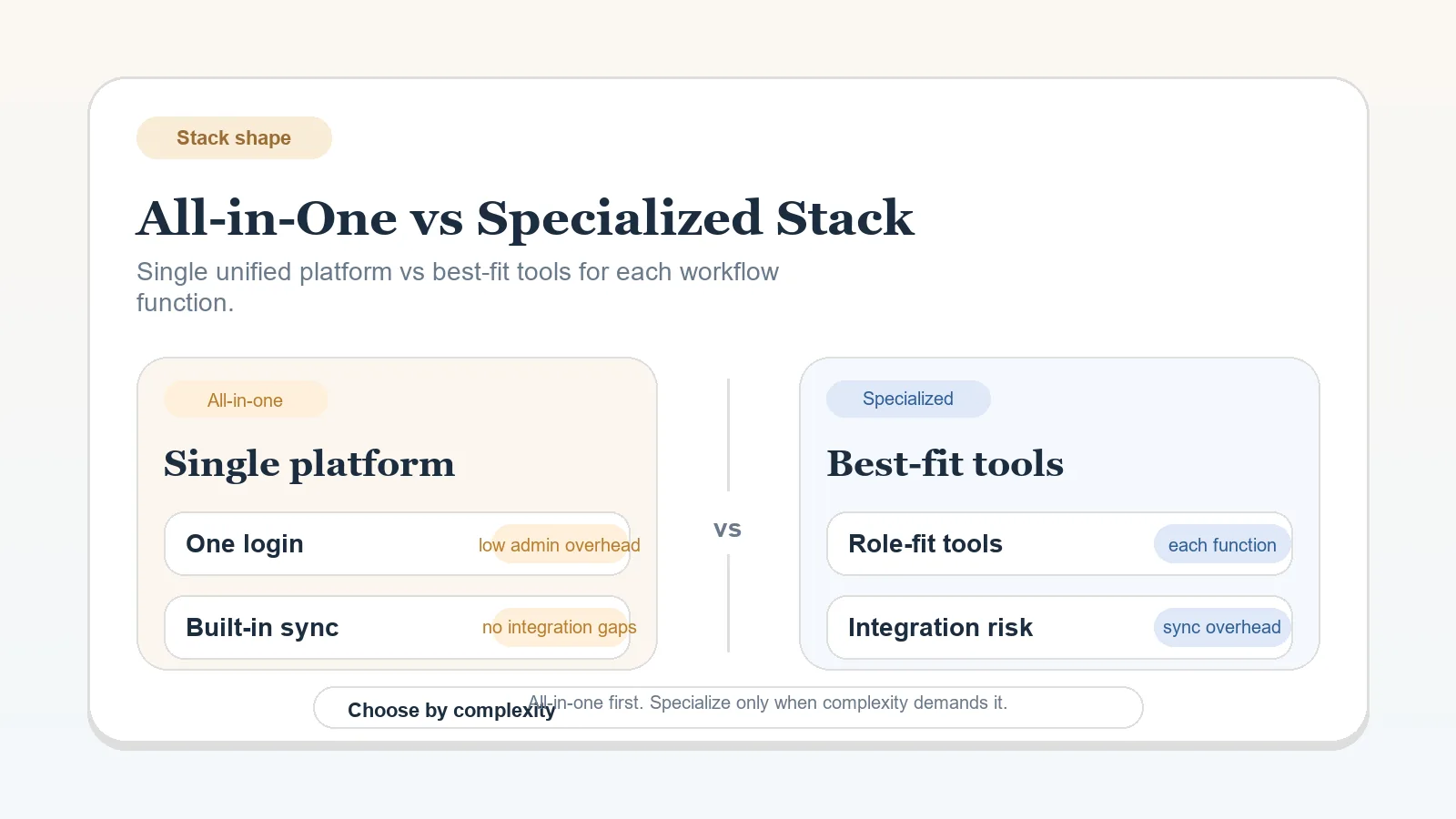
Use this page after the broader stack decisions are mostly clear. If you still have not decided where active client truth should live overall, start with CRM vs Project Management Tool for Client Workflows. If the bigger question is whether the business should stay consolidated or split functions across more tools, start with All-in-One Workspace vs Specialized Stack for Solo Operators.
What this page should settle
By the time you leave this page, you should be able to answer:
- whether the invoicing tool alone is enough for billing status,
- whether billing state also needs to stay visible in the main system of record,
- what kind of duplication is healthy versus dangerous,
- which billing or stack page should turn the choice into a working rule.
What this page should not decide
This page should not decide:
- which invoicing product to use,
- what event triggers an invoice,
- whether the business needs a CRM-first or PM-first operating model,
- whether billing terms themselves are strong enough in the agreement.
Those are separate questions. This page only decides where live billing status should remain visible.
What the real choice looks like
The two main models are:
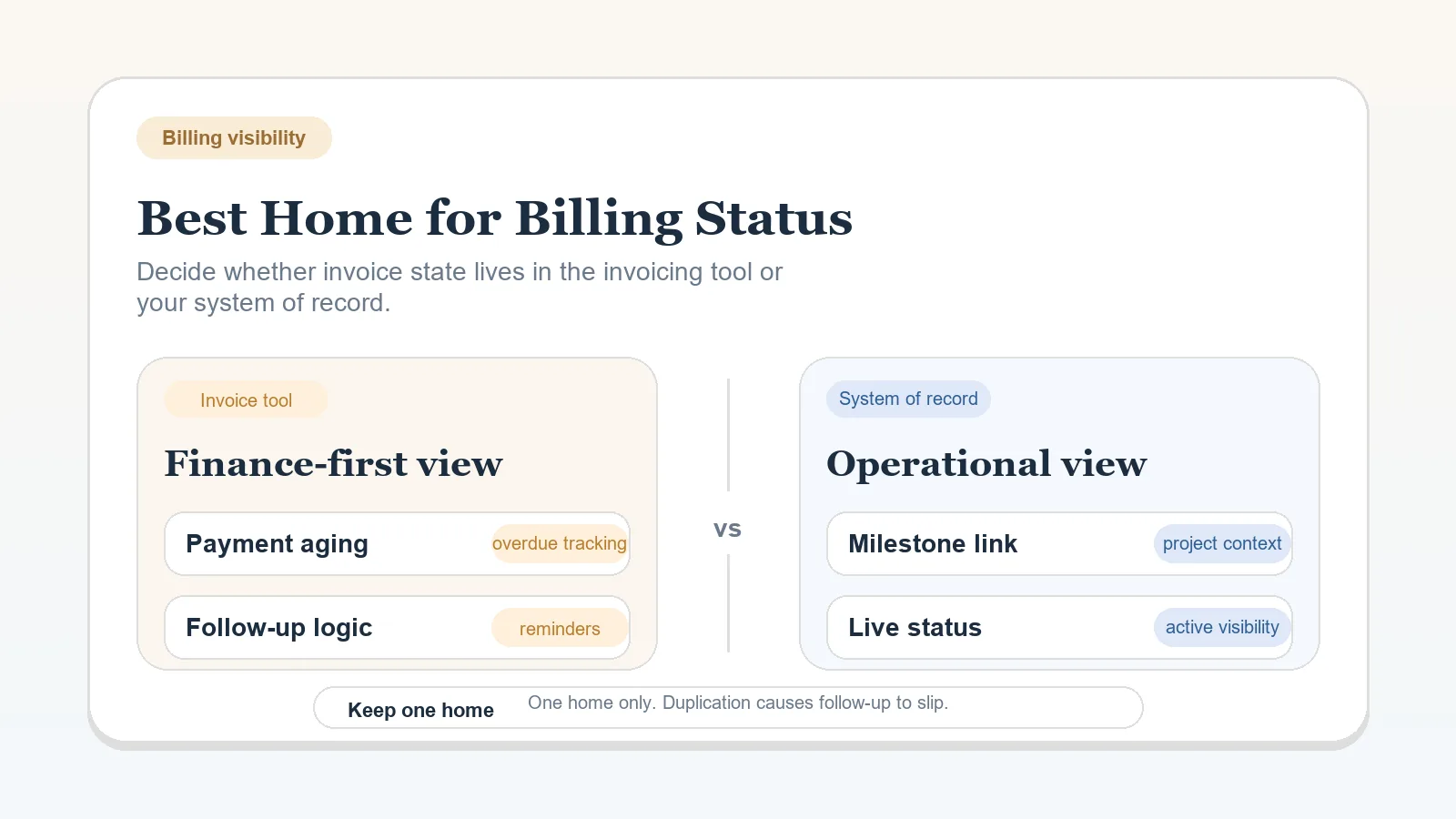
- Invoicing-tool-only visibility: the finance tool is treated as the main home for billing status, and the operating system trusts it without mirroring much back.
- System-of-record visibility: the invoice still lives in the invoicing tool, but billing state stays visible in the main operating system as a live status field or checkpoint.
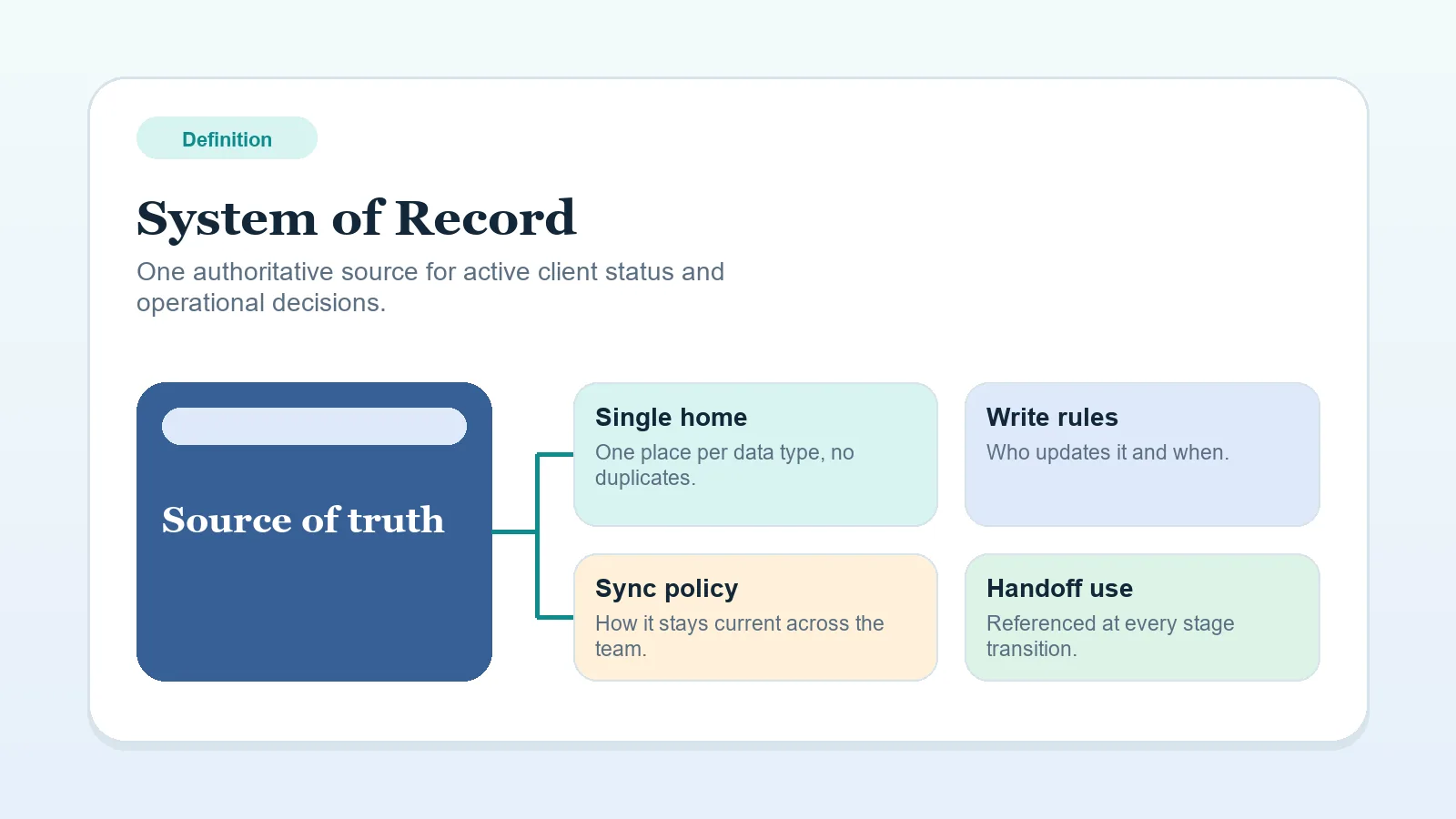
This is not a choice between one truth and two truths. The invoicing tool can still remain the source for invoice details while the main system carries the operational state people actually need to see.
Invoicing-tool-only visibility
Best for:
- very simple client loads,
- low invoice volume,
- operators who check the invoicing tool reliably during weekly operations,
- businesses where billing rarely interacts with milestone decisions or project pauses.
Strengths:
- less duplication,
- cleaner finance record,
- lower setup effort.
Tradeoffs:
- payment state can disappear from the system you use most,
- project and billing visibility can drift apart,
- overdue follow-up may rely too much on remembering to check one more tool.
Failure mode: invoices technically exist, but billing becomes operationally invisible during busy delivery weeks.
System-of-record visibility
Best for:
- milestone-based billing,
- projects where payment state affects delivery or closeout decisions,
- operators who need one weekly control center,
- setups where a collaborator or VA helps manage follow-up.
Strengths:
- billing stays visible next to active client status,
- weekly review is easier,
- payment delays are less likely to surprise delivery or offboarding.
Tradeoffs:
- requires one clean status rule,
- careless mirroring can create duplicate truth,
- someone has to maintain the boundary on purpose.
Failure mode: billing gets mirrored inconsistently, and the operating system starts showing stale payment state.
The healthy middle rule
In most solo setups, the invoicing tool should own:
- invoice amount,
- invoice document,
- payment processing detail,
- exact due date and payment confirmation.
The main system of record should usually still show:
- whether billing is not yet triggered, sent, due soon, overdue, or paid,
- what the next billing-related action is,
- whether delivery, closeout, or follow-up is blocked by payment state.
That is not harmful duplication. It is a healthy operating summary.
Decision criteria that matter
Weekly control center
If you want one place to answer “what needs attention this week?” billing status usually needs to stay visible in the main operating system too.
Billing-to-delivery coupling
If milestone approval, continued delivery, or offboarding depends on payment state, keeping billing invisible in the main workflow record usually creates unnecessary surprises.
Volume and simplicity
If invoice volume is low and billing rarely changes the operating plan, the invoicing tool alone may be enough.
Boundary discipline
If you cannot explain exactly which billing facts stay in the invoicing tool and which state gets mirrored back to operations, do not add more mirrored fields yet. Define the rule first.
Decision table
| Condition | Better default |
|---|---|
| Very low invoice volume and simple fixed-fee work | Invoicing tool only |
| Milestone billing tied to live delivery decisions | System-of-record visibility |
| One weekly operations dashboard matters | System-of-record visibility |
| Finance detail needs to stay clean but operations are simple | Invoicing tool only |
| A VA or collaborator helps follow up | System-of-record visibility |
Practical scenarios
Solo freelancer with 2-4 active projects and straightforward billing
The invoicing tool may be enough if you check it consistently and billing state rarely changes delivery decisions.
Consultant with milestone approvals and partial payments
Billing status should usually remain visible in the main system too. Delivery and payment state are close enough that hiding one from the other creates friction.
Operator cleaning up a scattered stack
Do not create several invoice-status fields in different tools. Keep the finance detail in one invoicing tool, then mirror only the smallest useful operating state into the main record.
Recommendation boundaries
Choose invoicing-tool-only visibility if:
- billing is simple and infrequent,
- the invoicing tool is checked reliably,
- payment state does not often change delivery decisions,
- the extra mirrored field would create more maintenance than clarity.
Choose system-of-record visibility if:
- billing status affects what happens next operationally,
- overdue payment should show up in the same weekly review as delivery blockers,
- milestone or closeout timing depends on payment state,
- another person may need to see billing state without living in the invoicing tool.
What usually goes wrong
- mirroring every finance detail instead of only the operating status,
- keeping invoice detail in two places and trusting neither,
- treating the invoicing tool as authoritative while never checking it during weekly operations,
- letting paid, overdue, and sent states drift out of sync with the live project record.
What to do after deciding
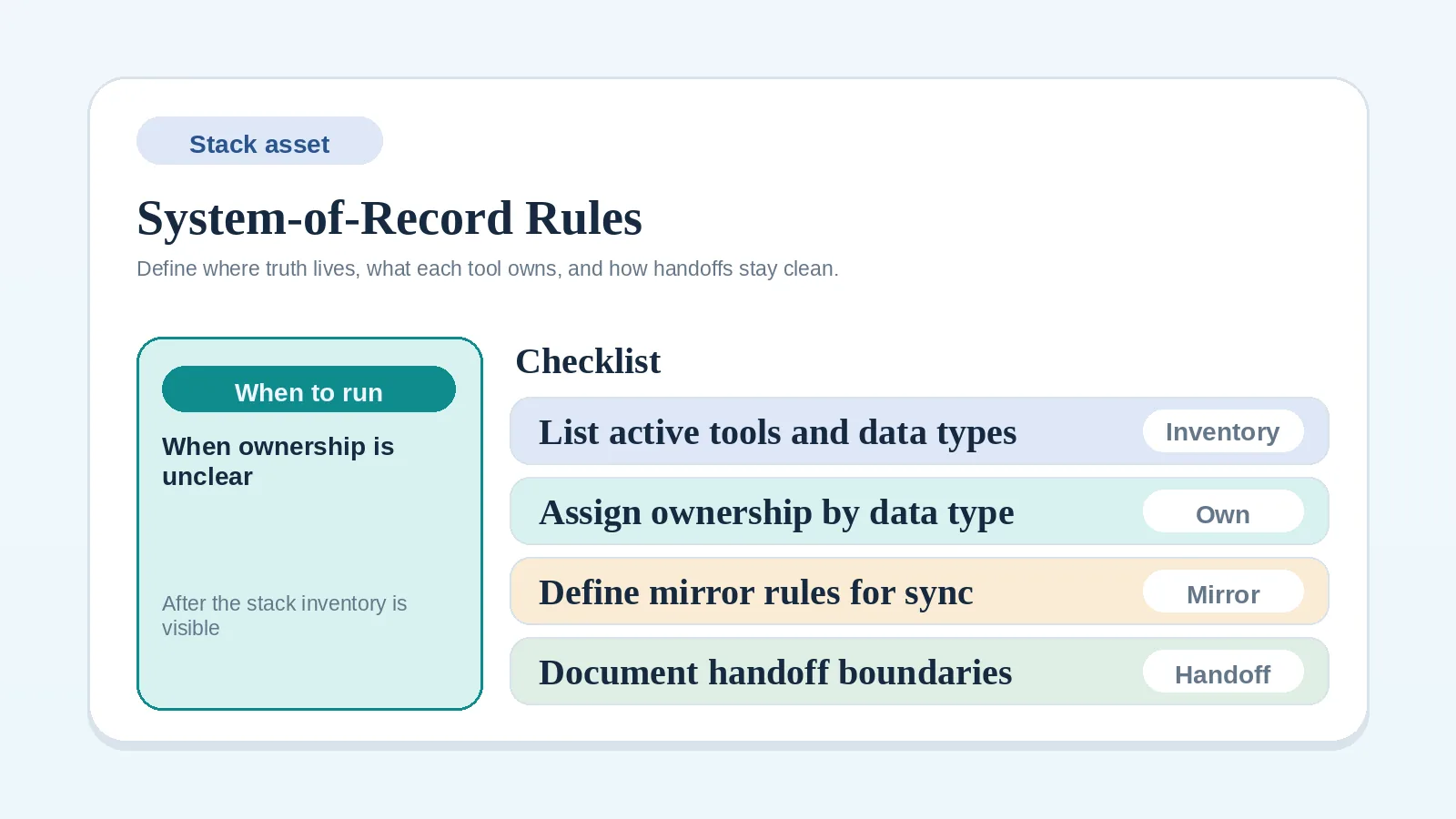
- If billing should stay visible in the main record, document the boundary with System-of-Record Rules Worksheet for Solo Operators.
- If the broader billing workflow is still weak, implement it next with Invoice and Payment Workflow Setup for Freelancers and Consultants.
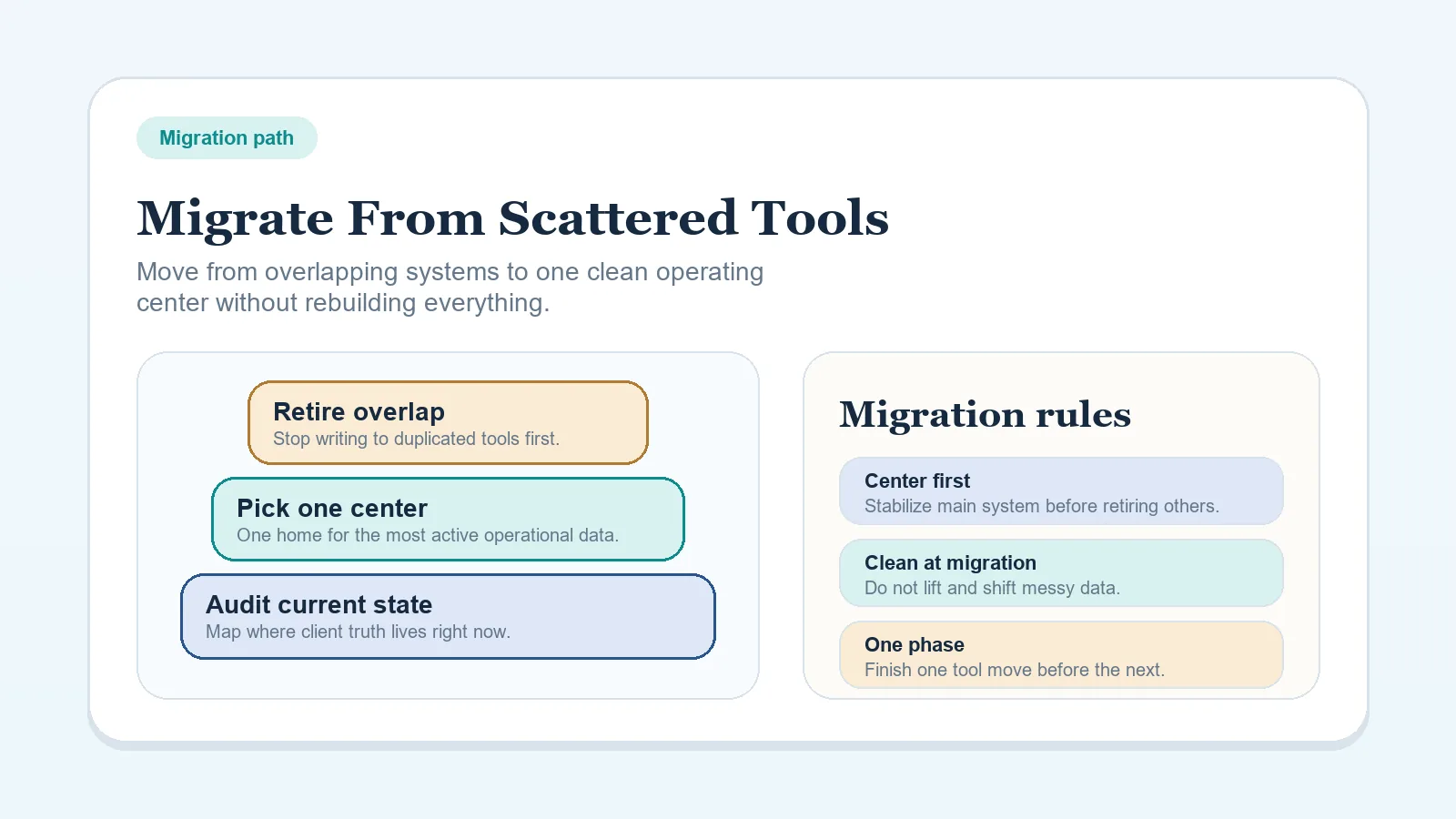
- If the stack is still fragmented enough that billing visibility cannot be fixed cleanly in place, use How to Migrate from Scattered Tools to One Workflow System.
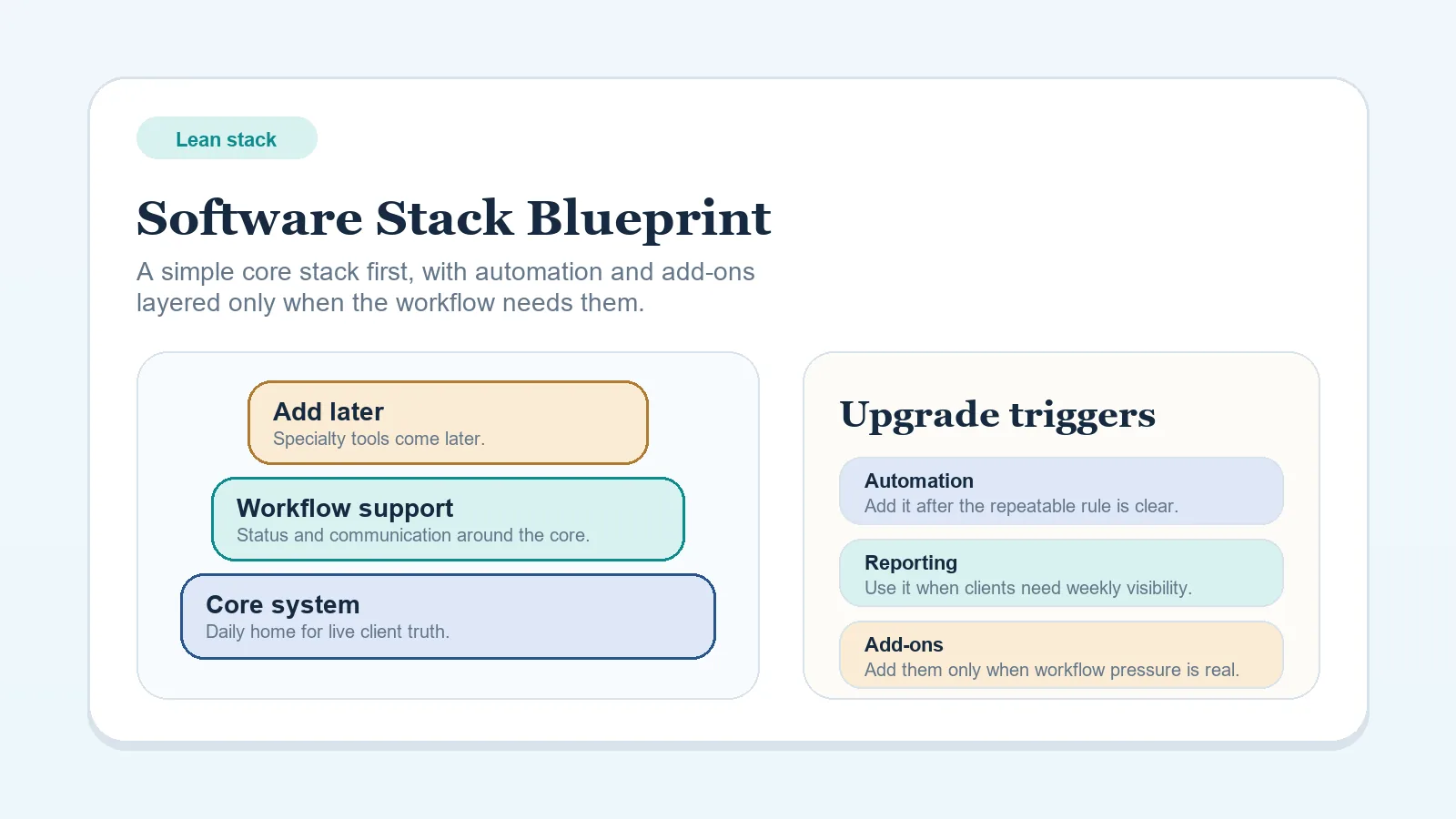
- If you still have not chosen the baseline stack shape, return to Software Stack Blueprint: Solo Freelancer (Lean Budget).
Quick failure check
Your current model is probably weak if:
- invoices are technically sent but you cannot see overdue risk during weekly operations,
- delivery status and billing status regularly contradict each other,
- a paid invoice still leaves the project looking blocked,
- no one can explain which system owns invoice detail versus billing visibility.